On Wednesday, May 6, 2026, the Word for Word online literary series welcomed bestselling writer Chuck Tingle. Tingle is a USA Today bestselling author, as well as a two time Hugo Award finalist, Bram Stoker Award nominee, Goodreads award nominee, Golden Poppy award finalist, Locus award winner, Dragon Award winner, Audie Award winner, and the recipient of the 2025 Loud Hands Award for Autistic Storytellers. He is a mysterious force of energy behind sunglasses and a pink mask. He is also an anonymous author of romance, horror, and fantasy. Tingle was born in Home of Truth, Utah, and now lives in Los Angeles, California. He writes to prove love is real, because love is the most important tool we have when resisting the endless cosmic void. Not everything people say about Chuck Tingle is true, but the important parts are.
The following transcript of Tingle’s talk and the Q&A that followed has been edited for publication. This is Part II. For Part I, click here.
###
W4W: Here’s another question from the chat. I work with nonverbal elementary SPED students. What is something I can tell them at school tomorrow that you needed to hear as a young kid?
CT: Oh, my gosh. That’s so interesting. There’s multiple layers to that. Is this a question of being a young artistic buckaroo or a young neurodivergent buckaroo? I was kind of both.
But I would say, honestly—gosh, it’s so simple. This is school, but it’s also parents or anything like that. I do think that as someone who—in this other, unmasked life, I became successful, very, as a child. I was not a legal adult yet. And suddenly, I was off and running in this creative field. Being a creator is the only job that I’ve had, because I was so young when it took off. So to have that much success, you’ve got to think, oh, well, what’s the key? And I think the first thing to say is that there is no universal key, unfortunately, just because my path is a rare one. And I always hate it when buckaroos in the limelight go out and say, you know, Taylor Swift or something like that, can say, like, you’re going to make it. You’re going to be as big as me one day.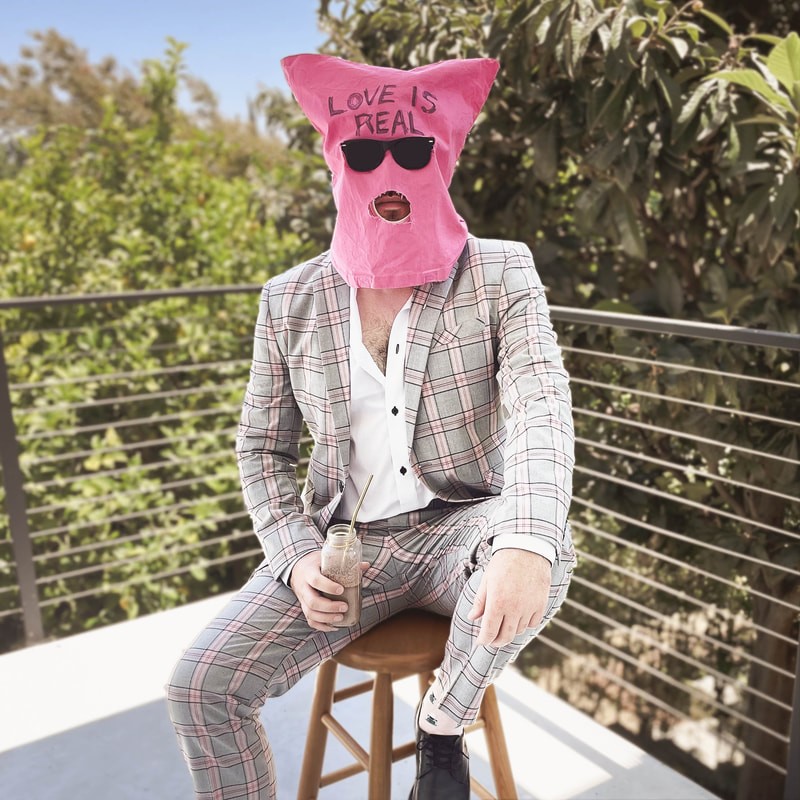
And I just say that’s irresponsible. It’s very easy to say about other people’s lives. But that doesn’t mean that everyone out there isn’t capable of their own extraordinary path. I truly believe we are all extraordinary in our own way. We are infinitely unique. And that is our power. So it’s not about, hey, how do I become the next Chuck Tingle? It’s about, how do I become the next me? That’s the key right there.
And then in a very practical sense, I will say, I think that when a young creative buckaroo comes up to you and is like, when you’re in their presence, the number one thing we can do is simply—this sounds ridiculously simple and absurd—simply give attention to creativity in young buckaroos and say, hey, what are you up to over there? And when they show you, say, wow, that’s cool. That’s really cool. That’s interesting.
It is absurdly simple. But if you actually look at the way that it is to be a child, that doesn’t happen that often. There’s a lot of telling. There’s a lot of saying like, hey, you’re doing this. What is that? All of these things.
But to just approach it with curiosity and say, like, what’s going on over there, tell me about it, and then to reinforce it by saying, wow, that’s pretty cool, it seems absurd, but I think that’s really important.
W4W: Someone wrote in the chat that it’s a compassionate curiosity.
CT: One hundred percent.
W4W: Chuck, how do you navigate the publishing world as an autistic author, especially when it comes to public speaking and interviews? The person asking this question goes on to say, I’m a published horror short-story author currently querying a novel. And I sometimes worry that speaking too fast, too slow, or struggling verbally in live settings makes me come across as less intelligent.
CT: That’s a great question. It honestly directly relates to what I was talking about before, which is, we are the stories outside of our books. So I think when I say that, there’s two reactions that I get. One, there’s a bit of a disgust with some folks because they see it as marketing, which is like a dirty word as an artist.
I’m not saying you need a gimmick. I’m not saying everyone needs to pop on their blue mask and their green mask and do their own Chuck. What I am saying with that is that we all have this internal truth that makes us unique. Literally, we are—this sounds kind of cosmic and woo-woo, but in a very literal sense, we are connecting to a tether that goes back billions of years, all the way to the Big Bang.
And if you could hit a little rewind button on your existence, there is a path that is infinitely unique to get here. The chances of you being here are so astronomically rare that even one generation back, it’s ridiculous that any of us are here. And to not have gratitude for that is astonishing. But also, to not recognize the power, and that would be a mistake.
So if you go up, and you’re like, I’m this artist. How am I going to stand out? What am I going to do to create that story behind the story? It doesn’t have to be something fake or flashy or anything. It’s just you. It is recognizing that the way that you are, and specifically in this situation, the way that you speak, is perfect. It is perfectly you.
Perfect does not exist in the sense of, oh, there is some way that we all need to speak. The perfect way of speaking is the most honest, real version of yourself. That is what other human beings artistically are going to tether to. That is your superpower.
So I always just encourage buckaroos to remember, your art is the book or the movie or the song or the painting. You are also your art. And the more authentically you can be and harness that, that’s like the jet fuel. That’s your superpower right there.
W4W: It makes me think of how you call yourself the world’s greatest author. And I know sometimes people are like, hey, what gives him the right to make a grandiose claim like that? But then you go on to say, well, you’re also the world’s greatest author, and so are you, and so are you. Can you explain where that comes from?
CT: I do think there are some art forms, let’s take rock and roll, where a lot of that is everyone does think they’re the best. That’s the thing. The lead singer goes out, and they’re the king of the world. So there are some art forms that encourage that kind of self-reverence.
But overall, I think what the vast majority of struggling artists experience, and even successful artists, is this doubt in yourself, this doubt that you are somehow capable of creation. And honestly, all of existence is based on this creation, and all of this existence is based on we all have these unique forms of creation.
Now, art specifically is subjective. It is this one thing that we are all entering from our unique walks of life and coming to this someone would say battleground. Others would say playground. But whatever, we’re coming to the sandbox together, and we are all presenting this version of ourself.
And again, if we recognize that, the only truth is in our own uniqueness, and we are recognizing that art is truly subjective. The only reason that you are not the greatest—not in a metaphorical sense, but in a literal sense—the only reason that you are not the world’s greatest author, that you are not the world’s greatest songwriter, all of these things, is because you’ve decided not to be. Art is subjective. That is just a fact.
So because of that, you can place yourself anywhere that you want. You can place yourself at the bottom. You can place yourself at the top. Now, a lot of people start to have a problem with this because, in our culture, in our heads, we imagine the Olympic platforms: the gold, the silver, the bronze. And we weight them by height. We say there’s only a spot for one on the platform.
But again, art is subjective. All of this is imaginary. The platform in our head is imaginary. So there’s no reason why you can’t in your head expand that platform. Being the world’s greatest at anything doesn’t mean that anyone else is not also the world’s greatest.
Just take a minute and imagine those platforms and realize those platforms aren’t real. That platform is a projection of the way that you think about the world. And in your mind, you can control it. So just bring them all up to the same level in your mind. Now widen it. Make more room. Make room for 10 people. Make room for everyone on there.
So when I say I’m the world’s greatest author, that’s not a joke. I one hundred percent believe that I am. I think I am the best in the world, and I also think you are the best in the world. I think that everyone from the most derided to dang Shakespeare is the best in the world. We are all the world’s greatest author. And the only thing keeping us from that is our decision not to be. So I just would like to encourage everyone. If you’re an artist, just decide to be. It is subjective. You can do that.
W4W: We talk a lot about so-called imposter syndrome in our classes.
CT: Yes. And that’s the thing. This is subjective. It’s art. There’s different things that we can all like. There’s different things that we can not like. There’s different things that may be more popular than others. But ultimately, this is your choice. You’re the artist. We are all creators, and we are all choosing where we want to place ourselves. So let’s put us all at the top altogether.
W4W: Let me go back to the chat for another question. As an autistic writer who also has an ADHD diagnosis, how do you keep yourself focused and productive? A lot of our students share similar diagnoses. And it can be incredibly frustrating to feel these conditions getting in the way of their writing dreams and ambitions. So how do you navigate that, and how do you get past those moments of just, well, despair or those moments of hesitation even?
CT: My answer for this is probably not entirely the one that buckaroos want to hear, but it is the honest one, which is just I got very lucky with the way that my brain works, essentially. It is not any fault of my own, but my particular brand of autism is one of hyperfocus: hyperfocus on writing, hyperfocus on art theory.
The thing that I care about, that I am obsessed with, that drives me every day, that I read about, and that I think about on every single long walk that I take, is art. And it is art in a broader sense, not like, oh, I’m thinking about that movie I saw. But what is art, the philosophy behind it, the philosophy behind creation, art theory in general, pulling these things apart? It’s what I’m obsessed with. So because of that, my focus when I am writing, it tunes in.
My battle is, how do I maintain my health when all I want to do is write? How do I make sure I’m having all the meals that I need to have because I’m so obsessed with creating art? That’s what it is for me. And the way that I have battled that is taking time to be in nature. Every day I do my morning trot. It’s an hour up the hill, do a big loop.
Connecting with the world without phones and alarms and screens, I think, is becoming harder and harder to do, but for me, that’s really important. And to be honest, I wouldn’t be surprised if that worked for other folks. I think the folks that maybe have the opposite problem and are finding themselves distracted, knowing that going as fast as you can isn’t always going to yield the best results, and that sometimes it’s OK to be distracted if it’s, I guess what I would say, healthy distraction.
If you just are like, you know what? I need to go for a walk for an hour. I’m just going to put on my dang headphones and I’m going to go out in nature and I’m going to come back. I think that developing a practice where you allow yourself these moments of like, OK, my brain’s going to settle, really powerful.
W4W: A lot of the writers in our program are struggling with these kinds of diagnoses and are still at the point in their lives where they’re trying to figure out what works for them to manage it, and to be able to achieve their dreams as writers within that context of what they’re dealing with mentally with their particular neurodivergence. So I think it’s very valuable to hear your perspective, Chuck. Thank you.
CT: While autism has not been a disability to me, I think it is important to define it that way for folks who experience it as a hindrance. And also, just on a legal, practical sense, there’s certain money allocations and stuff that folks who need it can get because it is defined that way, even though it has helped someone like myself. But I think for the folks that are really struggling with it as artists, it’s also important to keep in mind that a lot of the artists that you admire, a lot of artists that you have been inspired by are on the spectrum.
It’s just that generationally, that diagnosis was not as common. And so many of my heroes, when I look at them, I think the autism diagnosis was not understood. It was not understood at that time. It was just a different culture and different thing. But I look at them, and I think, gosh, there’s so much that I relate to. And I really would not be surprised if most of them were on the spectrum as well. So you are not alone as an autistic artist. I think there’s a lot more than you would think.
W4W: Yeah. I was just reading that a new biography of Auden just came out, written by Peter Ackroyd. And I was reading a review of it today. And I just couldn’t help think, well, this guy was on the spectrum.
CT: A lot of folks say, oh, there are sure a lot more autism diagnoses happening now. What’s wrong? What’s going on? It just that we are understanding these things a lot more, so there’s more and more people getting these diagnoses. And the heroes of our past, I think probably, there’s plenty of them that would have fit right in there.
W4W: Another thing about Auden, now that I think about it, is that he was gay in a time period where that was much less accepted than it is today. And maybe even today, that acceptance is on the ebb, unfortunately. But that’s an element of your writing and yourself that you’re also very upfront about. And how have you managed to incorporate that into your writing, in an honest and authentic way? How do you bring that authenticity into your work and yet navigate the traditional publishing system?
CT: I can’t necessarily give advice for others, because I think that would be disingenuous to the fact that I’ve been very lucky. I’m very fortunate to be in the position that I am. But what I can do is tell folks my own journey, not as a recommendation to follow these steps but just to be honest about my path.
 The way I’ve been able to navigate that is because I think it actually comes back to a punk-rock mentality that I think intertwines with queerness quite a bit. As an artist, I genuinely don’t care about the big film studio or the major label record deal or the Big Five publisher. If they want to work with me, that’s fine, but I answer to the art. I answer to what I want to create. And I would do it anyway, even if it didn’t have any success. I think a lot of folks say that but maybe don’t feel it. But what happens when you genuinely feel that is that if what you’re making resonates with people, you end up creating your own community, like I did kind of through self-publishing, where you genuinely do not need the higher power, the big company.
And then when they come calling—and this is getting into practical business stuff—but when they come calling, you can say no. You can just flat out be like, you know what? I don’t like that offer. I don’t like that deal. And because I’ve always been comfortable just saying no to the big timers, without getting too much in my unmasked self, I can do it in publishing, and I did it as a young buckaroo.
I got a very big offer, and I said no. And then a week later, they came back and said, OK, we’ll give you everything that you want. And this was a very young buckaroo. I just kind of had that sort of mentality of saying, I’m just going to make the art.
So what that does is it puts you in a position that is kind of unique, where there’s a lot of people that get a Big Five book deal, and their whole mentality is like, how am I going to maintain this? How am I going to make them really like me and make sure not to drop me?
But if I come to it as an equal partner, not like I just want a Lotto ticket, but like, hey, you guys want in on my Lotto ticket, because I’m the big winner, and you’re pretty big yourself, so let’s join as equal partners. I approached it like that, and it puts me in a position where I can just write whatever I want.
I know there are authors that will get their covers changed, or their titles are different, things like that. And I don’t have to do that. I don’t have to listen to any sort of things when people say, oh, hey, you better do this, because they have spent a lot of money to get a Chuck Tingle book, not a kind of sand-down other book.
My heroes in that regard are someone like John Waters, someone like Paul Reubens, queer icons that come from a punk rock place. So they do what they want. And I think if you establish that from the beginning, you can stick with it.
W4W: Yeah, those are people who did not sand away their own edges in order to make themselves more palatable to the world. Instead, they continued being who they were and becoming who they were as authentically as possible. And the world came to them.
CT: Yes, absolutely.
W4W: What’s next for you? I thought Bury Your Gays would make a wonderful movie. Any news to share about something like that?
CT: Actually, that’s the type of thing you can’t really talk about as it’s happening. But I will say something like that is closer to happening than it has ever been. So there’s a lot of work behind the scenes on something like that. I do think that my work, like I said, is built to be cinematic. So it does translate pretty well. All I can say is there may be something coming down the pipeline pretty soon regarding a crossover like that.
W4W: Writing-wise, you were saying that you were writing something that is scheduled for two years out. Is that usually how far you plan out, two years?
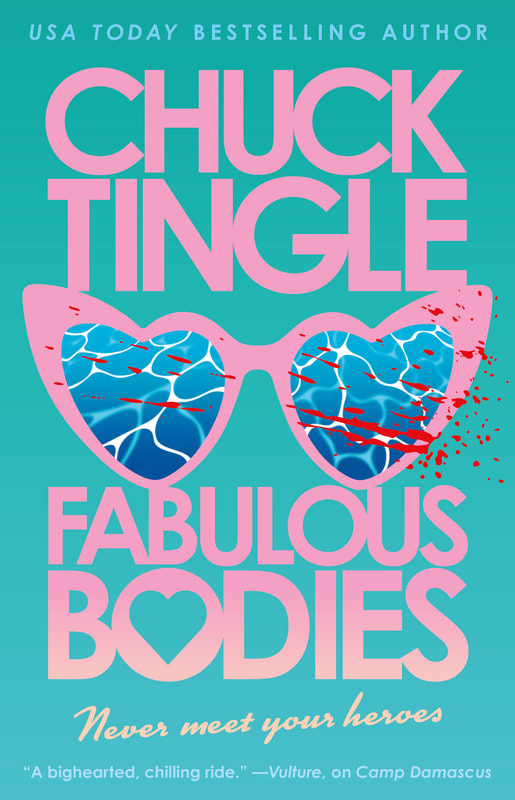
CT: This is actually me slacking behind, because I’m normally three years out. I normally have two books in the can when a new one is coming out. So as I’m coming up on Fabulous Bodies this summer, usually I would have two or three books finished beyond that. And right now, I have one, and I’m almost finished with number two.
So once I’m finished with this one I’m working on, I’ll be back up to speed. But I normally am way farther out, which has a lot of advantages. In my horror novels, you’ll see they all exist in the same world. There’s characters or businesses or different things, different ideas, TV shows that all cross over.
And I always have this pet peeve when there’s worlds that cross over where I’m like, oh, very interesting that all the future books reference the first ones that came out. But ironically, in this supposed world, nothing from the first book is ever like referencing forward, because the author didn’t write them yet.
I can avoid that. So all of my books, because I write so far out, have different things, actually. Lucky Day was last year’s book. Actually, if you go back and read Camp Damascus, there’s actually something about the casino in Lucky Day in there. In Bury Your Gays, there’s a reference to someone going to visit a resort, and that resort is like the main setting for my book that comes out next summer. So there’s a connection. There’s a direct connection from a character in Bury Your Gays, a very minor character that is the lead in my book for next summer. So it’s kind of fun to be able to do that.
W4W: The Tingleverse.
CT: Yes, the Tingleverse, exactly.
W4W: Thank you, Chuck, for coming tonight and sharing your wisdom with us.
CT: Thank you so much. It was an honor to be here. What a treat! The wonderful questions. I had such a good time. So thank you so much.
Category: