On Wednesday, May 6, 2026, the Word for Word online literary series welcomed bestselling writer Chuck Tingle. Tingle is a USA Today bestselling author, as well as a two time Hugo Award finalist, Bram Stoker Award nominee, Goodreads award nominee, Golden Poppy award finalist, Locus award winner, Dragon Award winner, Audie Award winner, and the recipient of the 2025 Loud Hands Award for Autistic Storytellers. He is a mysterious force of energy behind sunglasses and a pink mask. He is also an anonymous author of romance, horror, and fantasy. Tingle was born in Home of Truth, Utah, and now lives in Los Angeles, California. He writes to prove love is real, because love is the most important tool we have when resisting the endless cosmic void. Not everything people say about Chuck Tingle is true, but the important parts are.
The following transcript of Tingle’s talk and the Q&A that followed has been edited for publication. Because of its length, we have split the transcript into two posts. Check back soon for Part II.
###
W4W: Welcome, everyone, to tonight’s Word for Word. We are honored to have Chuck Tingle as our guest tonight, a writer whose career I have followed since 2015 or so. My eye was caught by his clever metafictional works of LGBTQ erotica with their amazing titles like Space Raptor Butt Invasion and, for all you D&D players out there, Bisexual Polyhedral Role-Playing Dice Orgy.
But I soon realized that Chuck was a writer who could not be so easily pigeonholed, and I’ve come to admire everything he does as a writer, marketer, and champion of his fellow writers. Flash forward 10 years, and Chuck is a USA Today bestselling author, as well as a two-time Hugo Award finalist, Bram Stoker Award nominee, Goodreads Award nominee, Golden Poppy Award finalist, Locus Award winner, Dragon Award winner, ADI Award winner, and the recipient of the 2025 Loud Hands Award for Autistic Storytellers.
Chuck writes to prove love is real, because love is the most important tool we have when resisting the endless cosmic void. Not everything people say about Chuck is true, but the important parts are. Chuck, welcome.
CT: Oh, my gosh, what an introduction! Thank you. I know that this is the point when a lot of authors do a reading. And since day one, I have just had this policy that I don’t do readings. And Paul was kind enough to allow that. So when I do my tours—I don’t know if anyone watching has seen me do my live tours—I also approach it differently. I don’t do readings there either. I put on a one-man show. I have a projection. It’s kind of hard to describe, but a one-man show is probably the closest that it could be. But it resembles nothing close to a traditional book tour. We rent out our own venues. We do it in theaters with the big stage and everything. And it’s a different thing.
So I’ve always approached things differently. But this is actually a subject that I have spent a lot of time talking about on my tours, because it’s very important to me. You mentioned some of the autistic recognitions I’ve gotten. I am an autistic buckaroo, diagnosed with Asperger’s when I was in my early 20s, which is no longer the definition. We don’t actually use that language anymore, but that’s what I was diagnosed with.
So part of my experience being on the autism spectrum has been a sort of regimentation of life, where I really am strict with certain things, certain behaviors I write about. In my book Camp Damascus, the character Rose exhibits some of the things I do, which I have certain tapping combinations—12345, 1234, 123, 12, 1—I do various patterns of that when I get stressed.
And stress is a big part of my life because of this. Stress has defined a lot of things about me, actually. And what that comes from, I have learned over time, is being a neuro-atypical buckaroo in a neurotypical world. And what that is called, anyone else on the autism spectrum will know this, is masking.
So ironically, despite me going out in public with this big pink mask, I am actually masking, to use that terminology, all the time without my pink mask. When I’m going about my daily life, eventually, if I’m ever unmasked or if I decide to take it off myself, I think there’ll be a lot of buckaroos that think, oh, I thought Chuck was autistic.
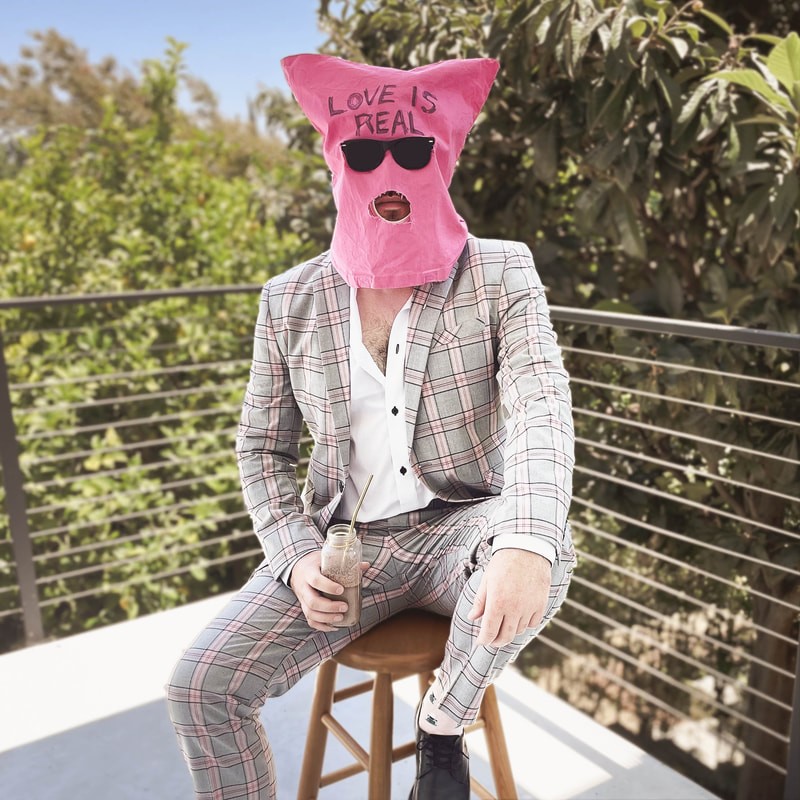 And let me just say, it is a spectrum. And you can’t really tell with some buckaroos because they have learned to mask. So I spend so much time masking, and it has created tension in my body. The way that this eventually manifested for me was, during the course of my life, I started to have some health problems.
I started to experience chronic pain that was all the way across my body. And I started basically going to the emergency room constantly to find out what was wrong with me. My primary care doctor would not help. The emergency room kind of came in when this pain would grow and grow and grow.
And eventually, after going so many times, while the doctor said, Chuck, we can’t find a dang thing wrong with you, I went multiple times and basically figured I would have to live on painkillers the rest of my life or, not to get too dark, stop living entirely. I thought, this is just not any existence someone can have.
Because if anyone here has chronic pain, they know it is all-consuming. It taints everything. Even the good events in your life when you have chronic pain are kind of brought down a little bit because you just end up thinking, gosh, I wish I could be here without this pain. You go to a wedding and you think, oh, I’m going to forget about the pain because I’m celebrating this family member’s wedding or something. This is a big day. The pain’s going to go away. And what happens is you just sit there, and you have your pain simmering in the background. And it just kind of haunts you, I think.
So I had resigned to living a haunted life. And essentially what happened was I started to express myself as Chuck Tingle. This is not my legal name, although I think it could be debatable whether or not is my real name. You have to define real. I think of this expression as the real me, actually. So I would say that in many ways Chuck Tingle is my real name, but it is not my legal name.
And essentially, I created this way of expressing myself where I didn’t have to mask, ironically, putting on a mask where I was anonymous, creating a metaphorical backstory where I would express my truth. Everything that I say is true, but the example I like to give is, if I post online, oh, I pet a cat today, I might have pet a dog, for instance.
I basically just knew I wanted to protect my privacy and express myself in a very uninhibited way. Before this, we mentioned an Oscar Wilde quote, but it always comes back to me, which is if you want a man to tell the truth, give him a mask, or some variation of that. But it is absolutely true.
So the more I started to express myself like this, in the early days of Chuck, I was still experiencing my chronic pain. And that painted a lot of the things I talked about. If you go back to some of my old posts back then, I was posting about pain waves being sent to me from my dastardly neighbor and all these different things. And if you actually peel back what was going on, a lot of that early stuff was me talking about my chronic pain.
And eventually, as this happened and as I started to perform live, to go out, to let myself exist in this space more and more, I had this strange realization where my chronic pain was less and less each day. I started kind of doing live podcast shows. I’d go out there. And suddenly, it was getting lower and lower.
And I thought, this doesn’t make any sense. This is a medical problem. I just had no idea. I didn’t understand, because every doctor I talked to had no idea what was going on. And eventually, armed with this information that, hey, the more I make this art as Chuck, the more that pain goes away, I eventually did go back to the doctor, and I kind of explained that. And they said, well, let’s get you seeing a physical therapist, because what you’re actually describing is a manifestation of stress, which is so ironic, actually, when you think about the books that I write about physical manifestations of things.
So my entire body, it turns out, was being clenched tight by masking all the time, by neurotypically masking. All of my muscles—when I went to my physical therapist, they were like, we have never seen anything like this. You’re essentially frozen, clamped shut. Every muscle that you have is—the off position is frozen shut. And it hurts you because when you relax it, it has become not your natural state. You’re like this ball of anxiety.
And then what happened was I realized, OK, the more that I strip away these metaphorical layers of what is Chuck and allow myself stay anonymous, do whatever I want, but allow myself to be the most myself that I can possibly be, the more that pain goes away. And over time, it went away little by little, to now, as I sit before you, I do not have this chronic pain anymore. It’s with me for years, and I have learned to manage it through releasing through art.
And I also want to say to everyone watching this, that’s from you too. I probably could do this without an audience. And to be honest, I probably would because it is so important to me and so meaningful. But I cannot do this without saying thank you to all of you.
In a very literal way, everyone watching this cured my chronic pain and saved my life, because I really did not think—I just couldn’t live like that. I thought I would be living on painkillers my entire life, or not live. So it does mean a lot to me. Every time that I get to talk to buckaroos like this, I have so much gratitude. And anyone in chronic pain will understand the practice of gratitude, because it’s how you get through the next day.
But I just have so much gratitude for things like this, to be able to sit in front of you and talk about my journey and my process. It is an honor, and it is not lost on me how rare this situation is. So I would just like to summarize that by saying from the bottom of my heart, thank you. Thank you for saving my life. I appreciate you all so much. It means the world to me.
W4W: Wow. Thanks, Chuck.
CT: Absolutely, absolutely. And by the way, I can carry on. I didn’t check the clock when I started. I could carry on about that a while, or we could get into the questions. But I’m a yapper. I’ll talk all day about anything you ask me to.
W4W: I’m watching the questions pile up in the chat. I think we should get into some questions. You write neurodivergent characters in literary horror. AI detectors are now flagging the exact prose patterns, recursion, density, structural repetition, that mark how some of us actually think. Your work names this directly. Do you think the authentic-voice gatekeeping in publishing is going to collapse under this or harden, and what happens to writers like us in the meantime?
CT: Oh, what a great question! Diving into the deep end, I love it. So my experience with AI is an interesting one, because my approach to art has always been pretty unique, as you can all probably see just looking at me. But I have always tackled art from a perspective I got a lot of pushback from in the early days, specifically my perspective that the art is, I always say, more than the page of your book. It is more than the sound of your song. It is more than the viewing of your film if you are a director, your painting if you are a painter.
And the way I like to explain that is that let’s say you go see a painting. I think we like to look at art as if we’re scientists and say, no, no, the art and the artist cannot be connected at all. That’s not appropriate. The real way to analyze art is to put it in a vacuum.
But I think that that’s just not possible as human beings, simply because, one, we often know about the artists that we like. And two, not knowing about an artist also affects your perception of the art. Case in point: me. No one knows what my real name is. And that’s going to color how you come to my art.
You’re always carrying these things. It goes beyond that. It goes, if you’re going to this gallery that we’re talking about, it matters what you ate for breakfast. If you go out and you go to your favorite restaurant on the way to that museum and they don’t have your breakfast burrito that you always like, that’s going to color the way that you see that art.
And that’s not wrong. It is OK to experience art outside of the vacuum, and that the real art is not the painting. It’s you and the artist tethered over time having a conversation. The painting that’s hung on the wall, where it’s placed in the gallery matters. The frame that it’s given matters, the time of day, the lighting, all of that stuff.
So I have always believed this, and I have always leaned into this with my creation. I have my books, but I also have this right here, the way that I’m talking to you, my tether now to you, to everyone listening. We are creating art right now. This is not only art, but a very valid peer piece of art. Everyone who’s listening to this will read my books in a different way.
And like I said, a lot of traditional artists—this really bothers them. A lot of my groups are very bothered by this. And for me, what I always try to do with my Tinglers is capture that experience to make you know there’s a human behind it to connect to it. So my Tinglers were written in 24 hours. They would have spelling mistakes. They’d be about current events.
When I still write them, a news story happens, and I write it overnight. And people would get down on me, say, oh, there’s these spelling errors. Chuck must be trying to intentionally be bad or all these things. I’m trying to be intentionally honest. I’m trying to capture the moment and the feeling of reading something that was made in 24 hours.
And what kind of blows my mind is that every other medium in art is OK with this. If you listen to a song, and it’s played a little too fast, and the singer’s a little out of key, and there’s a bunch of distortion, you say, wow, that’s a great punk song. You just say, what a cool genre where we embrace these raw edges and mistakes!
You do that with a book, you say I wrote this book quick in 24 hours, and I put it out, and it’s got a bunch of mistakes, and it’s all this stuff, everyone says that’s wrong. You’re not allowed to do that. So with that philosophy, I pushed back against that. And I think what’s interesting is that people have started to accept me more over time as a valid, thoughtful artist, I guess, where they thought I was a joke.
And ironically, now that it’s been like a decade of this, with AI coming out, I think that’s going to be my salvation and the salvation of a lot of artists who are worried about this. Humans will always connect to art that has another person behind it. They’re not connecting to the song. They’re connecting to the world behind the song. They’re connecting to you.
It is both. It’s all of these different things. And what AI in creative spaces does is it sands off all those edges. And no one likes that. That’s just not what human beings have ever enjoyed. Human beings are always interested in what’s outside the painting, and what’s beyond the page of the book, and what’s outside of the film on the screen.
W4W: I just finished reading Bury Your Gays, which I thought was an incredible book. But you can see some of the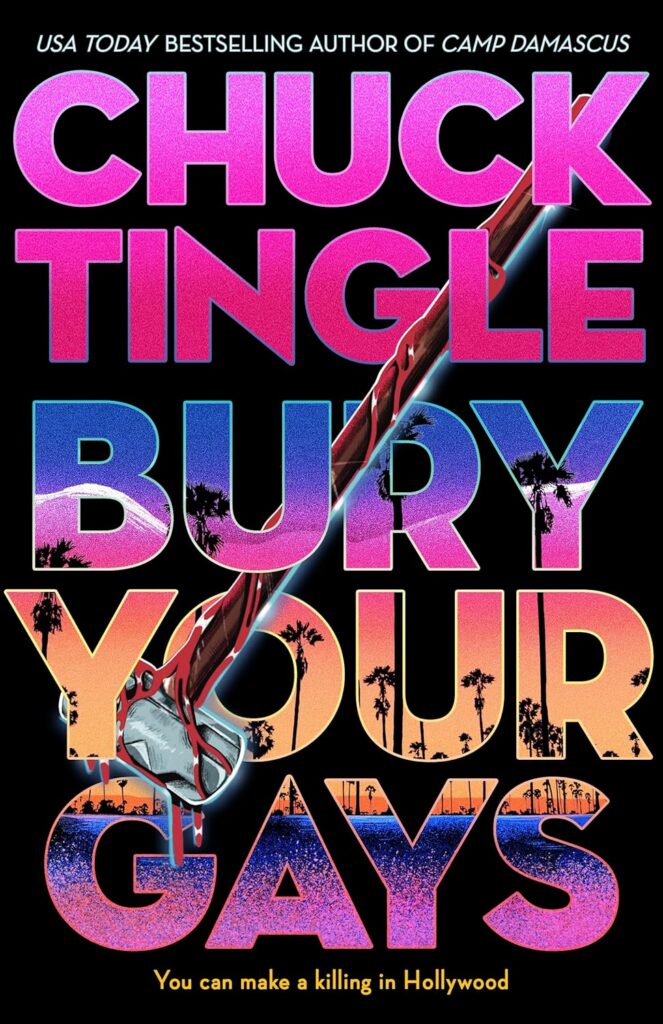 dangers that you just expressed about AI evident in that book. And I guess that’s an example, too, of your taking current events and moving them into that book. One of the things that really struck me about that book, that I was so impressed with, the book was marketed as a horror novel, but it could have just as well been marketed as a science fiction novel. It contains a very strong element of romance to it as well. And I know a lot of people write books that have different degrees of different genres in them, but your book seemed a little bit different to me in that it was treating all of these different genres equally and threading them in without giving one genre prevalence or superiority over another. Can you talk about your approach to genre a little bit?
CT: My horror, I think, always kind of ends up sci-fi horror. And I think there’s actually a very solid reason for this, just as far as my technique of writing, which is that science fiction and fantasy, what’s the difference between these things? A lot of folks say fantasy decides to answer the question through magic in some way, and you just go with it. You say we have this supernatural force. Magic is the cause, and we don’t need to explain it. And horror, I do think, divides on those lines as well, where there are some horror stories where, take Night of the Living Dead, a comet just passed by. And we don’t know why, but all the dead rose. And that’s fine. That’s just what the story is. There’s really a poetic beauty to the way that most horror functions on that sort of fantasy end of things.
But there’s other horror that doesn’t seem to be satisfied with “it just kind of happened for whatever reason.” Not that there’s a right or wrong in this, but it’s just that’s the other half of things. And fundamentally, because of the way my brain works—maybe it’s that autistic needing to get down and understand why all of these different things are true, and then either going with them or rejecting them—the way I approach it is, I always think I need to know why this is happening. So I don’t think I will ever write a horror novel where there’s just some sort of a supernatural entity that is just popping out to scare folks, like popping out for the scares. It’s a big pet peeve of mine to watch a movie and I’m like, oh, the house is haunted. And they see a scary thing every 10 minutes. And at the end, it’s the scariest thing. And then it’s over. Because I always think to myself, do ghosts just hang out and pop out at people? What is their day like?
I feel like there’s this fundamental curiosity where I have to have some reason for those scares. Why is the thing popping out? In Bury Your Gays, there’s a reason for it. In Camp Damascus, there’s a reason for it. In my new book, Fabulous Bodies, there’s a reason for it.
So fundamentally, because I need that in my own storytelling—and that’s kind of what excites me—I think they always come down on sci-fi horror. Because when you start explaining these outrageous, strange occurrences, inevitably, if you’re not going to say magic, you’re going to have to say, I don’t know, technology or a mystery. So I like to think of them really as horror, sci-fi, or—fundamentally, they have an element of mystery, too. So a lot of them are horror mystery.
W4W: Let me go back to one of the first questions that we had in the chat. I think it aligns well with just how much technology continues to advance with AI and with people constantly trying to unmask those who wish to remain anonymous. And the question is, how do you navigate anonymity in today’s modern world?
CT: That’s a great question. You know what’s funny is, I was so strict about it from day one. And because of that, and maybe again, because my autism keeps me really obsessed about certain things, and that was one of them, I go through so many things. I have LLCs that are getting paid and moving money around. And then even if you were to find the last one, it’s not actually registered to me. It’s registered to a friend. I have someone who used to do all my technology stuff. So all of my old—let’s say X or whatever, because I don’t really use it anymore, and that was the first one I was on, when it was Twitter. If that was to get hacked, just all of the two-factor authentication stuff is all to other people on this kind of team that I’ve slowly developed. I have a publicist now. I have a manager. I have all these things. So it’s all on them. So I think the way I’ve navigated is to take care of all the tech part of it. I always use VPN and stuff like that. And then on top of that, there’s the human element. So even if you were to get to all of those things, you would just unveil, like a friend of mine, one of my buds, which would be unfortunate for them. I don’t want you showing up at their house. But I think the key there is to have a organic firewall, I suppose.
And I think what is interesting, too, is that a lot of folks are really respectful of it, even the folks that don’t like me for political reasons or things like that, they’re still pretty respectful, I think, because I’m a queer artist. There’s like an outing element of it. It’s like outing someone. That is just culturally like, I think, a lot of folks realize you don’t do.
And then the other interesting thing about it, and also why I had to be so strict about it at the beginning, is because outside of this, outside of Chuck, I am somewhat known. I have reached, let’s say, the level of—I’m on Macmillan now, a traditional publisher. I’ve reached that level as a young buckaroo in a different creative field. So there’s my legal name, I like to say, because people always try to say, oh, how well known is Chuck? I think a good way that leaves it very broad is to say my legal name has a Wikipedia page as well.
So all of these things, all the metaphors I used, and all these different things that I had to do, as far as my bio goes, to really hide who I was, a lot of it is because if you were to know my bio, you could just Google that and find out, oh, there’s this well-known buckaroo who’s from here and does this and that, so I had to early on have an extra layer just because—
Even my voice. I affect my voice slightly. I always have. Because you could just watch an interview with me from my other creative field. And go, oh, that’s the same voice. So there’s all of these things that from day one I had to be pretty strict about.
W4W: Wow. So the takeaway is, a lot of planning and a lot of execution.
CT: The takeaway, to sum it up, is to do it from day one. That’s the thing. I think there are these paper trails and stuff. And I think that honestly, I probably wouldn’t be anonymous anymore if I didn’t have to, from the very, very beginning, be very strict about it just because I am known in other capacities. If that wasn’t true, I probably would have been much less strict about it.
Category: