Each year, Southern New Hampshire University’s Word for Word Literary Series dedicates an event to instructors from its online creative writing programs. This year, on Wednesday, October 21, the spotlight featured Gregory Kompes, an instructor in the Online MFA, and Misty Urban, who teaches in the online BA, reading and discussing their work and their writing journeys.
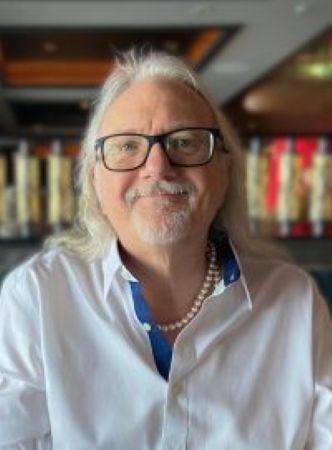
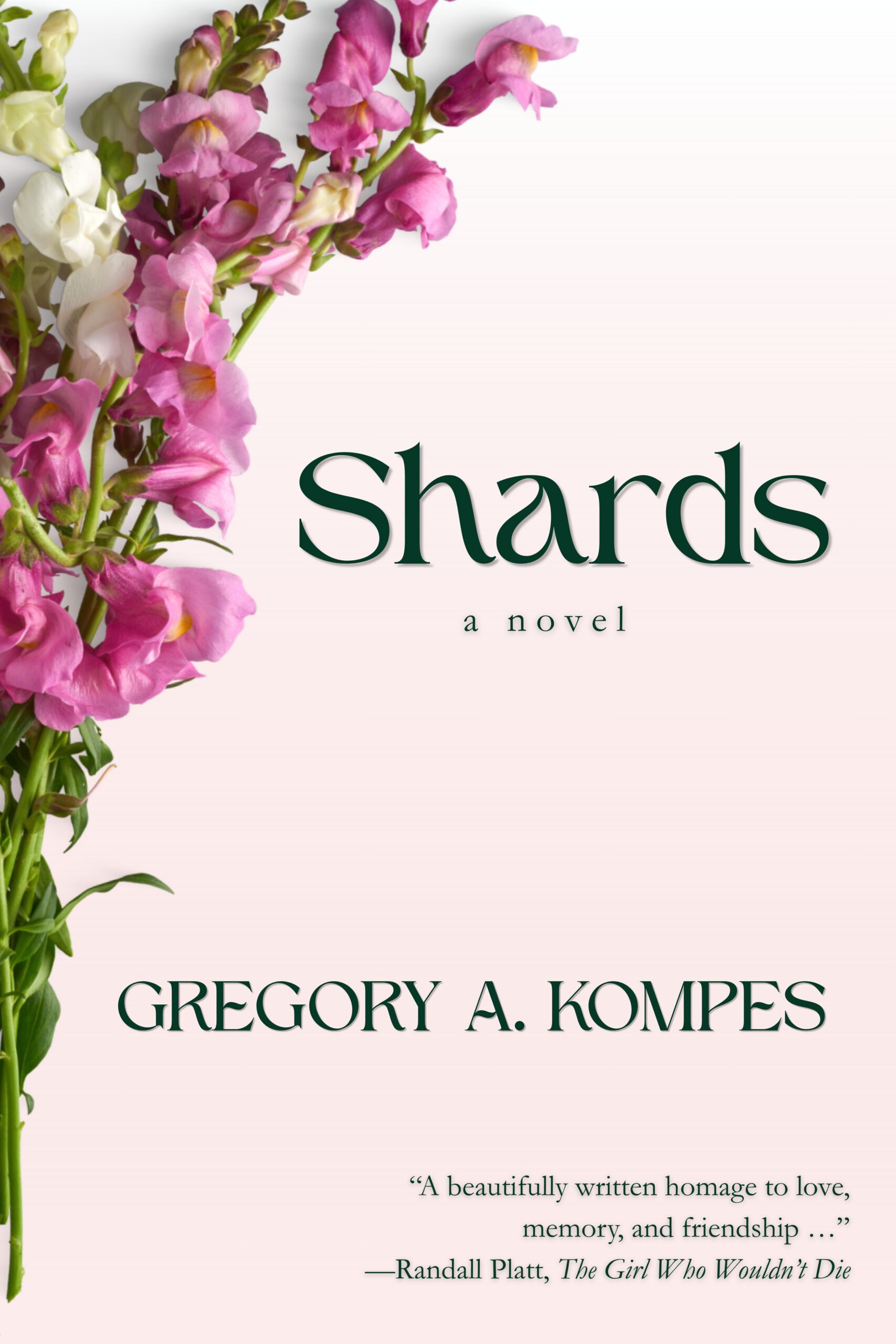
Gregory A. Kompes (MFA, MS Ed.), founder of The Writer Workshop, is an award-winning, bestselling writer of fiction, poetry, and nonfiction. He’s authored more than twenty books, including his latest novel, Shards, as well as the Broadway series: Flash Mob, The Middle Man, Tamburlaine, Obsequies, and Busker.
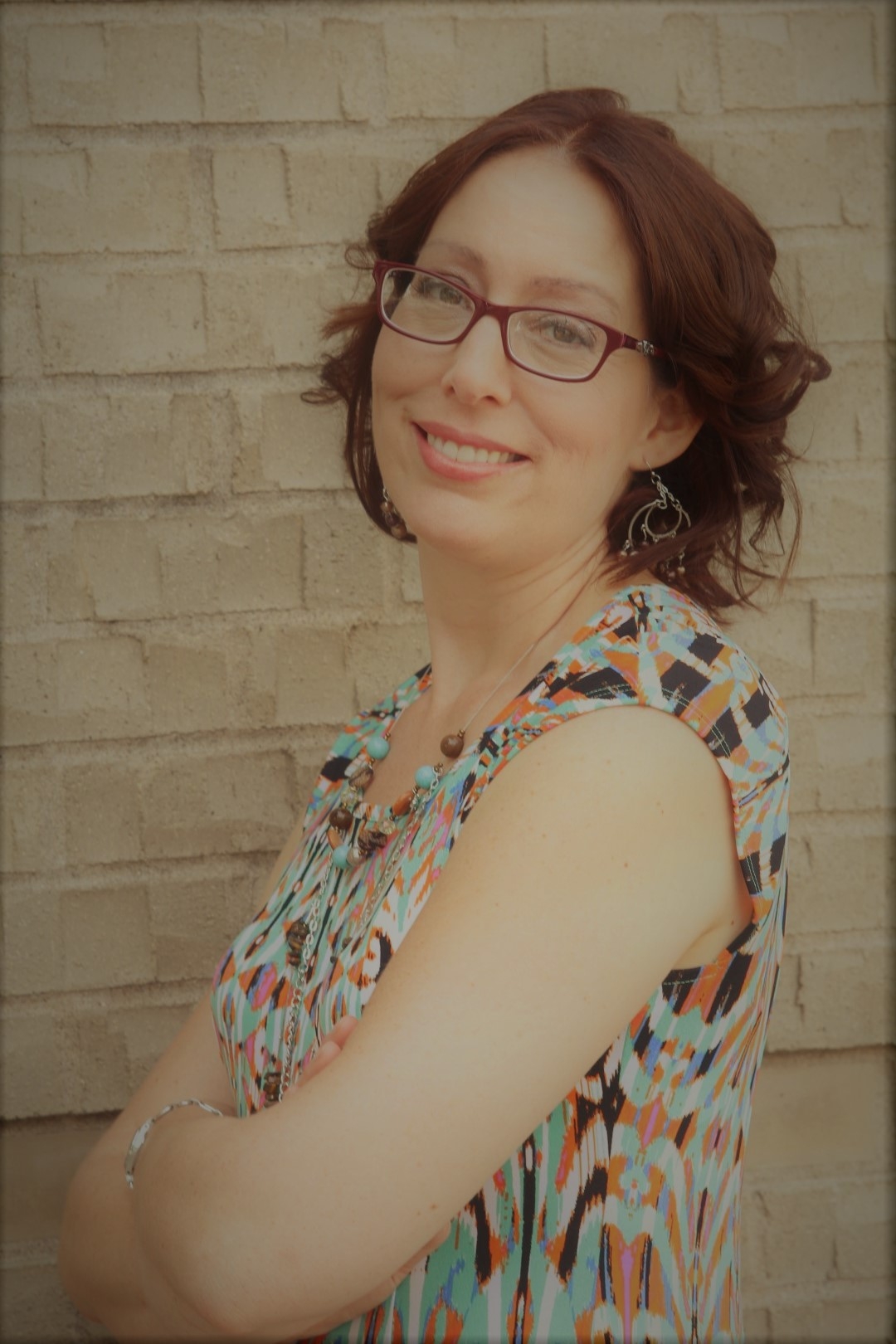
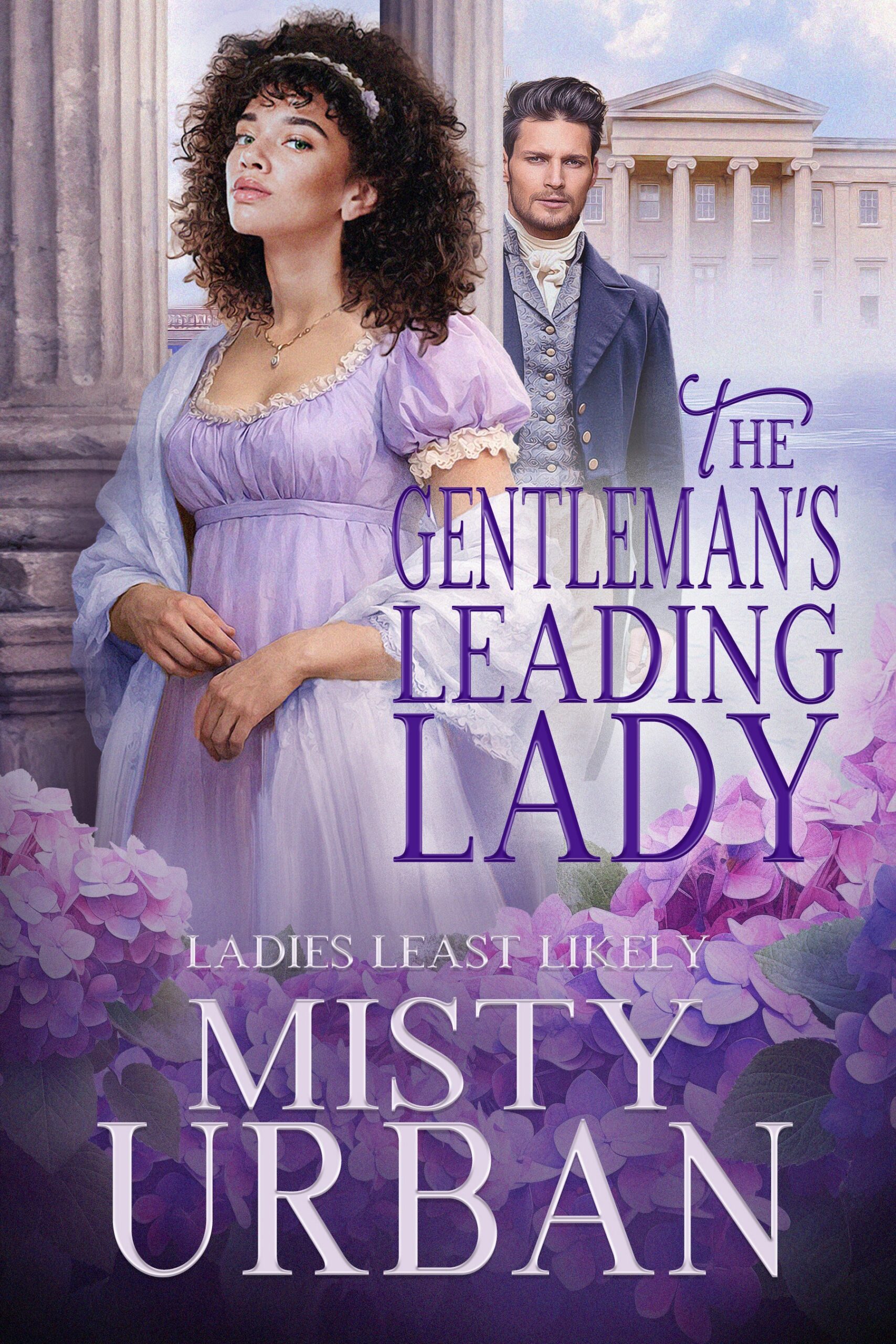
Misty Urban is an award-winning, multi-genre author whose work has been recognized with nominations for Pushcart Prizes and Best of the Net awards as well as starred reviews from Publisher’s Weekly. Most recently, she is the author of The Fortune Hunter’s Gamble, part of her Ladies Least Likely series of Georgian historical romance published by Oliver Heber Books.
In addition to teaching for Southern New Hampshire University, Misty is a ghostwriter, book reviewer, writing coach, and founding editor of Madwriters (madwriters.net). She holds an MFA in fiction and a Ph.D. in medieval literature from Cornell University.
After reading from Shards and The Fortune Hunter’s Gamble, respectively, Gregory and Misty answered questions from the audience and from SNHU Associate Dean Paul Witcover.
Following is a transcript of that Q&A, edited for the page.
W4W: You both do a great job of showing instead of telling. Do you have any advice for learning how to do that?
MU: It’s all in the concrete sensory detail. If you’ve ever had a class with me, you’ve heard me say this over and over and over. The way you bring a reader into the scene is the sensory details, all of them, as much as you can get in. You don’t want to overload. You want to be careful, and you want to keep everything rooted in the reader’s perspective.
The other thing that I get to play with as a genre writer is lots of action. The emotion gets to be close to the surface. You don’t really have to hint at it. But I do like for there to be some byplay. And again, that’s in the detail.
In what I read, what Rowden notices about what Sophronia is wearing—not everything, the things that jump out to him. In Gregory’s example, the food really roots you there. So, concrete sensory detail, that’s the way to do it, if you ask me.
W4W: Yeah. And just one thing I’ll point out before I turn to Gregory is—like in the example that you just gave from your own work, it’s not just the details, the sensory details that are chosen. It’s how those sensory details reveal aspects of character at the same time.
MU: Exactly.
W4W: Gregory, let me pose the same question to you.
GAK: One of the things I find myself commenting on a lot with students is filter words, getting filter words out. So things like felt, heard, talked—
W4W: I was going to ask if you could explain filter words. Go ahead.
 GAK: Yeah, so the filter word is “I looked,” “I heard,” “I smelled.” Getting those things out forces you as a writer to get into the detail of what was seen, what was heard, and finding a way to get that on the page. The question was about that wonderful cliche we all live with as writers, which is “Show, don’t tell,” and this is one of the ways to do that, which is by showing us what was seen versus telling us a character saw something or noticed something. And then the other thing I like to nudge is, can you add one or two words to whatever it is you’re trying to describe that are really unique and special? Like food in the scenes Misty just mentioned. A tomato that bursts in your mouth like July, for example. And this works whether you’re writing genre or literary fiction or whatever you’re writing. Nonfiction even. Finding one or two words that really describe the thing, the element.
So that’s really how I think you get there. And just listen to the feedback. You have to listen to the feedback that you get from other people, from other writers during workshop, because they’re going to ask you for more of something. And that’s the place, I think, where the detail goes.
W4W: Telling sometimes gets a bad rap. Aspiring writers might feel like, well, I should never tell. And maybe you should never tell. But sometimes you need to.
GAK: I think telling works. Paraphrasing. And there are times where telling is the perfect thing. It isn’t that we should never do it. It’s that we should write with intention.
W4W: Misty, in writing your romances, when do you know that it’s appropriate to tell?
MU: The example I give from what I just read would be telling the reader that Rowden is bad with math and not a fast learner, but Sophronia is. That would be tedious, and it would slow down the scene to try to show that. I can flip it in with the kind of mental math he does when he’s calculating when he’ll be ready to marry and use it for a joke. But that was something where it was simply easier to say he’s a dunderhead.
W4W: But at the same time, you’re giving us in that scene all of this information, which is essentially exposition, but you mask it in, again, character and voice—the details about the respective financial condition of their families, the sense of their backstory, the sense of what lies ahead for them. That’s all very adeptly conveyed without actually being set down in a big expository lump. But nonetheless, it’s exposition, even if some of it’s inferred or camouflaged.
MU: It is. That’s the work of the first few pages, isn’t it? You have to convey so much information and plant the hook and start the characters on their arc. And you just get a few pages to do that. It’s a huge challenge every time.
W4W: I’m going to grab another question for you, Misty, out of the chat. Here goes: I would like to ask Misty where she draws her inspiration for medieval literature from. Is it mainly through Shakespeare or are there other sources that inspire you?
MU: Oh, medieval literature! I’m going to tell a little narrative. So I went to my master’s program to write creatively. And I had to take some literature classes, obviously, as everybody here knows. And so I chose Old English. I love languages. And I walked into my Old English class, and Professor David Johnson started reading to us in Old English.
 And what he was reading to us was prose sermons, Aelfric, very boring, but the language just captured me. Just the sound of it was amazing. And that was it. You hear that thing or you hear that story and you think, I need to study this. I need to study this as long as I can. So I started with Old English, and then I moved into medieval literature for my PhD, partially because there was more of it.
When you are a PhD scholar and you have to contribute to a field, you want to have a way in. But what happened was I discovered medieval romance. I came to my MFA program as a secret romance writer. That was what I was writing. My stories were ending happily, and I couldn’t say this in workshop. I was like, it’s not literary to be a romance writer. I was writing literary fiction for my MFA and writing romances in my head.
But the medieval romance—sorry, to get back to the question—is just wild. It has the most wild metaphors. It has the most phenomenal plots. It has huge cultural biases, like very cringeworthy cultural biases. But it was so interesting to reflect on. What were these stories doing for the people who were listening to them at the time? And that really hooked me.
So to answer that question, it’s medieval romance that first inspired me. And Shakespeare is wonderful, but he’s actually Modern English. He’s early modern. So before Shakespeare, you have the Old English, which is your Beowulf, you have the Middle English, which is your Chaucer, and then you have your Renaissance English.
And the language really starts changing and modernizing. Shakespeare drew in a lot of medieval romances. Midsummer Night’s Dream is a callback to early romances. The Tempest is a callback to some of those earlier romances.
So the thing I loved about the medieval literature was just the wildness of it—werewolves, fairies, monster women, knights who go out and kill ten-thousand people in one battle. But what does that mean? What is that saying? That’s the thing that I enjoyed the most.
W4W: It sounds like you should be writing romantasy, Misty!
MU: It’s funny, because I often get asked, why aren’t you writing your romances in the medieval period? And the problem is that I knew too much about it, and I was afraid my medieval colleagues would come back and be like, you really represented that poorly.
There was an accuracy hurdle that I have to get over. But romantasy, yeah, you get to make it up. I think that’s fabulous imaginative license. That’s what the medieval romance writers were doing. They were making up worlds. That’s what we do every day, right?
W4W: Yes, exactly. So you told us a little bit about your journey through academia to writing the romances that you write today. Let me switch over to Gregory and ask you to give us a little précis of your journey to becoming a writer.
GAK: Yeah. So I had been told in the ninth grade by Mrs. Leedale—I can use her name; she’s dead now—that I would never be a writer.
W4W: What?
GAK: Yeah, because I had trouble spelling. I was a terrible speller. And this was before computers and before spell check and before all this stuff we rely on today. And I listened to her, and that was a terrible mistake. But I know now as an educator, she took the wrong direction. She was trying to motivate me to do more work, but instead she shut me down.
So I was a closet writer for many, many years. And then I dropped out of college. I was a music major in college for the first time, and then I dropped out of school to be a musician. And I’ve worn all these different hats over my lifetime. And then I ended up in New York City, and I decided to go back to school, and the companies I was working for would pay for it.
I ended up going to Columbia University. And I got a degree in English literature because I still couldn’t come out of the closet as a writer. And I love having an English literature degree. I think it’s really useful. Not financially, but it’s been really useful to enriching my life.
And then along the way, I sort of came out slowly as a writer and took some writing classes. And I finally did my MFA. And what’s so interesting is when I did my MFA, I didn’t write literary fiction. I actually wrote a steampunk novel, and it was really difficult for me to find an advisor who would take me on because I hadn’t written literary fiction.
I’ve written lots and lots of genre. And what’s interesting is with Shards, I’ve taken a left turn, and I’ve ended up writing a piece of literary fiction. But so anyway, so I did the bachelor’s degree in Lit. Well, the first bachelor’s degree, I dropped out of. The second bachelor’s degree I did in literature.
Then I did my MFA. No, I did an MSF in online teaching and learning. And then I did my MFA. And then I did another MA at SNHU in screenwriting. Because when you teach for a university, you can go to school, you can take some classes for free.
So I’ve had this really circuitous route along the way. And then I started writing books. And once you write a couple of books, you’re a writer. I mean, you just do it. So that’s really how I spend my time now is writing. And that was so, oh my gosh, all over the place.
I thank Mrs. Leedale in some ways because my life ended up being much richer because I did all these other things, trying to find my way in the world and trying to find something I really wanted to do. I toured as a musician and did all this really cool stuff. And out of that, I have my Broadway series, right? And that takes in all of my musical theater time. And the joke now is everything ends up in a book.
My friends and family are very aware that they’re going to end up, whatever the scene is or whatever the moment is, I’m going to put it through the grinder and it’s going to come back out. My husband says all the time, it’s hard for me to read your work. And I said, why? And he said, because I know that story, but that’s not how it happened.
W4W: Do you have that issue as well, Misty?
MU: I did with my literary fiction. My mom would read them and say, why are all the mothers so mean? But it’s not you, Mom!
W4W: Gregory, Shards is about a gay couple who have been in a long-term relationship and are now navigating life as one of them goes through dementia. Is that based on any personal experiences with dementia?
GAK: Yeah, the book is actually dedicated to my mother, Mary Ann Cooper, who died this past December. She had a long, slow spiral into dementia, and she was never formally diagnosed. But we all knew that’s what it was. There was just kind of nothing they could do for her. I was not her primary caregiver. We had her living in assisted living because we couldn’t quite handle what she needed, her care.
But I was there. And I watched her brain sort of disappear. The present really left her. She lost her memory of the moments. But she was still having arguments from 1938, I’ll just say. She had a very good memory, in her own way, of the revised stories from her past, because she would revise her past. And then that became the reality.
 So, yeah, so I dealt with that. And then because she was in assisted living, I got to meet a lot of the other residents there. And so I was just around it for a very long period of time. And Shards came out. I teach these writer workshops where we write to prompts. And I write along with the participants. And while I was doing that, I discovered these characters, Allister and Gede. And so I just sort of started writing scenes that were about them that allowed me to process the dementia memory experience I was having with my mom, and then draw on other things. Because you have 25 minutes to write 600 words. And so it’s a sprint, and you just do them. And a lot of the scenes, that’s where they came out of. The core of the scenes, that’s where they came out of.
The interesting thing about that is that, in the end, when someone said, you have a book, I was like, I do not have a book. It’s just a bunch of pieces. When I read through everything in the order that they arrived, it’s almost the exact order that things are presented in the book. There is an arc to these storylines, even though we jump through time, and we really do jump through time.
It gave me permission, too, the dementia experience gave me permission to explore what memory means and how memories come. And that’s where the idea of Shards comes from. That structure of random scenes—that’s how my mother’s memory worked. She would jump from the game show that was happening on the screen in the room to some memory from 1938 to some memory I did not know about between her and my father in a matter of an afternoon. That would be our conversation. So it was all over the place in tiny little bits and pieces. And I read an article. I wish I could find it. But I read an article somewhere along the way, as I was trying to understand my mother and what she was going through, to be able to help her. And a doctor called this memory process shards, that dementia and Alzheimer’s patients have memories in shards, and that sort of stuck. And when my publisher rejected the first title of the book, Shards was my second suggestion.
W4W: I think your publisher may have done you a favor there, because that is an awesome title.
GAK: Yeah, I think he did.
W4W: That brings up something that I hear a lot from young writers especially, and I hope you don’t mind my asking you about this, but I’m assuming that there was a therapeutic aspect to writing this book, a way to work through some of the memories and feelings associated with your mom and her passing.
What is the right balance for a writer to think about the therapeutic aspect of writing? You don’t want it, obviously, to take over your entire book, because then you’re writing a journal for yourself and not a book for other people. But it can still fuel what you’re writing. So how do you go about finding that balance?
GAK: I am terrible at balance in all aspects of my life. I’m just terrible. I think of life more like a moment of jazz where the combo keeps playing in the background and some instrument gets the lead for a while. And you just take the lead as long as it goes, and then it’s someone else’s turn to have the lead. So I don’t really think about it. I don’t worry so much about balance.
I didn’t think this was going to be a book. This was just writing exercises that I really, honestly didn’t think anybody else was going to see beyond the workshop. So there was no intention, there was no thought process, there was no outline. There was no nothing. It was just me processing information and energy at the time. These things were going on. And at the time, I was living in a house in Georgia. It did not have a beautiful garden, but it did have a view of a pond. And so I was sitting at those workshops, looking out at the pond and the birds, thinking about the fact that I just came from my mother’s and I was in tears on the way home because, frankly, she got kind of mean toward the end, as a lot of times happens, because she was so frustrated that she would take it out on the people around her. And it was so it was all so difficult.
And I didn’t worry about it. I was just processing information. And I’m also a fan of Julia Cameron’s The Artist’s Way, if you’ve ever done that. If you haven’t, a lot of people in this room are too young to remember, but in the ’80s or ’90s, everybody had a copy of it on their bookshelf because it was very popular.
There’s a process there called Morning Pages where you write three pages. You’re supposed to do it longhand, but I do it on the computer because I type fast. Anyway, but you dump, you just dump your brain out every morning before you start your day. And I was doing Morning Pages through this period of time, too. So I was dumping a lot of that energy out already.
And what remained went into Shards. But I think part of it was I didn’t expect anyone to see it. There’s also—and I don’t remember who said this; it’s been said by many people in the writing community and the craft books and stuff—but don’t hold anything back. Don’t hold anything back. Put it all on the page. Because you can edit it out later. But if you don’t get it on the page, then you have nothing to work with.
And so I was playing with the idea of putting all of that emotion on the page, layering in as much as I can. There’s a lot of stuff that happens under the surface, because that’s how all these conversations go. Hardly anybody’s honest with each other in the room. And if you were honest with the person going through dementia, they wouldn’t remember it anyway. So there’s so much crap going on.
The other thing is, I wrote all of this before my mother died. The publisher had the book for almost a year and a half before it came out, almost two years. So this was all the stuff that was going on leading up to that. It’s sad that she actually died right before the book came out, but that’s how the journey works.
W4W: Misty, let me turn that same question back to you. In terms of the therapeutic aspect of your writing, how your writing is grounded in your own experiences, your own emotions. I mean, you’re applying it more to a genre template, at least in these books. But nonetheless, I feel confident that there is a very personal wellspring underneath it all.
MU: I think it really matters who’s writing. It’s a completely individual process. I will admit a lot of my early stories, in fact, the entirety of my first short-story collection of A Lesson in Manners, is about grief. It’s about dealing with grief. And I had lost someone very close to me before that.
And so I was coming to the same questions from different angles, from different characters, in different situations. Sometimes it’s the loss of a parent, sometimes it’s the loss of a sibling, sometimes it’s the loss of a child. But I wanted to explore grief. That was the therapy I was giving myself. How do you handle something so immense and so heavy, pretty much what Gregory was finding out.
The balance is something we talk about when I teach the nonfiction workshop, because this is what we bring in the beginning, that raw emotion that we want to share, that we want to talk about. But then how do you sculpt that for a reader? How do you bring the reader into that experience? You felt this because you were there, so how do you recreate that for the reader?
 And that is the job we do over the course of the nonfiction workshop. Thinking about the details, thinking about the way your character will develop, thinking about that arc. For fiction, even for genre fiction, you still have a theme, you still have a character arc. And I find that my characters are asking the questions I have at the time.
How do you find a sense of self-worth when everything around you is destroyed? How do you find your way in the world when you’ve lost the people who were your guides? How do you function on your own when you’ve been betrayed? How do you help your family when you have no legal resources?
There’s always that question, I think, of something that I’ve been mulling over that comes out in my heroine. And there have been a couple of times I committed to a series, and I mapped out the stories from my publisher in advance. And for two of the books in the Ladies Least Likely series, I revised that because I was interested in a different question. Number 13 was supposed to be a sequel to an earlier book. But the question I wanted to explore was, what happens when you’ve betrayed somebody early on, and then they come back into your life and you still love them? What do you do?
So all writing, I think, is a way that we are somehow working out those questions that are on our mind and just won’t let go.
W4W: Both of you are teaching in creative writing programs here at SNHU. What is it that your students really need to know that they don’t know about writing and about writing as a endeavor they might be pursuing, whether as a career or as just something important to them, for the rest of their lives?
MU: The question everybody asks is, is this any good? We know we love it because we wrote it and it matters to us. And we were there, we had that imaginative experience. But the thing we address is, what will happen to my writing in the world? And you don’t always know how to answer that. So one thing I always tell my students—and anyone who’s my student now will be hearing this coming up soon, because it’s week 8—don’t stop.
Write the story you want to write. There was a really interesting question in the chat about balancing commercial realities. And as somebody who’s writing genre for a small publisher and who’s very aware of the demands of advertising and getting your book out there visibility-wise, my publisher is still always telling us, write the best book you can.
So what I want to tell people who are just coming to this is, it’s going to be hard. It’s a craft. It takes time. Like anything, it’s a skill that you develop. But it’s also a matter of your voice and your own creativity and your own sensibility. Hold to that. Honor that. Keep to that. And hold on to that when the world doesn’t see your work.
Some in the world won’t see your work the way you do, but some will. Look for those people. And you have a right to tell the story. It’s your story. No one else can tell it. So share it. Do the best job you can and then share it with the world. And don’t let anything stop you.
W4W: Thank you. That’s great. All right, Gregory, what about you?
GAK: One of the things I focus on a lot with my students and with people in the workshop and writers that I meet is the idea that, for most of us, for almost everybody I know—there are a few exceptions—but for almost everybody I know, this is a very long, slow play. You write a book and then you write a book, and you have a little success. And then you have a book that fails, and then you write another.
And you just keep going. And then along the way, you pick up another fan and you pick up another super fan, and you speak to a book club and you promote yourself, and then you’re too tired of all of it to do anything. And then you write. The best advice I ever got was just write the next book. The best way to promote yourself is to write the next book.
I agree with Misty. You have to write the book you want to write. You have to explore ideas that are interesting to you. Because if stuff is interesting to you, it’s going to end up being interesting on the page. I also think it’s very apparent—most people I know, they don’t really become decent writers until book three or book four, frankly.
There are exceptions to that too, but it takes a while to learn how to write a book and to get comfortable enough with the process that you know you’re going to end up with a book. Because it takes so long that it’s hard to see all of it at one time. So you have to know that you’re going to go into this, and it’s just simply going to take some time, and you’re just going to have to write the next book and write the next book.
And as you get better, and as you promote yourself somewhere new and develop your following, then you have some superfans and then you have something cool happen. And the next thing you know, you’re on television or some amazing radio show happens. And all of a sudden, you jump up on one of the lists or you win an award or something cool happens.
But that often comes from just doing more. You have to just keep going. And I think that’s why we have to really love this. We have to love the craft. I agree with Misty. It is a craft. And so you can get better and better and better over time and develop not just your following but your own skill and your own ability.
And then magic happens. My favorite quote has always been a Seneca quote: “Luck is what happens when preparation meets opportunity.” And I just think we have to keep going and believe in ourselves and then write the next book and write the next book, and then magic will happen for us.
W4W: Writers can really only control, to the extent they can control anything, what’s on the page. Everything else is up to the universe.
GAK: Right. And someone asked in the chat, how do you know when something’s finished? Well, nothing’s ever really finished. You have to say, okay, I’ve done enough, and it’s time to move on to the next thing. Because I know a lot of writers, I’m sure everyone here does too, that all the faculty knows, a lot of writers with great first and second chapters and no book, because they keep revising the beginning of their book, trying to get it read by somebody. And so you have to just stop at some point and move on to the next thing, I think, because you’re a different writer today than you were a year ago or two years ago. And if you hang out too long in that old thing, you’re going to get a little trapped. So you need to write the next thing. And frankly, some books are going to be better than others. That’s just how it goes.
W4W: Misty, I’m going to tell you something that I have noticed that probably will not endear me to many students. But I’ve noticed that a lot of times, writers come into the MFA and let’s say they’re in their mid-twenties or thirties and they’ve been working on something since they were like fifteen.
This is building off something Gregory said. And I feel sometimes like, you know what? Put that aside. Put that book aside and write another book. Which isn’t to say you can’t come back to that book later. But get that book just out of your system however you can, because you’ve held on to it too long. Have you encountered that? And how do you counsel students in that position?
MU: That is really interesting. I can’t think of any recent examples, but I know it happens. It definitely happens. And if you’ve been working on it that long, you need a new perspective. You need a new way to come at it. One of the things I love to do in creative writing classes at any level, when we can, is to just bring in new inspiration, new sources. When I would teach in person, we’d go to the art museum and we’d write one day. We’d go outside and sit underneath a tree and we’d write one day. To those people who are still trying to find a way in, I would say, write it in a different genre, write it as a screenplay, write it as a prose poem, write it as a monologue of the sky speaking, whatever. Just come at in a new way.
Because you haven’t yet figured out the heart of it. There was an earlier question about writer’s block. And I always used to say, well, I don’t get writer’s block. It’s a character block. And now I’m working with this manuscript, and every day I’m like, what do you want? What aren’t you saying?
It’s definitely harder, this manuscript. And when that happens, it’s just, you see my writer’s block breakthrough right here. It’s my elliptical. I just jump on it. Movement, new movement, fresh perspective, a different way in. And, yes, lower your expectations. Gregory is right. It’s never finished. It’s just the best you can do right now.
There are so many times when I have a deadline and I’m like, I’m just going to send this to my editor and she’ll tell me everything that’s wrong. And my editor comes back and she’s like, this is pretty good. This is pretty clean. You did okay. And I’m like, oh, all right, dodged a bullet that time!
W4W: Fooled them again.
MU: Yeah. Just come at it in a new way. Don’t give up on those questions that are in your mind. Don’t give up on that thing that you have to write, but bring in a fresh air. Punch a hole.
W4W: What’s next for you, Misty?
MU: I just wrapped up my historical romance series, which doesn’t mean I’m done writing historical romance. I’ve committed to another novella next year. But my publisher and I were tossing around series ideas, and she said, how do you feel about Victorian mystery? I thought about it, and I said, how do you feel about Victorian mystery with a bit of paranormal and literary basis? And she said, how many books do you want to write? Yeah, it’s going to be so much fun.
W4W: Oh, that’s great. I’m excited about that. Gregory, what about you? What’s next?
GAK: I’m workshopping book 6 in the Broadway series, which is a bit of a thriller. And then I’m writing a serial-killer prequel. It’s about a serial killer with dementia. I have a little bit of a dementia theme. So I’m playing with that. That’s almost finished. It’s in the workshop. And I’m developing a new idea for a series of cozy mysteries set in a quilt shop, a quilter, so set in a quilt shop. And the boyfriend of the guy who owns the shop is raising a guiding-eye-for-the-blind dog, which is something I’m about to finish doing.
W4W: That’s a great illustration of what you were saying earlier, how whatever is in your life is going into your books.
Category: