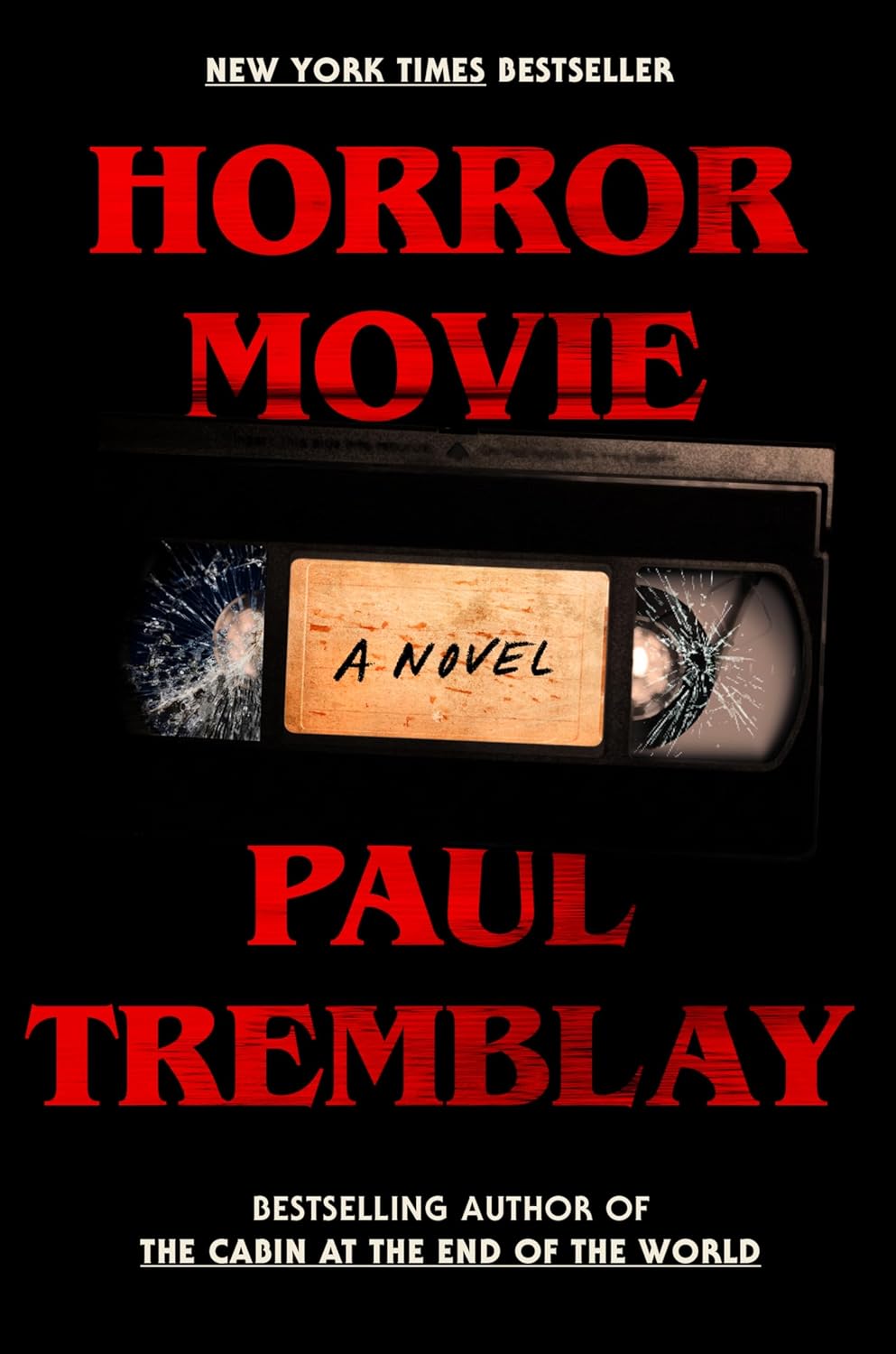
On Wednesday, December 10, 2025, the Word for Word Literary Series proudly welcomed horror master Paul Tremblay! Tremblay has won the Bram Stoker, British Fantasy, Sheridan Le Fanu, and Massachusetts Book awards and is the New York Times bestselling author of Horror Movie: A Novel, The Beast You Are, The Pallbearers Club, Survivor Song, Growing Things and Other Stories, Disappearance at Devil’s Rock, A Head Full of Ghosts, and the crime novels The Little Sleep and No Sleep Till Wonderland. His novel The Cabin at the End of the World was adapted into the Universal Pictures film Knock at the Cabin. His essays and short fiction have appeared in the New York Times, Boston Globe, Los Angeles Times, and numerous “year’s best” anthologies. He lives outside of Boston, Massachusetts, with his family and has a master’s degree in Mathematics.
After reading from his novel Horror Movie, Tremblay answered questions from the audience and from moderators Jacob Powers and Paul Witcover. The following transcript of that Q&A has been edited for publication.
W4W: Where do mathematics and horror intersect?
PT: Usually when I tell people I teach math, they react more scared over the math part than horror. It’s hard to explain. I think sometimes maybe I approach my writing more analytically than some, but I don’t know if that’s just me trying to rationalize an after-the-fact connection between the two.
W4W: It probably comes as no surprise that a lot of people are responding to the film aspect of your novel Horror Movie. Obviously, horror is a genre that very much includes movies as well as books. What lessons can prose writers take from horror cinema and adapt to the page
PT: Honestly, I’m usually thinking more like I’m trying to unlearn the lessons of watching movies. I feel really strongly, and I don’t know if Zadie Smith was the first to say this, but I’ll credit her since it’s maybe the most recent. “Writers, if you’re writing a novel or a short story, you should be essentially trying to make it unfilmable or, if not unfilmable, fundamentally different. You chose this form to tell the story. You should try to make it the best form for it to be and not just write, basically, a treatment for a screenplay.”
I take that to heart. I think about that. My degree was in math. I didn’t study English. I didn’t get an MFA. I never even took a creative writing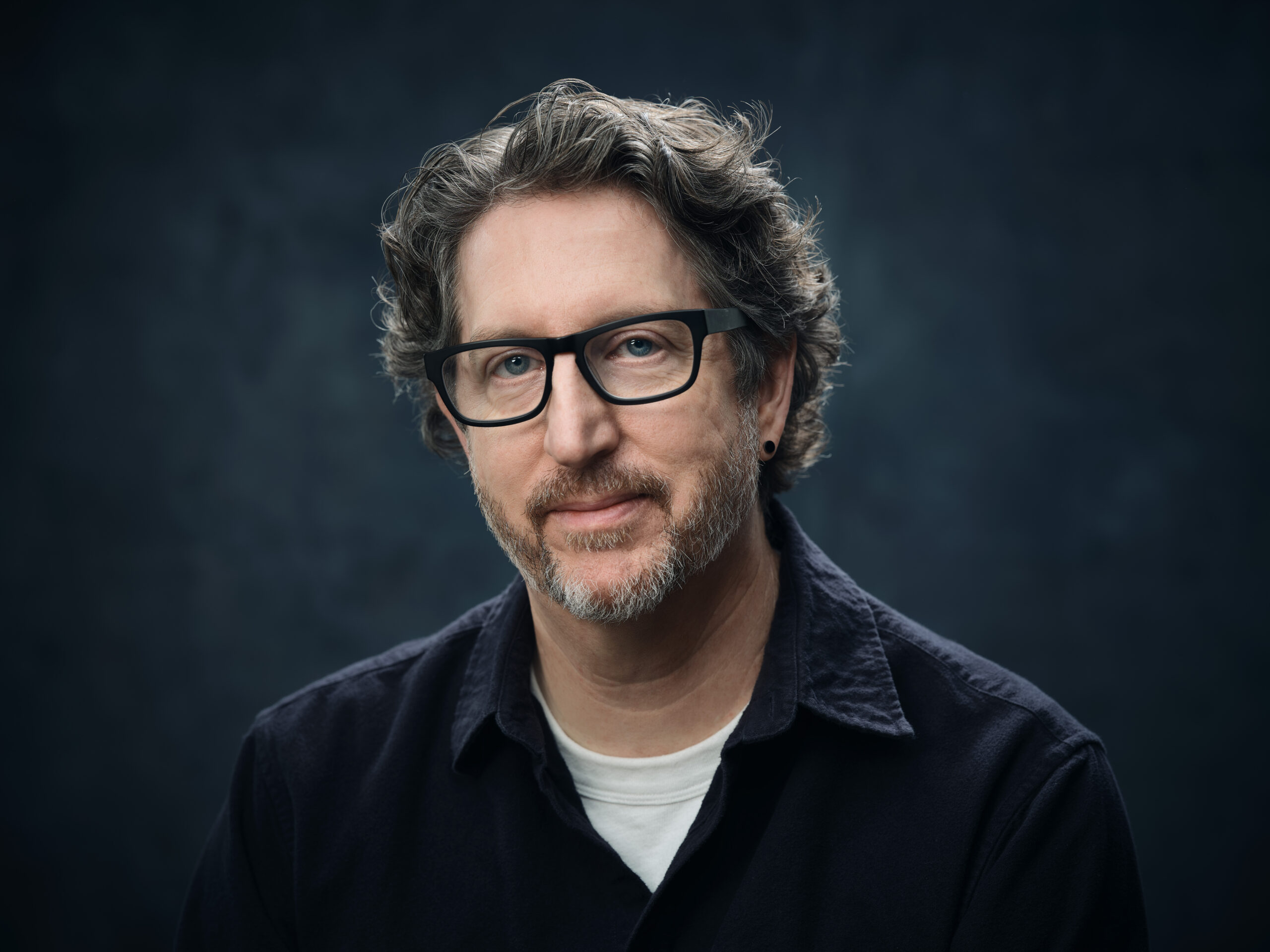 class. I came to reading for pleasure kind of late. I don’t mean this as an anti-intellectual thing. I have a point. I read as a student because I was a good, mousy high school student who read all the assigned books. But I wasn’t a big reader for pleasure. I was a child of the ’80s who came home and watched cable TV and listened to records. I didn’t fall in love with reading until my early 20s.
So when I first started reading and first started writing, I had this real lack of self-esteem and agita over the fact, like, oh man, I haven’t read all these books! For my formative years, what I knew of a story was almost exclusively from film and television, based on the amount that I consumed.
This book for me was like I wanted to play with, hey, what did I learn and what did I have to unlearn from watching too many movies? But at the same time, what’s cool about both? So, yeah, there’s a screenplay, but I also purposely wrote the screenplay in a way that no executive in Hollywood would ever accept.
I was setting out to break the rules of a movie and more sort of unleash the power of what written word can do compared to a movie.
W4W: I’m going to jump into the chat and pull a question out. “I spent 20 years in the military and found creative writing to be a powerful way to process those experiences. I’m drawn to horror and surreal tones, and I admire how you use them in your work. If you had to give one piece of advice to a veteran like me on using writing as a tool for healing while still creating compelling stories, what would it be?”
PT: Thank you, I’m honored. What a great, heavy question. The hard part is what draws everyone to horror—it’s so individual. So I think it’s great that they know they’re healing that way.
I’m laughing because I wrote a book called The Pallbearers Club, and I thought that was going to be healing. I wrote that in 2020 and 2021 when I came to the realization, like so many people, I had a shitty time in high school, and I realized I write because I’m always trying to prove I had something worth saying.
I thought this book might get that out of my system. I mean, I’m really proud of the book, but I did not get that out of my system. There was no healing. I mean, that’s a lot of pressure to put on your writing. If it does that for you, that’s great. But also, don’t feel bad if it doesn’t heal you. To me, the point of art, the point of writing, is communication between you and another human.
Even though we’re writing about really dark things and terrible things, still I find it hopeful, because there is that shared communication between the writer and the reader. That’s a hopeful thing to me. Whether or not it heals people, I mean, I think hope always does heal people, but it makes me feel less alone when I read a book that I really love, because oh, this person, they get it—they feel the same things I feel that I couldn’t describe other than saying, hey, read this book. That’s the description of how I feel. That’s what continually draws me to read and also to write.
W4W: Writing is an act of communication, of reaching out to another or others, but at the same time, it’s an internal process in you as the writer, and something is being worked out or something is taking place. I know, for example, with my own work, that I often set myself a challenge, I accomplish it, and I feel like I’ve leveled up or something, not just as a writer, but as a human being. Have you ever felt that?
PT: Oh, a hundred percent. You said essentially what I was going to mention. George Saunders wrote a book called A Swim in the Pond in the Rain. In that book, he breaks down a bunch of Russian short stories. But somewhere in there he talks about something exactly as you said, like, the idea that you work on this thing, and this thing that you complete is in some way better than you are.
I mean, that’s a little bit glib, but the idea that it says it better than you could at any moment—clearly, as I’m just rambling in this moment. But it is, especially if it’s a novel. I spent twelve to fifteen months on the draft and then another three to four with the editor and put all this time and energy into it, and I’m proud of this thing that says things I never thought I would have the emotional language to say. That’s the exciting part for me.
W4W: How did you get into horror in the first place?
PT: It’s something I’ve had a love-terrified relationship with since my earliest memories of media, like, as a four- or five-year-old, seeing Disney’s Rescuers, or Creature Double Feature for any older New Englanders. But also at the same time, I’m still pretty much afraid of the dark in a kid way.
Now that my kids are older, if I’m in the house by myself, a lot of lights are on, or if I have to sleep by myself because my wife is on a work trip, it’s a 50/50 chance her nightstand lamp is on. In one way, it’s awful to live like that, but it certainly helps the horror brain.
W4W: What about process? Does it get easier?
PT: Yes and no. The book I’m working on right now has me bashing my head off the desk. But that’s OK. I want it to be hard, because I feel like if it would be easy, that would mean I’m going through the motions somehow, right?
 If it was easy, would it be worth spending twelve to fifteen months on it? I know other writers write quicker and other writers write longer, but it’s supposed to be hard. It’s easier only in the way that’s like, oh, I’ve done this before, so I can do it again. But I spend more time thinking about trying to make each book feel subtly different. I’ll even just do goofy things to fool myself into thinking it’s different.
Some books I write outlines for, some I don’t, some I just outline a little bit. I try to have that balance of confidence—hey, I’ve done this before—but also I want to remind myself that whatever I do for this next book, it’s starting over. It’s brand new, and everything I do has to serve this book in some way.
I’ve been a high school math teacher for thirty years. So there were ebbs and flows in how much time I had to write. But when I am working, I try to write most every day. If that equates to five out of seven days, that’s OK. I give myself permission to miss days when life happens. But I try to steal an hour a day, hour and a half. And then on the off days, maybe I’ll go for two, two and a half.
And the math side of me is like, hey, that accrues if you do that. The summation adds up. And that’s where maybe the math part comes in.
W4W: Are there common pitfalls you see that new horror writers fall into?
PT: Like we talked about before, don’t imagine that you’re writing a movie. If an editor or someone says, oh, it’s the movie in your mind, I would avoid getting writing advice from that person! No, writing is a different thing. So one, don’t write treatments. I mean, pay attention to the sentences, those basic things. I think that helps people really stand out. If it’s really, really well written, really beautiful sentences, you can get away with a lot more. When I say get away, you can maybe get away with a story that doesn’t have a happy ending.
I think if you’re a new writer—and this doesn’t mean you’re necessarily taking stories from your life and writing horror novels—but your job is to filter your experience into the story. This could go for anything besides horror, but you’re trying to filter your experience through. That’s what’s going to make it unique.
If it’s a zombie story, no one’s heard your zombie story. And that’s the hard part, the part that we practice and people are taking classes in. It’s how you figure out how to filter the you through those stories. Because almost every horror story has been done before in one way or another, but what makes it new is the writer. So says the math teacher, anyway.
W4W: What do you think makes fear work differently on the page than on the screen? I mean, pacing is kind of an essential aspect for both forms. But how does literary pacing create tension in ways that differ from cinematic tools like jump scares? Because I think a lot of our writers often come to a point where it’s like, I got a really scary idea, but I just don’t know if it’s actually coming off as scary on the page.
PT: I’m going to say two things that your teachers probably may disagree with, and they’re welcome to. First, I honestly don’t know what scares other people. And I really don’t worry. I try not to worry about is this scary. Because I think that’s beyond my control.
You and I can intellectualize, like, oh, that was intended to be scary. But whether it scares us, I have no idea. So I try to focus more on the things that I can control, which is moving the reader emotionally. Disturbing, I think, is a little bit more universal. If they’re scared, great. I honestly have no idea.
On the other part—and maybe this is again just me being a contrarian—I don’t believe in pacing. Obviously, you guys study. You guys have degrees. I should say I don’t agree with pacing when some bookstagrammers refer to it, or Goodreads people . . . People just throw out the word “pacing.” So I should just say people who aren’t invested in story.
Because to me, when people say, oh, the pacing was bad, about a movie or about a book, to me that generally translates into, oh, there wasn’t enough stabbing and explosions. Pacing is usually equated with plot. So as I get grumpier, I bristle at that. Because for me, pacing doesn’t preclude having characterization or other things happening that aren’t just like the exciting things.
It’s probably a little bit semantic. So what I tend to think of instead is, does this serve the story? Does this beat move the story in some way? Does it give you atmosphere? Does it give you important information about the character or the voice or this or that? And then if it doesn’t, it’s got to go. And if it stays, that’s probably what makes the pacing lag afterward. So my fear—to go back to what we were talking a little bit about before—is that too many people just culturally, just automatically, go, oh, pacing is like a movie. Pacing is these things happen. Story beats. Nothing makes me more crazy, especially on the Hollywood side of things, when they talk about screenplays having to have story beats. Like, what the fuck’s a story beat?
W4W: I guess what I see sometimes when watching a film, there’s a lot of things working with it. Like the music, for one. I mean, I think back to Friday the 13th, the first one, and how if that score wasn’t in that movie, it would be just a goofy-as-hell movie. But the score is actually what makes it work.
But as writers, we don’t have that score. And I think that that’s one of the things a lot of emerging writers kind of struggle with. How do I get that horror on the page without it being so obviously, ha, I got you, or this is supposed to be spooky and scary, or that kind of thing. So I wonder if you have any advice in that context.
PT: That’s a great way of putting it and a great question. One of my favorite writers is Shirley Jackson. And obviously I’m not saying I’m anywhere near Shirley Jackson, but one of the things I admire about her work is it feels so mundane insofar as it’s lived in. It’s realistic. Kelly Link does this too.
Then you have something just be off a little bit, and you don’t need the violin sting of a movie. You can just have like everything feels real. This feels like I know these people or I’ve been in this situation. But then you have the thing that happens, like the lift of the horror story.
It’s almost counterintuitive. If you work on the things that aren’t the horror parts, and if you do that well enough, the horror parts have a leg up, because the thing that’s been built, scaffolded, around it feels more real.
You got to have horror and comedy—that’s what you hear from some editors and filmmakers, especially. This terrible stuff will be happening, and people will take the time to have a quick joke or two or something. A lot of people like that. I don’t. Yeah, I keep blaming Hollywood and editors, the cynical editors and filmmakers.
I mentioned it in Horror Movie. It came right directly from a meeting with a producer that I had. He said, hey, we want horror, but can’t be too grim, and it has to have a happy ending. I’m like, well, you certainly don’t want my horror! And I’ve been hearing that from some writers, some of the comments they get from their editors about, oh, it has to have heart. It has to have a happy ending.
And listen, that’s not to say I’m against things that have a happy ending, as long as it honors the experience of the readers and the characters. But for it to become like, oh, this is what horror is supposed to be—that’s coming from people who don’t like the genre, have very little experience with it, and are only doing it now because it’s, quote unquote, “hot.”
W4W: Horror is a genre with a long history. And we were talking—again, before we let people into the room—we were talking about Peter Straub and that a lot of younger writers aren’t aware of the work of Peter Straub and writers of his generation, even. Probably Stephen King is the most famous of those writers to still command a huge following.
But how important is it, do you think, for writers who aspire to write in the horror genre or any genre to be familiar with or conversant with the history of that genre and the writers that came before, as opposed to just reading whoever is hot today and trying to model your work after them?
PT: There are people who are capable of only just dipping in and writing something from a genre. That’s fine. I think it could only help if you read a little wider. But at the same time, I would never say somebody would have to be a completist. Just from my own reading experience, I haven’t read a ton of Lovecraft. I wasn’t super into him, but I read enough people who were doing cosmic-horror Lovecraft. I felt like, oh, I get it.
So there is that part of it . . . I mean, to maybe ease maybe the anxiety of some people who are thinking, oh, man, I haven’t read a ton of horror. The cool part is, as you mentioned, the history of the genre. I think of the best stories—not only do they fit within the genre, but they fit into the long conversation that you get to join in as both a reader and as a writer.
If you’re going to write it, why not take advantage of it? I’m in a very lucky spot where I get sent a lot of people’s horror books early, so I definitely read a lot of contemporary horror and new horror. But I try to read other stuff too, books aside from my favorite horror writers, literary fiction that skews, maybe, a little darker, like Roberto Bolaño or Paul Auster, whatever weird books I find.
W4W: As someone who began their career as a writer in maybe pre- or very early Internet era, and now somebody who’s writing in what is becoming the AI era, what changes have you seen, and what do you see as the challenges that lie ahead for writers?
PT: When I first started selling stories in the early 2000s, there was definitely a big online component. I mean, there were online zines. That’s where I was selling. A lot of people were blogging, LiveJournal, so there was a connection. And it was—I wouldn’t have to spend as much time on it, like you do now with social media. That to me was one of the bigger changes, you know, before we get to AI. The dawn of social media has changed the expectations of writers in a really unhealthy way, I think.
When I say expectations of writers—expectations of what they’re going to do, if you’re working with a large publisher. They expect you to be online. And I hear horror stories from new writers all the time where they just sort of casually mention to me like, oh, yeah, this agency or this publisher asked me how many followers I had, and I needed to build up more followers first or something. Well, how are you supposed to do that?
It’s a little bit insane to me, because so many of us become writers because we’re much more comfortable sitting in our little dark corner, being by ourselves as opposed to all of a sudden having to be online performers. It’s definitely not healthy.
W4W: Or it’s selecting for a different type of writer. I often wonder about that. Because I’m like you. I want to be in my little corner typing away. But there are so many other writers that you see really do take to this new environment very naturally and very well, or seemingly naturally, and thrive in it.
PT: No, absolutely. I just hope that new writers don’t feel like they have to be performers. It might be you just have to find another way.
And for me, I mean, I like teaching, but part of my gig was that was the artistic safety net. It’s like I’m going to write my weird shit, and if no one wants it, I’ll publish it with an indie. I was patient. I’m glad I’m not new now, because the urge would be to self-publish. For the vast, vast, vast majority of people, that’s not going to go well for you.
W4W: Can you explain a little bit why that would be the case?
PT: To self-publish? Because just how easy it is. It took me two years to find an agent, hundreds of rejects. And this is pre-social media. So now if I was waiting around for two years, I would go insane by seeing all these people on Instagram or whatever platform talking about all the great stuff that they’re doing. I feel that pressure now. If I look at it for five minutes, I’m like, oh my God, I’m not doing enough, look at what this person’s doing.
Of course, we try to be rational, take a step back. And I’m very happy for all the successes that my fellow writers have and stuff, but that messes with your head. So I know that part of it’s hard. The only advice I think that’s worth anything is to be patient and to be kind to yourself. And just remember, there’s so many different paths to becoming a writer. It does not mean that you have to go on TikTok.
My publisher asked me once if I would go on TikTok. I think I’ve told this story before. I’m sorry if people out there have heard it, but I still might do this if I’m desperate enough. If I go full-time writing, and I need more money. I asked him, could I do a puppet account? I said, a literal puppet account. Make me a puppet that looks like me, and I will have it go on TikTok. I went so far as to go on Etsy. You could get a puppet made for 300 bucks.
W4W: Money well spent and tax deductible for this purpose!
PT: Yeah, I think I went far afield to the rest of the question.
W4W: What about the future of—
PT: Oh, yeah. So I was part of a lawsuit suing OpenAI for two years. Myself, Christopher Golden, Richard Kadrey, and Sarah Silverman were a part of the first filed lawsuit against OpenAI.
W4W: The Anthropic suit?
PT: No, OpenAI. Anthropic is its own AI platform. There are so many of them. It’s depressing. We filed in June of ’23, which was the first writer one against specifically OpenAI. You know, and like any big case, it took forever. And this September or this spring, I had to do a deposition, which I don’t recommend. This summer, because there were like 10 different lawsuits against specifically OpenAI, a federal judge consolidated everybody. And so at that point, you don’t need all the different plaintiffs. You only need a certain amount. So I’m no longer a part of the case, which is fine.
So I’ve been thinking about the AI thing for a while. On one hand, I definitely lump it in with—and we just talked about saying, hey, you should be writing a book, not a movie. I think about writing something that AI can’t do and whatever that might mean.
For me, stereotypically, it means having a screenplay in the middle of it, or this next book that I have coming out has got weird, weird interior design of the text being moved around. In the book that’s coming out this summer is an anti-AI screed, so that experience goes into it too. It’s crystallized what I think about art and its value and what it means.
And it also means telling people it’s wrong to use it. I think people—writers and publishers and editors and even readers—you have to reject it. Like, no, this is not right. You should not accept AI art. You should not use it. You should not use ChatGPT. You’re not a writer if you use it. No, that’s not an ableist statement, which was originally put out there by OpenAI. So it is a battle. It’s something that’s going to have to be fought tooth and nail.
W4W: This is something we’re dealing with in our programs and with our writers. It’s difficult. But we’re doing our best to make it clear, at least in our programs, that it’s not a helpful tool, to put it mildly.
PT: I appreciate that.
W4W: You’ve been talking a little bit about your frustrations with producers and Hollywood and stuff, and especially with, like, oh, this horror movie has to have a happy ending and all that kind of stuff. But you have had your work adapted to the screen. How did that come to be? And what is your experience with that?
PT: The short version is because I have a really excellent literary agent. When I had my first couple novels published, he went out and got me film representation. And the film reps basically send the books out there. Sometimes people will come to the agents looking for the books. So yeah, it’s different than looking for an agent with your book. I’m almost doing nothing on the film side. They do it themselves, which is great.
As far as the adaptation experience itself, it was very strange in a fun way and also in a stressful way. I like the movie, but I really don’t like the ending. But I like talking about the differences. There’s nothing in the movie that I was like, oh, I wish I did that in the book. But there were things, especially in the first half of the movie, that I really appreciated, things he was able to communicate solely through images about the characters, which I thought was really cool.
For me, the biggest frustration was them hiding the fact that they were adapting the novel for the lead-up until the movie came out. I still don’t understand why it had to be that way. It didn’t have to be that way. Without getting too far into that stuff, that was frustrating.
And we don’t have—like, novelists, when I say “we”—we don’t have a union. We don’t have the Writers Guild. We don’t have those protections, which makes it hard, which makes what you all do—especially, I know you teach writing, but you also help with the business side of things—that much more important.
That’s why I try to be as honest as I can be when people ask me business questions. Because it shouldn’t be a secret. People need to know. Because we’re not going to learn otherwise. We don’t have the union looking out for us.
Other things have been optioned. A lot of things haven’t worked out. I heard Head Full of Ghosts is really close to filming, maybe in early ’26. The closest it’s been, so knock on wood. We’ll see. If those filmmakers get to make the movie they want to make, it’ll be really dark and messed up and not have a happy ending. So that’ll be cool.
Category: