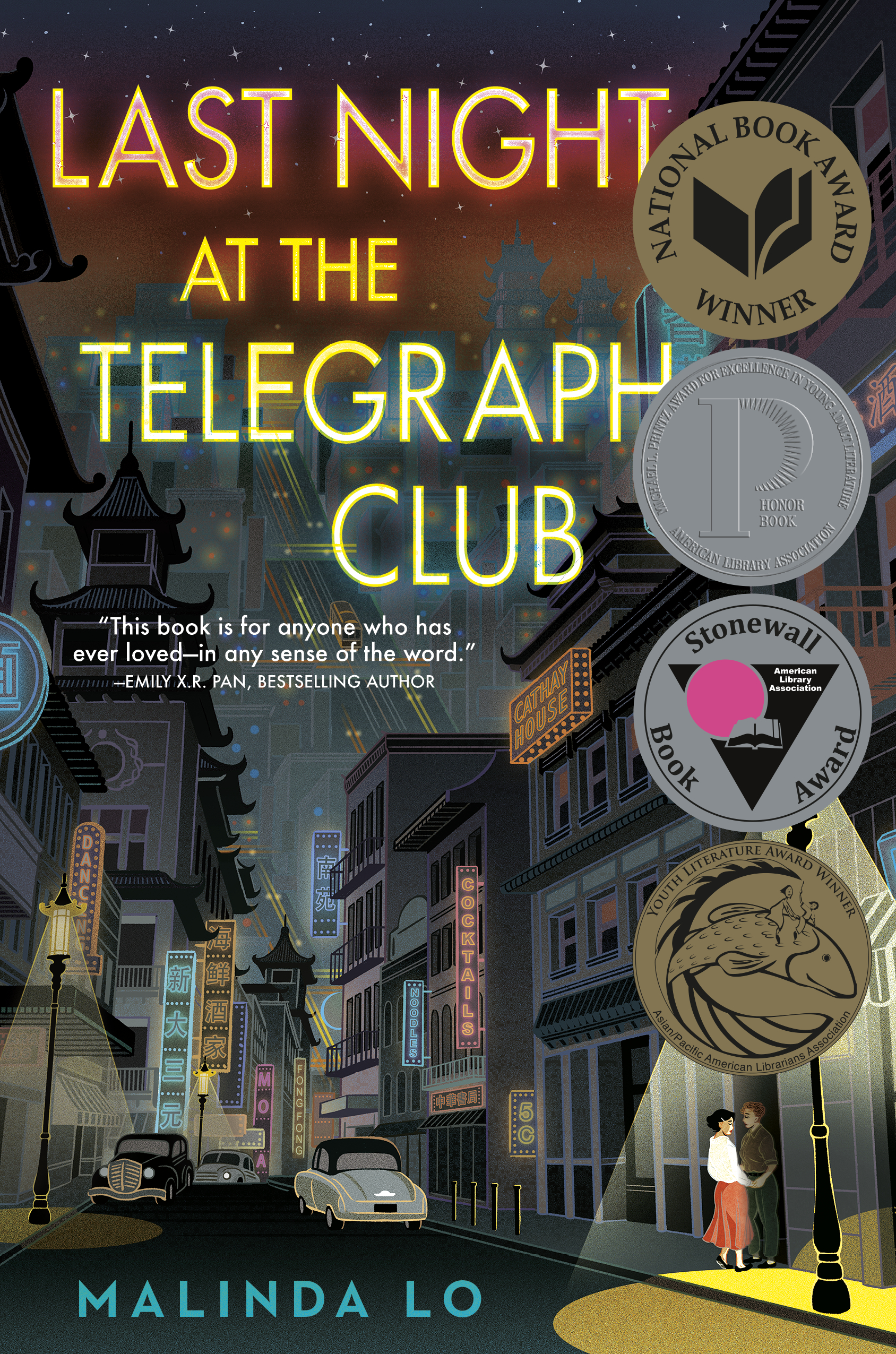
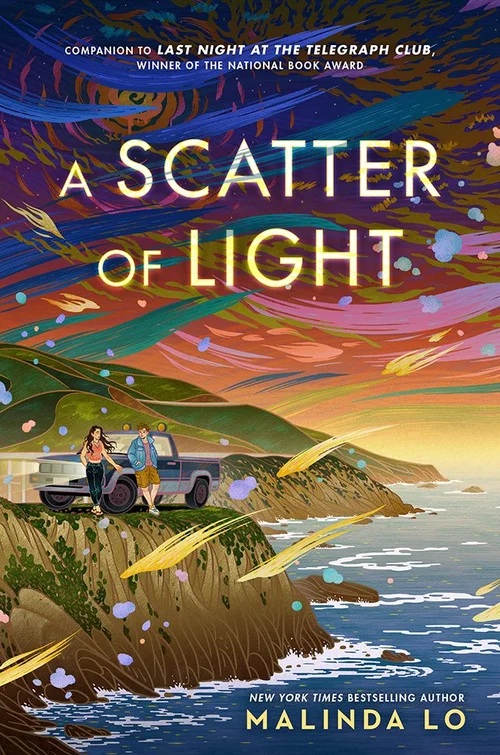
On Wednesday, February 18, 2026, the Word for Word Literary Series welcomed award-winning writer Malinda Lo! Lo is the New York Times bestselling author of seven novels, including, most recently, A Scatter of Light. Her novel Last Night at the Telegraph Club won the National Book Award, the Stonewall Book Award, the Asian/Pacific American Award for Literature, a Printz Honor, and was an LA Times Book Prize finalist. Lo’s short fiction and nonfiction has been published by the New York Times, NPR, Autostraddle, The Horn Book, and multiple anthologies. She lives in Massachusetts with her wife and their dog.
After reading from Last Night at the Telegraph Club, Lo answered questions from the audience and from moderators Jacob Powers and Paul Witcover. The following transcript of that Q&A has been edited for publication.
W4W: How did you conduct your research when writing this novel?
ML: I lived in San Francisco for 15 years, from about 2000 to 2015, and I actually didn’t start writing this book until after I left. Once I left San Francisco, all I wanted to do was write books about San Francisco. I obviously really missed it. It’s set in San Francisco because I love the city, and I lived there for quite a while. The book actually came out of a short story, and that short story was inspired by two other books I had been reading. One of them was called Wide-Open Town: A Queer History of San Francisco. So I’ve been reading about San Francisco’s queer history, and I lived there, and I was just really interested in this time period because the book explains that in the ’40s and ’50s, there were just dozens of gay and lesbian bars in San Francisco in the North Beach area, which is not the way it is now. I mean, there are still many gay bars, but there’s no lesbian bars left. And I was just so stunned that there were dozens of lesbian bars all in this little neighborhood. And I’m like, this is quite interesting. Like, how? How did this happen? I was really fascinated by that. And I really wanted to learn more about that time period. So I was really led there by my own interest in that.
W4W: It certainly shows. I wanted to ask you about one other thing in the book that I noticed. I don’t think I’m giving away too much here plotwise, but there are a few interlude chapters dedicated to Lily’s mom, her dad, and aunt. And they don’t really directly tie to Lily’s story of self-discovery. But they’re there. Why did you choose to include them?
ML: Those chapters from the adults’ perspectives didn’t exist in the first draft, because I thought I was writing a young-adult novel. And traditionally, young-adult novels are generally focused on the perspective of the young adults. So we don’t have adult perspectives in there. But after I submitted that draft to my editor, he basically said, maybe you should have some of the adults’ perspectives in here. And I was like, I thought I was writing a young-adult novel. Is that allowed? And he was like, yes, it is allowed.
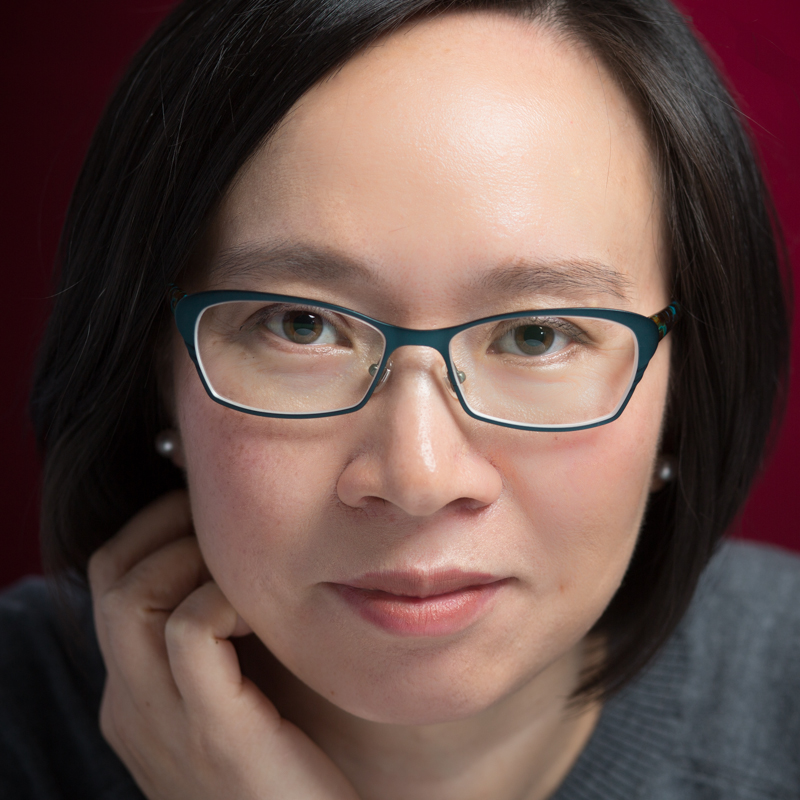
Photo credit: Sharona Jacobs
So immediately I was really into this, because I wanted to give the reader a perspective on Lily’s family and culture that I couldn’t really do if I was doing a close-third narrative. It gave me a chance to show where her family comes from and the greater issues and world events that they’re immersed in. And I wanted that context, because at the end of the book, I won’t tell you what happens, but something happens. And I wanted the reader to understand why that happened.
I felt that if it was only from Lily’s perspective, I don’t think it would be a very satisfying ending. But if you have a better idea of what her family is about, where they came from, why they are there, the struggles they’re going through, then I think the ending makes more sense for a contemporary reader. I felt like it was very important to give that context to the book and make it a little bit bigger than just the world.
W4W: When we were talking earlier, I mentioned how the image that occurred to me when I thought about this novel was one of those really compressed flower things that you put into water and it just expands and expands and expands. That’s what your book was to me. And those historical elements, and the backstories, I guess, of so many of the adult characters, really, they didn’t just contextualize Lily’s journey and her experience, but they were part of that tapestry. That’s what made this book really resonate with me. Just how generous it was to all of its characters.
ML: Thank you.
W4W: So now I’m going to jump in and ask you the hard questions that the audience expects.
ML: Bring it on!
W4W: This is one I’m pulling out of the chat. “As a gay Mexican-American, a lot of the subjects I write about revolve around my culture and my orientation. Sometimes I worry that my cultural themes aren’t marketable. In a world where being a minority is seen as different, do you think it’s important for a writer to lean into their culture or to strive for marketability?”
ML: I really empathize with your experience and the difficulty of this question. It’s a question I have struggled with as well, and I think . . . I just want to recognize that we are in a very fraught moment politically right now in many ways. The First Amendment is under attack in many, many ways, and one of the methods of attacking it is by clamping down on, quote, unquote, “diversity,” which I have always maintained, it’s just reality. It is the world we live in. People come from different places and have different experiences, but we call it diversity. And some publishers, unfortunately, due to this clampdown on free expression, have actually been acquiring fewer books with people of color and queer characters in them, because they are concerned that these books will be banned or will not be as marketable as before. And yet, at the same time, there are other publishers who are basically doubling down and saying, screw that, we’re going to keep going. Like my publisher, Penguin Random House, is one of the most active publishers in that arena. They’ve sued several states for their book-ban laws. So it’s not like everyone is on board with that train.
The longer I am a writer, the more I believe that it is most important for me to write what I deeply am called to write. So whatever that story is, I want to be true to that story. If it is a highly commercial mainstream hit, do it. If it is a story that is much more experimental, that may not speak to the straight white majority, if it is a story about my own personal community and it is calling to me every day and every night, I should do that. I just feel that you have to listen to what your writerly heart wants to write, and you got to really go for it. You got to go for it. You have to feed that, because it’s not like writing is easy.
It’s not like it’s a lucrative profession. So you have to do what makes sense to you as a writer and an artist. I just feel like, increasingly, there’s no other way to go about it. You have to be true to what your voice wants to do and understand that there are a bazillion books published every year. Not every one is going to hit the New York Times bestseller list. Very few do. So you also have to take care of yourself as a human being and make sure that you have a way to have a living, but try to be true to the calling that you feel in your heart. I think that’s very important.
W4W: I may be wrong about this, but my suspicion is that as you were writing Last Night at the Telegraph Club, you weren’t expecting that it was going to have the kind of mainstream crossover success that it had.
ML: No, no, no, no, no. I did not think a historical novel about Chinese-American lesbians was going to be any sort of a hit. That’s the other thing: you never know what is going to hit in the marketplace. You really never know. You just have to write the best book that you can. Whatever that book is, make that book the best thing that it is, right? That’s all you can do. A lot of it is just, who knows? Who knows what it is.
W4W: Let me pull another question from the chat. Actually, it’s almost a follow up. It’s by the same person whose question I just asked. “Are there moments in your career where you didn’t feel confident about your writing? And if so, where did you draw inspiration to overcome that?”
ML: Oh, I’m always not confident in my writing at the beginning. In 2013, I started writing a novel, a contemporary YA novel. And I was concerned that it wouldn’t sell because it was a contemporary YA novel. All my other books have been fantasy, and publishers really hate it when you switch genres. Also, it was not a happy love story. It wasn’t a romance. It was like a messy coming-of-age novel. And it had a lot of moral ambiguity in it.
And it turns out I was correct. Nobody would publish it. It was rejected by everyone in New York over the course of two years. It was completely devastating. And I was like, oh my God, this is horrible. But the funny thing is, the more I got rejected, the less I thought my writing was bad and the more I thought the publishers are horrible.
W4W: That’s the right lesson.
ML: I think it was necessary for me to go through that experience, because I learned that it really is a business. It is 100% a business. So you might as well write what you want to write. And I felt like I had written a book that I wanted to write, and I just needed to go find an editor who actually understood it.
So I did manage to find an editor who understood it. He was not in New York. He lived in St. Paul, Minnesota, and he was at a small publisher, and he did like it. And in the course of submitting to him, it turned out he was moving to become an editor at Penguin. So that is how I ended up at Penguin.
W4W: Oh my God.
ML: He wasn’t there when I submitted it to him. He was editor at a small press. You need to have, I don’t know, not arrogance, but a deep belief in the thing you’re writing. And the only way you can do that is if the thing you’re writing is really true to who you are and what you want to write. Because if you’re trying to hit a trend or something, you won’t have that conviction, I guess.
W4W: Or resilience.
ML: Yes, yes. If you love the thing you’re doing, and you believe in it, you’ll keep at it. So that’s a really important thing to have. Other than that, the last project I worked on, I really didn’t know if it was any good, because it was poetry. And I do not think of myself as a poet. So I was like, what the hell am I doing?
In order to figure out if this was anything, I do have a writing group, so I sent them a selection of thirty poems, and I was like, is this real? Is this actually anything good? And I trust them very much. And they said, yes, you should keep going, so I did. So it’s also good to have people in your corner who can give you honest assessments.
W4W: How do you find those networks of people that you can connect with and form a group of trusted readers?
 ML: Well, the good thing is you are in a writing community now at SNHU. This is a great place to find your fellow writers. And you don’t need a dozen of them. You only need a couple so you can share work amongst each other.
If you’re not in a writing program now, the good thing is there is the internet. It is so much easier to find fellow writers now than before the internet, which is actually a long time ago. But anyway, there are many local writing programs you can go to. I always think it is good to do a writing workshop at some point to get yourself familiar with criticism, and local writing programs all over the country have writing workshops where you can meet other writers. And that’s not even counting social media. So there’s so many places now. I do think it’s really a great idea to have a couple people that you share your work with on a regular basis.
W4W: I’ll take another one from the chat, kind of going back to the multi-genre author role and dabbling in poetry as well. First of all, have you found that to be difficult? What advice do you have for other multi-genre authors who are exploring the same thing? And perhaps, also folding that in with what we were just talking about with finding readers, do you seek out different readers for different genres? Do you have one single-entity reader that you often go to? How does that process work for you?
ML: I come to this switching of genres naturally. I don’t find it difficult, because I find every book to be very different. So maybe if they were all in the same genre, they would be less different. I don’t know, but I find that every book feels different. It requires a different type of process.
My first book, Ash, was a fairy-tale retelling, which is fantasy, and then my second novel was a fantasy novel as well. So that was the same genre, technically. But they were so different. The second novel is always the hardest one, I think, but it was still hard even though they were the same genre. So I don’t actually think it’s that different to switch between genres.
Advice on how to manage that. I will just say that if you’re looking to be published by a mainstream commercial press, they really freak out about this a lot. They don’t really know how to market authors who cross genre, and I was fortunate in that my books were all young adult, so it was in the same category.
In YA, there are authors who write across different genres. It’s somewhat more flexible, although I think that even in adult literary fiction now there’s a lot of genre crossing happening. The thing is, readers often read across genres. I don’t know about you, but I read all sorts of kinds of books. I don’t only read one kind of book. And I think that publishers have been slow to figure that out, or they’re just risk averse.
Maybe it’s slightly riskier to publish a different book rather than the same one slightly tweaked. But I think the fact is readers also read across genres. So I have not really made an effort to try to find readers in different genres, because I feel like my books, they may be in different genres, but as I joke on my Instagram bio, my brand is lesbians. So if you want a book about lesbians, that’s me. They are different genres, but you know what you’re going to get.
The good thing about having different genres is it gives readers different entry points into your backlist as well. So if someone doesn’t like fantasy, they can jump in with a historical novel. If they don’t like historical, they can jump in with a contemporary. There’s different places for them to enter.
W4W: Who are some of your literary idols? And what did you pull from them and make your own?
ML: When I was a teenager, my favorite writer was Robin McKinley. I don’t know if anyone here remembers Robin McKinley. She wrote fantasy novels in the 80s that were fantastic. They were all about strong girls having adventures. She did a lot of fairy-tale retellings, but she never did a Cinderella retelling, so that is why I wrote my first novel, Ash, which is a retelling of Cinderella. It’s literally if Robin McKinley retold Cinderella. So that’s what my first novel was.
As a teenager, I never read any books that had queer characters in them. I think they existed in the ’80s, but I was in Colorado. I only had my public library. There was no internet. I couldn’t find any. So I never read a novel with queer characters in it until I was an adult. And the first book with lesbians that I read was Tipping The Velvet, by Sarah Waters.
This was early 2000, and that was a transformative reading experience for me. I was like, oh my God, this book exists. And so Sarah Waters since then has become a huge literary idol for me. I love all of her historical fiction, and she was very much an inspiration for Telegraph Club.
I love discovering new writers all the time. I find inspiration everywhere. I finally just read Pachinko, by Min Jin Lee, and I was blown away by that. And I’m like, wow, this is a totally different way of doing historical fiction than what I did.
W4W: Was there any specific scene or moment in Telegraph Club that was especially difficult or meaningful for you to write, without it being a spoiler?
 ML: There’s one scene in the book. It is the chapter from the perspective of Lily’s aunt, Judy. And that chapter, I wrote it very late in the process of writing the book, like fourth draft. I knew that this scene would have to transition between two parts of the book, and it would have to draw together a bunch of themes. So I saved it for later.
And when I got there, I sat down in my armchair and I just wrote it. And it took me a couple hours, and it didn’t change much in the revision. I think I was so late in the process that I understood the book by then. It had taken me three years, but I understood the book. So that chapter came out in almost its final form.
It felt so meaningful to me, like, oh my God, I finally know what I’m doing. I just love that scene because it was easy, and it felt right. So that was a meaningful scene because I felt like I finally understood what was happening.
Difficult scenes typically happen early in the book. There is a scene in the class in the high school where Lily has to have a conversation with this boy who likes her, and that scene, oh my God, it was like pulling teeth. I could not figure out how to write it. I probably spent like a couple weeks just writing the rough draft of that scene. And it took me a really long time.
W4W: Was this the scene where they were all sitting in a group together, talking about their aspirations and stuff?
ML: Yes, yes.
W4W: Really? Wow. I mean, it’s so natural and fluid now.
ML: Thank God. Because that took a long time. It was really hard.
W4W: Is there any reason you thought it was so challenging to get to that point? Or was it just because it was early on?
ML: Well, the early-on part, because early on, I don’t really know the characters that well, because you haven’t written the book yet. So it’s like you’re guessing what the characters are like. But also it was a group scene. And whenever you have a group scene with multiple people having dialogue and doing things, you have to choreograph it, and it’s more like writing a script, and that’s difficult for me.
The scene with Aunt Judy was basically just from her POV, like her monologuing in her brain. So there was none of that technical stuff. This classroom scene had a lot of moving parts, and it happened early. So later on, there are scenes that have a lot of moving parts. There’s a party scene, and that one had a lot of choreography that had to happen, but that happened later. So I knew more about how to do it then.
And then there’s a scene where Lily is at an older adult’s apartment, and she is there with two older women, and they’re just talking and having a discussion about life. And that scene was so enjoyable to me because that was also later, and by then I knew these characters. So you can see the theme here.
W4W: You have to suffer before you can get to the enjoyable part.
ML: Yes, absolutely.
W4W: It’s a matter of getting just past that one scene. And then once you get over that hill, everything else is like, ah, I can see the sun setting now.
ML: Absolutely. I don’t know about you guys, but at a certain point in the writing process, I do feel like I’ve hit the downhill portion. That’s the best moment.
W4W: Since you brought up understanding the book, do you plot and outline your books extensively? Or are you more of a discovery writer? If you plot it, does it often deviate from the original outline?
ML: It depends on the book. So like this book, it sounds weird to say this, but it didn’t really have a plot. There was no mystery in this book. I had just written a crime novel before this one, which I extensively plotted and realized I had the wrong killer three times. So that one was quite a frustrating plotting experience. This one I had a synopsis. I sold it on a synopsis. I mean, it was a short story. And then I wrote a synopsis before I wrote the novel. So I read the synopsis after I finished the book, and I was really shocked. I had done it. I really had done what was in the synopsis. But there was no outline for this book. I knew what was going to happen, because it was a simple story as opposed to a complicated one with many plot threads. But if there is a complicated one with many plot threads, I have indeed extensively plotted. Very extensively. So it really depends on the book.
I will say that for me, though, it’s important to remember that when outlining, even if you have extensively outlined it, I think it is important to be flexible. If you get to a part of the outline that just doesn’t work, you don’t follow it. It’s not set in stone. Because as you write the narrative, sometimes the things you thought were going to happen don’t happen. So you have to be flexible enough to go in a different direction if the story demands that.
W4W: . It sounded as though, when you were writing the book, it’s not like you had the synopsis on the desk beside you and were referring to it with every scene, right? You sold the book on the basis of the synopsis. Then the synopsis went into a drawer and you set sail with whatever the book would turn out to be.
ML: Yeah, absolutely.
W4W:. Let me ask another question here out of the chat. “Did you ever consider a pen name? What advice would you have for future author writers who are considering writing under a pen name? I’m sure I’m not the only one struggling with deciding.”
I usually teach MFA 505, which is the first class in the MFA. And it’s incredible how many students in that class are really concerned with whether or not to use a pen name. I’m always surprised by it.
ML: That is interesting. I don’t think I’ve ever been asked that question, actually. No, I never considered a pen name. I don’t know why. It’s very common in romance, for example. Most romance authors write under a pen name, or they used to. I think more and more of them write under a real name now, but there’s still many pen names in romance. I guess my only advice if you’re going to consider a pen name is Google it first and make sure it’s not taken, because you don’t want that to happen.
W4W: That’d be embarrassing. What do you mean Ernest Hemingway is taken?
ML: Exactly.
W4W: One question that I wanted to ask is, and because I’m a speculative fiction writer, this is why I’m going to ask it. I know you began your career as a speculative fiction writer. And here’s a novel, The Telegraph Club, that is not speculative fiction. And yet it seemed to me, as I was reading it, that it’s infused with a speculative fiction sensibility, and not just because Lily reads science fiction novels and Aunt Judy works at NASA, or what becomes NASA later. But also, just something about the way you look at the world seemed to me to be science fictional in a way. Can you talk about that a little bit? Am I totally off base?
ML: No, I love it. I agree. I think it’s because I did come out of writing fantasy and science fiction, and I really approached the historical novel as a fantasy. Historical fiction is a fantasy. You have to do all the world building. I literally thought of it as world building. To create the 1954 San Francisco that the reader would find realistic is the same as writing a fantasy novel in a secondary world. So I did think of it that way. And I definitely brought in all those sciencey aspects with JPL and Lily’s obsession with rocket science because I am a space nerd. I love that stuff. So that’s definitely there. Yeah, it’s definitely there.
W4W: How do you tell when you’re relying too much on dialogue in a scene? Or how do you make dialogue serve your scene instead of taking it over?
ML: That’s such a hard question. I used to hate writing dialogue. This was my least favorite task. I love writing description. I started out writing fantasy novels with lots of description of the woods. There wasn’t a lot of dialogue happening. So I really had to learn how to write dialogue. The novel I wrote before Telegraph Club was called A Line in the Dark, and that was my mystery. In that book, there are a number of police interrogation scenes. And I ended up writing them in the book simply as if they were transcripts. So just like character name colon, what they said and the question and blah, blah blah. It was literally like a script.
I think writing those scenes really helped me. It helped me understand how to write dialogue, even though it didn’t have any dialogue tags. Somehow stripping all the stuff away to just the dialogue was very helpful.
So I actually recommend to writers, if you are having trouble with dialogue, try writing it as a script. See if it works. Because with no descriptors, it’s easier to tell if the characters sound like who they are, and it’s easier to tell if what they’re saying sounds like spoken words. You know what I mean? Because people don’t talk the way a narrative is written, and you want to make sure that dialogue sounds the way people speak. I think that doing that, stripping away all the dialogue tags entirely, is a really helpful exercise. It really helped me a lot, anyway.
W4W: Reading your novel, which is set in the ’50s, I had such a strange reaction. On the one hand, I’m reading it and thinking like, oh gosh, we’ve come so far since that period. I mean, in terms of acceptance for LGBTQ and in terms of diversity. Aunt Judy, for example, would have had a very different job at NASA today. That sense of, OK, we’ve come a long way.
But there was also, because of the political situation that you alluded to, this sense of, oh my God, we haven’t come far at all. In fact, we’re slipping back at an accelerating rate. We tried to achieve escape velocity and weren’t able to do it. And now we’re being pulled back down the gravity well.
What was that experience like for you? Because I’m assuming that when you were writing it, you similarly thought we have progressed to a certain degree. What do you make of that progress now? Is it still there? And has that changed your attitude toward the book?
ML: Well, I wrote this during the first Trump administration. I literally started it January 2017. So I, at the time, understood that I was writing a book that had a lot of contemporary parallels. I did not think they would have so many. As time has passed, the contemporary parallels have gotten out of hand. This was supposed to be fiction, so it’s a little bit astonishing at how much worse things have gotten just since the book has been published.
I did not expect that at all. So it’s been disturbing, to say the least. But I did know that I was writing a book with historical parallels. And the thing about history, especially immigration history, is the more you learn about it, the more you realize America has been trying to kick out immigrants from the beginning. Even though all the propaganda says we are a land of immigrants, they’ve been trying to kick out immigrants from the beginning. So it’s not new.
And the more the current immigration crisis continues, they’re pulling from things they’ve already done. All the stuff that is happening now, they have already done. It’s just that we didn’t live through the stuff that happened back then. So it seems shocking, but it has already been done before. There is precedent. What can I say? Our history has been whitewashed. We are not taught the true history of our nation. And so it’s a good time to try to learn it.
It’s just a good time to try to learn it, because we’ve been here before, and I hope that we will emerge from it and make some positive changes. We can’t make positive changes if we don’t actually know what has happened.
W4W: What is next for you, Malinda? What are you working on now?
ML: Well, we just announced my next book, which is going to be a very weird thing. It’s a memoir that is in verse, and it’s in lyric essay, and there’s art in it. It’s a multi . . . I don’t know how to talk about it. It’s not coming out for a year, so I don’t have to know yet, but it’s about my childhood. It’s about immigration. It’s about coming to America. I came here when I was three and a half from China, so it’s about that. It’s about what this country is. It’s about history. Yeah, and it’s a little weird. It’s not your typical memoir, so hopefully it’ll do OK.
W4W: Do you have a title yet?
ML: It is called Something Inside Me Knows.
W4W: Beautiful. I look forward to that very much.
ML: Thank you. I don’t know if I’m looking forward to it. It was a very hard book to write, and it’s very personal. So I’m not sure how that’s going to go, but I’m excited, I guess. I’m nervously excited. I mean, I wrote poetry when I was a teenager, as many of us did. But it was not like I was a poet. So it was a very steep learning curve for me. But it was very meaningful for me to do this, so I’m glad I did.
Category: