Word for Word Welcomes Bestselling Author Courtney Milan
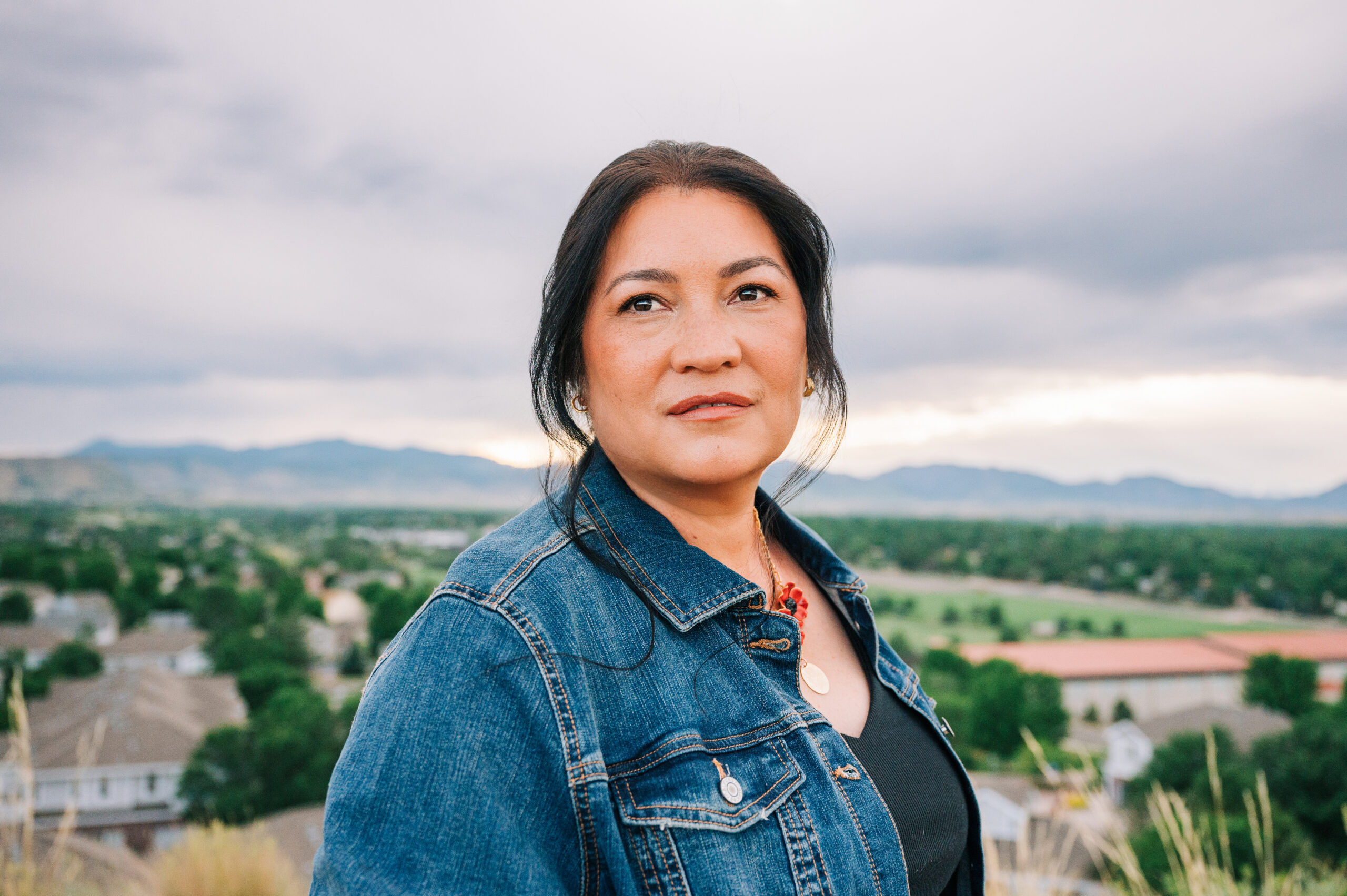
On Wednesday, April 15, 2026, the Word for Word online literary series welcomed bestselling writer Courtney Milan. Milan began her career with a starred review in Publishers Weekly and has never looked back. A self-publishing pioneer, she has gone on to become one of the top-selling and best-reviewed Romance authors writing today. Her bestselling historical romances are known for their wit, characterization, and plot. Milan’s background in law—she clerked for Supreme Court Justice Sandra Day O’Connor—has made her a leading authority on copyright, contracts, and intellectual property. She has been a steadfast champion of author rights, as well as a staunch advocate for women and diversity in publishing.
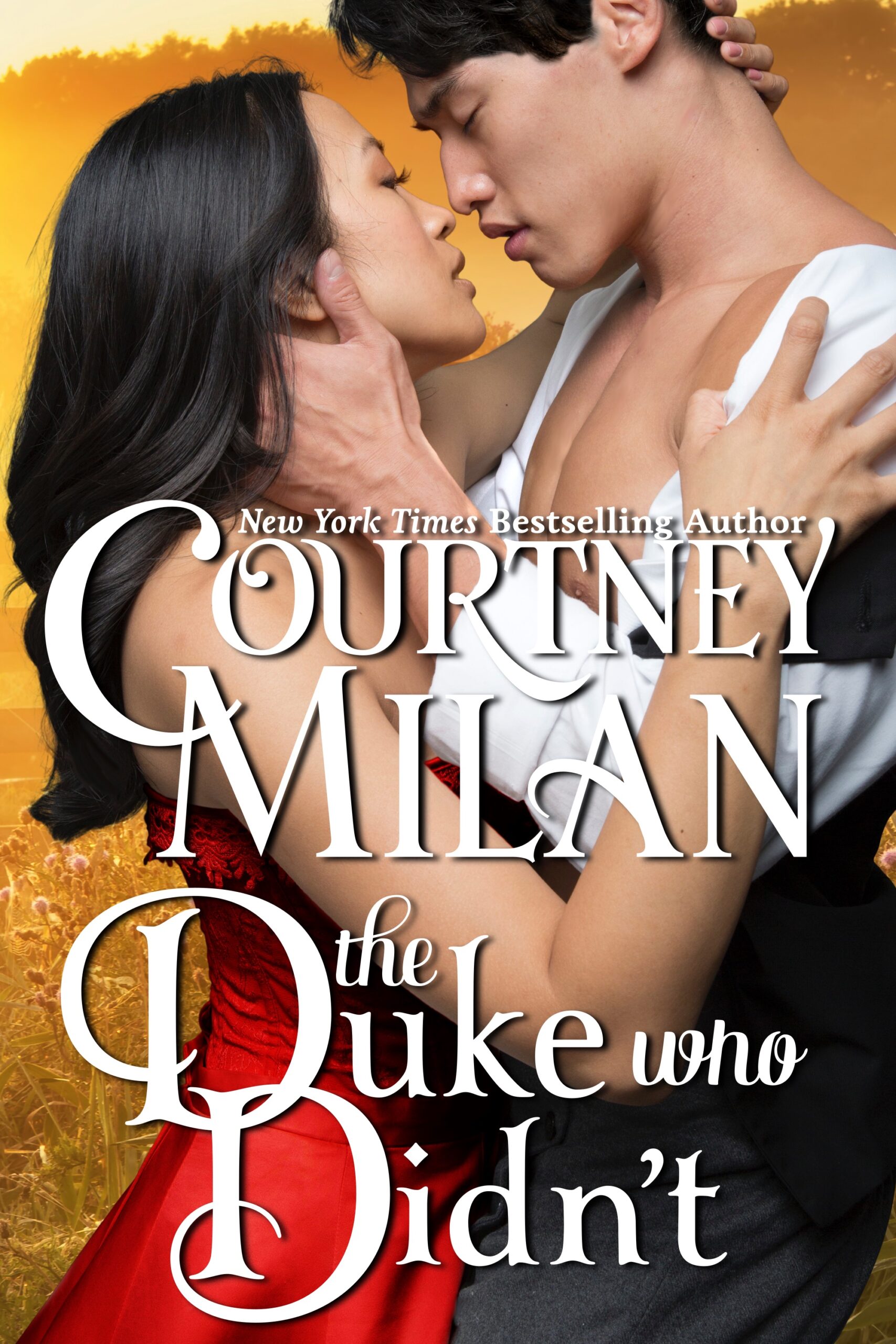
After reading from her novel The Duke Who Didn’t, Milan answered questions from the audience and from moderators Jacob Powers and Paul Witcover. The following transcript of that Q&A has been edited for publication.
W4W: What comes first with your writing, the history or the romance?
CM: I don’t know that I can actually separate those two. So I think the way things work for me, I have a terrible way of writing books. And I strongly suggest that if you can write books any other way, you should do that. But when I’m in the initial phases of having idea turn into a thing that feels like a real book, then it’s actually a combination of things that happen all at once. I have this big puddle inside of me that is filled with ideas that don’t fit with anything else. And some of those things are from history. Like I’ll have read a book, and in it there was some idle mention of something that happened a while back. And my brain will be like, ahh, what a terrible thing to do to a child—I love it! Or you’ll hear about an event that happened, and you’re like, that would be so really fun to wrap things around. And you have these things that sort of wind up, and at some point you’re like, ahh, that terrible thing to do to a child works really well if I add it to this historical moment. And then, at some point, these things start coalescing, and I get a ball. It’s like making a snowman. You have to have that initial ball to roll out to make a snowman. People who live in non-snowy areas have no idea what I’m talking about. But you have to have enough of a ball to start rolling it into a story. That ball is usually composed of history and characters and a handful of other things. And there’s just a moment where it’s like these five things fit together, and now I’m going to try and wrap a story around it.
W4W: What interested you in history in the first place?
CM: That’s a great question. And I have a lot of different answers for it. They’re all true, but some are more honest than others. I’m going to give you the intellectual reason first, and then I’m going to give you the honest reason.
 The intellectual reason is this: I love writing in the Victorian era because I feel like, in some ways, it mirrors the time we’re living in. They were living in an era when their entire world was upended by technology. Steamships, telegraph, manufacturing that had never really existed in this particular way. Factories, steam engines, all of these things were coming up. And they were totally changing how life worked for the vast majority of people.
You would have these people, and for century after century, generation after generation, they lived in this village. And suddenly, people were leaving the village. They would go to London, they would go to the United States, they would go to Australia, or they would travel. Travel was possible even for people who didn’t have a lot of means.
And that meant that people in some ways were lonelier than they had ever been before, which I think we can understand now, that people were being uprooted from communities that had been solid for generations. And what came in the place of those communities was still in flux. I think that’s something that a lot of people can understand today. So that’s thing number one.
Thing number two, the world went from being very, very large to being very, very small, very, very swiftly. And that is something that we also are grappling with today in different ways. But we can have conversations with people on the other side of the world. We can see videos made three thousand miles away, six thousand miles away, twelve—like, around the moon recently, as it’s happening. That is something that is both breathtaking and wonderful, and also kind of horrific sometimes.
And these things that had never happened before . . . If you look at what happened with newspapers in the Victorian era, it’s fascinating. They go from being something that’s reporting on every little ridiculous thing that happens in town to, suddenly, you’re getting reports on things that happen across the world. And they happen across the world yesterday, and you can know that. And that’s an amazing thing.
So I really feel like, in some ways, the adaptation to change and the fear of that change is something we have then and now. And it allows me to tell stories about things that I think matter to us now, but in a safe setting, because we kind of know how it mostly turned out for them. We don’t know that about us yet, but we hope.
So that’s my intellectual reason.
W4W: That’s a great reason. I want to hear the other reason.
CM: The other reason is just that I started reading historical romance as a matter of accident. I actually didn’t read romance at all until I was in the middle of grad school. And I started because there is a science-fiction author I liked, Lois McMaster Bujold, who wrote sort of like crossover romance. She recommended that I read a handful of authors, and some of those authors were historical romance authors. And it started me down the path. So when I started writing romance, it was a genre I read in a lot. And it gave me a great deal of comfort to be living and writing and thinking about a world that had helped me get through some really hard times.
W4W: Can you talk about your organizational process? Do you usually have a strong outline? Do you let your creativity flow? Or are you a plotter or a pantser? And is one approach or the other better for writing romance novels?
CM: I’ll start with the last question first. I don’t think there is a wrong or right way to write. I think there is a matter of finding out how your brain works best and finding your process. And I feel like anyone who tells you that there is a process and you must follow it does not have your best interests at heart. You are writing your books. Your books belong to you and you alone. And the way that your brain comes about making things up is actually a significant portion of what will make your book special. That’s just my experience. My process sucks. I’ve said this before. I have tried to make it a better process, and it does not make a better book. It just means that I end up having to do a lot of work at the back end of things.
 I am not a plotter. I don’t really think I’m a pantser either. I write significantly out of order. I mentioned before, I have my little snowball. My snowball is history, romance, characters, and then a couple of key scenes in the books. And I honestly don’t know how I get to those scenes or where they come from. I just know that at some point in the book, she’s going to sit down and she’s going to be doing this thing, right?
So the thing I will do is I will write that scene first. I don’t know how the characters meet. I don’t know anything about them. I don’t know who their parents are. I write that scene. And when I’m writing that scene, it jogs things. I start writing stuff down. And he’s right in that scene, and I’ll just put in something there because I’m like, why is he doing this? I don’t know. I’ve never met this guy before. Why is he doing this?
So I write in there, well, his mother’s really going to hate that. And I’m like, great. He has a mother, right? His mother doesn’t like this, right? And then I’m like, what’s his relationship with his mother? So I’ll write another scene that fleshes that out. It’s not plotting. It’s not pantsing. I sometimes will write the end of the book first and then try and figure out how I’m getting there. Sometimes I will write a scene in the middle and try and figure out how I’m getting there.
It is a terrible process, because once you finish a first draft, essentially what has happened at this point is that I’ve nailed down all the key scenes, but I still have to go back, and because I’m sort of like stumbling through the dark and stubbing my toe against all the hard edges of the story, I have to go back and do a ton of editing to make things consistent, to try and figure out why people are doing things. Because I’ll have them doing different things from scene one to scene two to scene three. And then I have to go and make it all consistent and figure out how does this actually work in a human being. Terrible way to do things. It is my way.
W4W: Do you use beta readers or editors to help you with that stage of things?
CM: I have an editor, whom I trust implicitly, who reads the first draft of my stories. I don’t trust a lot of people to do that, because, at the point when I have a first draft, it’s not always clear what the story is. So, here’s one of my problems. I’m extremely demand avoidant. If you tell me to do something, I will automatically not want to do it. I actually have to be very careful about letting people tell me not to do things. Because they tell me to do something obvious or something that I really need to do, and I won’t want to do it. So I have an editor who understands me very well, and who will do the thing that I need, which is to say, here’s what’s not working for me. Here’s the parts that I’m thinking don’t really fit together.
She doesn’t tell me what to do. She’ll tell me what’s not working and why the book is broken. In fact, when I send her the book, I usually preface it with three pages of me writing something, saying, this is why this book is broken. And the act of writing that out, for me, is actually super important, because it helps me clarify what I’m working on for the next draft. And what she does is, she reads what I’ve said, and she goes back, and sometimes she will say, I think you’re being too hard on yourself. This subplot is working really well. And sometimes she will come back and say, you are dead on. This thing is broken. And I think you will find that this other thing next to it is broken, and they’re broken together. And so maybe you need to think about fixing them together. So that’s how things work in the editing process for me.
W4W: I loved your analogy with the snowman, because it’s such an organic description of the process. But at the same time, your later description of the way you work struck me as being so logical. Not logical in the sense that you start at point A and end up at point Z, but logical in the sense that you’re applying a certain manner of thought, a certain approach to figuring out what the connection between these things is, what the backstory of your characters might be, all that sort of thing. You proceed by almost like a process of deduction.
When you’re writing something, are you excavating something that already exists in some form, and you’re just discovering connections that are already there? Or are you imposing connections that didn’t exist until you created them?
CM: Can I pick a third option? I think sometimes there is excavation, and sometimes there is imposing. But part of what you’re doing when you do this is you’re telling yourself a story. When you get to the final draft, you’re telling a story to someone else, but when you’re writing the first draft, you’re telling a story to yourself. And very often, I have found that the story I’m telling myself at that time is a story that I need to hear, right? And so a lot of what I’m doing in that moment is going through and forcing myself to figure out where I’m uncomfortable with the story and making myself lean into it.
So I don’t think that I’m excavating a story. I don’t think I’m making connections. I feel like I’m finding the part of me that is reflected in the story already. So there is something pre-existing, but the thing that is pre-existing in some sense is me.
W4W: We have a question from one of our instructors here at SNHU: Misty Urban. Who, if I’m not mistaken, also writes historical romance novels. How you feel about tweaking historical facts or details to help fit the story that you want to tell?
CM: That’s a great question. I think it depends on the fact or detail. There’s some things that I feel fine tweaking. One thing I want to say right off the bat: I’m writing fiction. All of this didn’t happen. Like none of this happened. All of this is a tweak of historical fact or fiction.
There are some underlying things that are questions of, like, the world that you live in. So as an example, when was the telegraph invented? That is a question that if I got it wrong, or if I put the telegraph in a book where the telegraph hadn’t been invented yet, I think I’d feel weird about that. You’re writing historical stuff for a reason. Why are you changing the historical record? There are exceptions to that, of course. And the exceptions are when your fiction needs to change the world as a part of the story.
In My Brothers Sinister series, The Countess Conspiracy, the entire premise of the book is that there has been a character who has been making scientific discoveries, and the scientific discoveries are around the science of inheritance. This happens right around the time that Gregor Mendel is actually doing his work on the science of inheritance. I mean the inheritance of traits. He used peas, I think.
My character finds them through snapdragons and has to actually find it backwards, because snapdragons have a different inheritance scheme than peas. Not really relevant. But nobody actually did that. The other thing about Gregor Mendel is, you have to understand, he published these papers and nobody saw them for twenty years. He was only credited with it after the fact, when people were like, oh, this explains so much.
Instead, my character is doing it openly at the same time. So I am, in fact, changing the history of science, but it’s happening because of a character in the story, and that is a driver of the story. And so that, I think, is totally fair game. I mean, your characters are already creating an alternate universe that they live in. If your character changes the world that they’re living in through the operation of their thing, I think that’s totally fair game.
Another example. People are like, oh, well, there were no Chinese dukes. I don’t care. I mean, none of the dukes that people write historical romances about actually existed. People have written dukes who were all part of a sex club. That didn’t happen. Well, actually, it kind of did. Never mind that. Not a great example.
But there’s all these things that people have happen that haven’t actually happened in real life. I think it’s totally fine to invent characters who are doing things that didn’t happen at the time, as long as it makes sense within the time period they are in. Can you explain it? Or is it just like, oh, wow, a magic fairy came, and now there’s a giant new laser that they’re all using. Congratulations on the rediscovery of the laser before they knew about it.
W4W: Do you ever get people writing to you with those types of “well, actually” emails? This didn’t exist historically and stuff like that. Is that something that you have to navigate as a writer?
CM: Look, here’s the thing. They really don’t know the history. I actually know. There’s some things in my stories that I tweak just because. As an example, I use the word suffragette because I just think the word suffragist is ugly. I don’t like using the word suffragist. They didn’t use the word suffragette at the time. I don’t care. I prefer one word over the other.
I think one person has called me on that. But the things that they get mad at me for are things that are just not a thing. They’re like, oh, well, people back then didn’t swear. Oh, yes, they did. Or women back then wouldn’t be caught alone walking with a man. I’m like, have you read Jane Austen? Yes, they did. They absolutely did that. Or women back then didn’t know anything about sex. They had friends, okay? Yes, they didn’t have a concerted sex-education program. And I’m not saying that they knew everything. But you’re telling me nobody ever taught them anything until their wedding night? That’s just not true. And you know it’s not true because you have these etiquette books that tell women what not to do. And that list provides them a lot of information about things you might want to try if you were a certain kind of person. They wouldn’t be telling people not to do it if nobody ever did it. The things that nobody ever does don’t end up in the etiquette books.
I get a lot of, well, they didn’t have people of color in England back then. And I’m like, yeah, they did. They really did. Sorry about that. Sorry to burst your illusion, but it’s never been a white haven. Never.
W4W: I wonder if the creators of Bridgerton get similar emails and messages.
CM: Well, Bridgerton is a different story. Bridgerton is officially building an alternate universe of Regency England. They’re publicly saying we are not Regency England. We are Regency England moved about 45 degrees from reality. People still get mad about it though.
W4W: You began your career with a traditional publisher, and then you moved over. In fact, you were one of the first writers to demonstrate that it was possible to have a successful career in self-publishing. In traditional publishing, still, the romance genre—perhaps more than any other genre—has rigid strictures that publishers expect writers to follow. I’m assuming that as a self-published writer of romance, you don’t have to follow those strictures as closely. Can you talk about that a bit? Is romance opening up in the sense of the freedom to address things in a less historically bound way?
CM: I think self-publishing has opened up the romance genre a lot. I can see a huge difference between when I started my career and where I am now. As an example, one of the reasons I started self-publishing . . . Well, there were many reasons. One is I hate being told what to do. I think I’ve mentioned that. And my publisher was like, well, we love your writing, but your characters are so weird. Can you just write normal characters? And I’m thinking to myself, no, I don’t even think I know how to do that.
W4W: What does that even mean? What is a normal character?
CM: All of my characters are giant weirdos. I don’t know how to write a normal character. It would suck. What do normal people . . . What are they even like? I’ve been trying my entire life. Normal people, why are you doing that? Why are you . . . That’s so weird. I don’t get it. How am I supposed to write a more normal person? I don’t know. All I know how to do is write big, giant weirdos.
Anyway, they were like, well, why are your characters so weird? I was like, because I’m weird, that’s why. So I started self-publishing in part because of these conversations. I felt like I was being compressed into a little ball and told to write specific things.
And I did way better on my own than I did with them. They were just not marketing me well. I don’t have a copy, thankfully, of my second book. But I wrote this book where the guy is depressed and his wife is going around the country and saving abused women from their husbands by having them run off. They gave me this cover where the girl is lying on a bed and the guy is looking straight into the camera like he just roofied her. And I’m like, this is not going to sell the book. This is going to sell a different book. It’s just not the right cover for this book.
I feel like I’ve been able to do a better job of packaging and presenting myself than they have or that they were able to do, just because they kept trying to put me into this old box. And I didn’t fit in that box. And I think being more honest about who I was and what I was doing was way more successful for me.
W4W: Because you reached those readers. Readers can tell when a writer is being authentic or not. You reached all those weirdo readers out there who are just looking to read about other weirdos.
CM: Actually, people want weirder characters. If you write characters and they’re just normal, you don’t stand out.
W4W: Look at The Duke Who Didn’t. I don’t want to say the whole plot revolves around this, but a substantial portion of the plot is engaged with the fact that your protagonist really loves to make lists. And not only loves to make them, but it’s an integral part of who she is as a person and what she does every single day. And that’s not, so to speak, normal.
CM: Actually, the book didn’t work until I had it start by her writing a list. And I was like, I know who she is now. This is great. But until I figured out how she was weird, the book just was not working. It’s like you have this gear and you’re trying to turn the gear and it’s missing teeth? That was the missing piece.
W4W: Do you have a moment like that with every character, where suddenly you’re like, ah, now I understand who this character is?
CM: No, no, no. Sometimes, I have to fight the whole way with a missing gear, and you’re just like, I’m going to make it work. I gotta make it work. I haven’t found the thing. And sometimes there just is no thing, and you’re fighting it the whole way. Some books are a fight, and some books are simple. That’s just how it is.
W4W: How do you come to creating those weird characters? Do you start with dialogue? Or are there other ways in which you work on developing the character?
CM: Dialogue is something that I have been good at. When I first started writing, there were a lot of things I needed to work on, but dialogue was always one of my strong points. I think part of it is that I’m from a very large family, and we are nitpicky and weird. If you’re ever around us, our events are always full of this constant conflict and pushy stuff. So it just comes very naturally to me.
W4W: One of the major things with romance is emotional output, having that as a part of the narrative. How do you balance that output with physical intimacy in your writing? I know that some romance writers go further, obviously. Some allude. How do you find the right balance for your own writing?
CM: I think the answer is different for every person. And again, I think this comes down to what feels natural for you and what feels natural for the story. I actually think I have different stories that have slightly different heat levels, because it just depends on what the characters are. Some people, they’re just not going to snap into it right away. There’s just too much going on for them to be physically intimate.
And others, it just feels like it’s really natural to have them almost nearly immediately have that physical connection. In terms of balance, I don’t know that it is a balance. I guess one way I would say it is that sex is part of the plot. It’s like you’re not balancing part of the plot with the characters and all that other stuff. It is the plot.
The characters and the plot are like warp and weft in the fabric you’re weaving in the story. So I think balance isn’t the right framework that I use when I’m thinking about it. It’s a matter of finding the right place for it to happen.
W4W: What is the impact that you see on the romance genre and on writing in general and on writers in general of AI right now?
CM: First of all, I do not think AI will ever be able to write a novel that compares to a really good human writer. I just don’t think it’s possible, for a number of reasons based on how the technology works. The technology is looking for correlations between words. It can put together things. But what it’s very bad at is long-term continuity and human emotion. And those are the two things that are the bread and butter of romance.
I think the way that it’s impacting the industry is unfortunately really hard for entering writers, because it means that there are tens of thousands of books out there. Somebody can produce a book and have it look like a competent book and put it on the digital shelves. And when you have somebody putting out four hundred or five hundred books a year, and you have not just one person doing that but you have a thousand people doing that, it drowns out new authors. I think that’s a huge problem. Not that they can write better than you, but they can simply exist in such greater numbers that you might never be found in this much larger sea that is being made. So that is, I think, the threat that it poses.
The bigger threat that is being posed right now is that people aren’t reading as much. I think that’s a problem. Kids graduating from high school today are not being taught to read in the same way that I was. The grade level of reading of a high school graduate has gone down since I was a kid.
That’s terrifying to me because reading has been such an important part of my life, obviously, and I think it’s probably an important part to everyone here. And having fewer people who are readers is going to impact the market. So that’s kind of what I see as the issue here.
The drowning out of voices is a huge problem. I’ve always said this. I think people sometimes will talk about my fellow authors, and they’re like, well, isn’t that your competition?
And the answer is almost never oh, yeah, she’s my competition. Tessa Dare, Julia Quinn, all of these people . . . If somebody reads a good historical romance novel, do you know what they want to do next? They want to read another one. And people get on a kick. They’re like, I love these books about such and such. And they want to read like eighteen of them. They’re not your competition. They’re your catalyst.
The thing that is your competition is bad books. If somebody reads a bad book, they don’t want to read another book. They’re like, this is not a fun activity. My brain doesn’t like it. Let me go watch a video instead. Your competition is bad books. And there are so many bad books being produced right now. That is going to have an impact on reading.
So that’s my spiel on how I think AI is going to impact the market. I don’t think it’s good for us, but probably not in the sense that AI is going to be able to create a good book just like me. No, it never will. It never will. We need a different technology for that. The technology we have right now is not capable of that.
W4W: Let me ask one more question out of the chat. I think this is an important question. “I’m trying to figure out writing the romantic subplot for my asexual protagonist.” Romance without sex. I know there are writers that do asexual romances. So how do you do that?
CM: That is a great question. I’m not sure I’m going to be able to give the best answer. But certainly, romance without sex is extremely possible, because there are people that have romances without sex. So you’re dealing with someone who is ace but not aromantic. I guess the thing I would be looking for in this equation is, what is their love language? What is it that you do to convince someone that the romance is there?
I do have to say, I think sex, when it exists in books, is an important part of the book, but it is not the only important part. And if all you had was the sex, it would not feel like a romance. The things that make up a romance are often those small little things, like someone noticing that you’re having a bad day and doing something about it. Someone understanding who you are, seeing who you are, and caring about that person and wanting to be with you. That is romance.
That is the core of romance right there. That includes sex for some people, but it doesn’t have to. I think the core of romance doesn’t necessarily have to have anything to do with sex. You just have to know what it is that the characters do for each other. And for many people, it’s not sex. And in fact, I think for most people who you would think of as a really good couple, the sex, even if it is there, is not the entirety or even a small portion of it.
W4W: That’s a great point. Maybe it’s our culture that teaches us to think that if there’s no sex in your book, well, something is missing. How can I put sex into my book? It belongs there. But who says? Maybe it doesn’t.
CM: Doesn’t have to be there. Totally doesn’t.
W4W: What’s next for you, Courtney?
CM: I’m actually writing a contemporary fantasy. I know people are like, oh, a romantasy. And I’m like, it’s a romantasy about private equity set in Pueblo, Colorado. So this is going to be exactly what the market wants.
W4W: Well, it sounds weird. There will be a market. I’m sure there will be. Courtney, we hope you have a wonderful night. And thank you again for joining us.
Category: