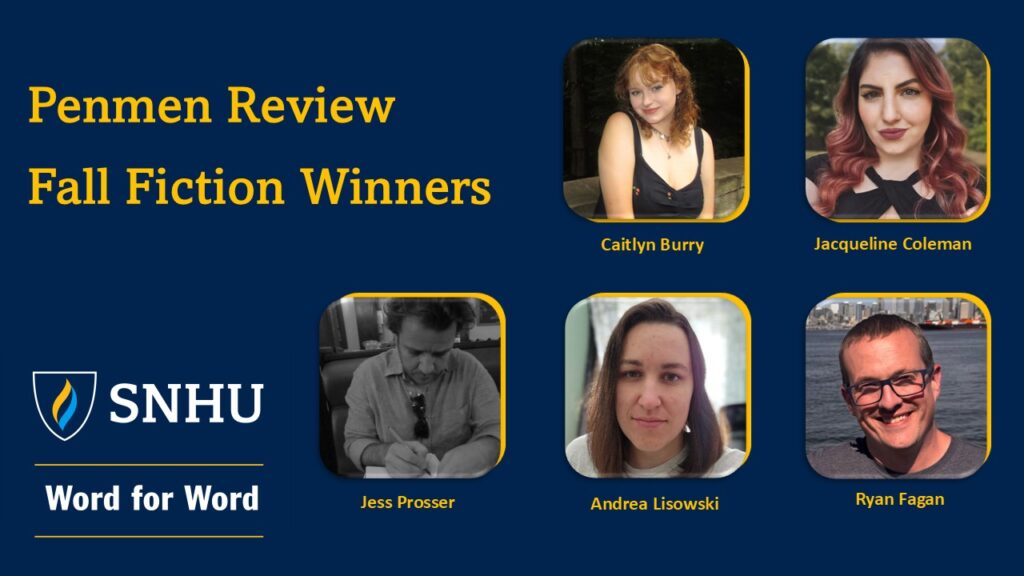
On Wednesday, January 14, 2026, the Word for Word Reading Series at Southern New Hampshire University (SNHU) featured the winners of the Penmen Review’s eleventh annual Fall Fiction Contest. This year’s contest had more than 900 submissions, from which five winners were chosen: First place, “How to Eat a Pomegranate,” by Caitlyn Burry; second place, “The Hope Index,” by Jacqueline Coleman; third place, “Home Base,” by Jess Prosser; fourth place, “Stone Teeth,” by Andrea Lisowski; and fifth place, “The Replacement Shift,” by Ryan Fagan.
Word for Word hosts Jacob Powers, associate dean of the BA and MA Creative Writing programs, and Paul Witcover, associate dean of the Online MFA, discussed the winning pieces with the authors before moving on to an audience Q&A session, an edited transcript of which follows. Ryan Fagan and Andrea Lisowski were unable to attend the event, though their prize-winning stories were read by Jacob Powers and Paul Witcover, respectively.
###
W4W: What made you decide to submit your work to the Fall Fiction Contest, and what advice do you have for those out there who may be hesitant about submitting their own work to contests or literary journals in general? Jacqueline, let’s start with you.
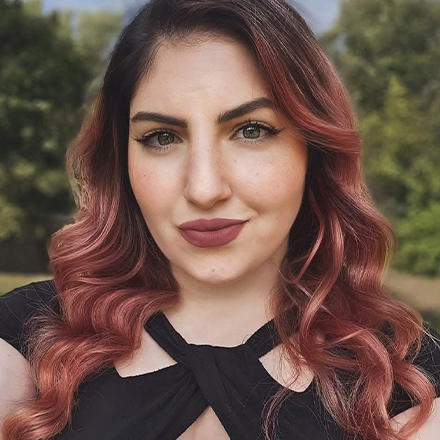 COLEMAN: This is my second year submitting to the contest. I remember when I joined the MFA program, sitting here at Word for Word three years ago now, I think, and listening to the readers actually read their stories and thinking, wow, that is so cool. I’ve never even thought about writing short stories. So it was always a fun challenge for me, and I actually didn’t know if I was going to submit this year because it is so competitive. I actually had a different story idea I was writing. And on the last day of the contest, I wrote this story.
W4W: Wow.
COLEMAN: So I wrote this story in a day—
W4W: That’s incredible.
COLEMAN: —because it was an idea I had from five or six years ago. And I’m like, I’m going to go for it. I’m going to try it. Why not? It’s probably not going to be perfect. And I ended up placing with that story. So follow your gut, especially with your story idea. If you’re really passionate about it, it doesn’t hurt to submit. It doesn’t mean that you’re not a good writer if you’re not selected. There’s so many good stories out there, so many good writers I know that submitted to this contest. Just make sure you don’t give up.
W4W: Fantastic. I couldn’t find a better answer. That’s quite an answer to follow, actually. Jess, I’m sorry to do this to you, but I want to hear why you decided to submit for this particular contest, and what advice you’d have for those out there who are maybe hesitant to do so.
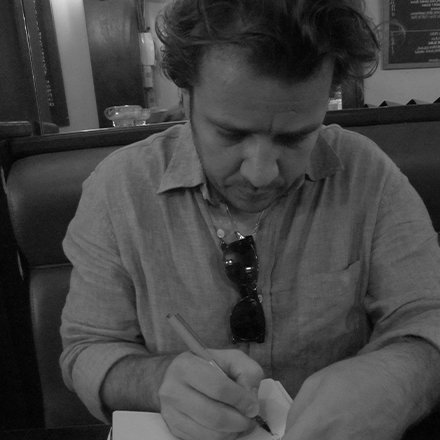 PROSSER: Money. Honestly, if there hadn’t been some scholarship part of the prize, I probably wouldn’t have submitted, because it meant taking more time away from the classes I was in to re-edit a story. I had to take thousand words out and move a lot of stuff around and shift a few ideas. Yeah, that was the prime motivator for this particular contest. I mean, anybody who’s watching this is probably a writer, or one of our family members, or something.
I was asking young writers, why do you write? And they’ll think for a second, and then I’ll say, before you answer, there’s only one answer if you really want to be a writer. And then they’ll get confused. And it’s just because you have to. So you might as well try and get them out there if you’ve got something that’s got a beginning, middle, and an end. I mean, I think we all want an audience. So you might as well go get it.
W4W: Yes, absolutely. Thank you for sharing that. Caitlyn, what about you?
 BURRY: When I first saw that the competition was happening, I was like, oh, that’s cool, but I don’t have anything to enter. And I’m notoriously known for writing way too much for it to be a short story. My discussion posts are embarrassingly long just because I can’t shorten them. But after reading V. E. Schwab’s Bury Our Bones in the Midnight Soil, I was struck with this vampiric inspiration.
And then I had the brilliant idea to turn it into a how-to article, which I thought would grab the judges’ attention and other people’s attention. I just thought it was really unique. And I was like, OK, I guess I’ll submit it. But I had no expectations whatsoever, because I never win anything. So I just did it on a whim. I also submitted it on the very last day. It was just sitting in my Google Drive. But yeah, I decided to go for it, because I was really proud of the piece.
W4W: What made you decide to write in second person?
BURRY: I am strictly a second-person or third-person writer. I’m not good with first person, or even reading first person, personally. So it just felt like what was right. Kind of like teaching another person.
W4W: What about you, Jess? Your story is also in the second person.
PROSSER: I prefer to write in second person. I probably do it more than I should, but I think it’s a really interesting way to immediately put the audience right there in the perspective of your narrator or your hero. It’s impossible not to feel, I think, what they’re going through if it’s in second person.
W4W: Who are some of the writers that influenced you in your development as a writer, and what are your goals as writers? Caitlyn, I’m going to throw it back to you to start.
BURRY: I was 11 when I found the Maze Runner series. You probably know it. I fell in love with it. I watched the movies first and then fell in love with the books. And I actually met the author. That’s how obsessed I was with it. And just the way he made his own dystopian world, I knew I wanted to be a part of that.
I recently got into V. E. Schwab and her books. I’m reading The Invisible Life of Addie LaRue right now, and I just love the way she writes. It just feels so perfect. I love it so much. Ultimately, my goal is I just want a single person to just fall headfirst into my fictional creations the same way I did with the Maze Runner series and just love it so much and have the same impact that that series had on me personally. And I also want to shine lights on topics that are often dismissed in novels, and I especially want to focus with queer-centric stories in novels and stuff like that as well.
W4W: Jess, how about you?
PROSSER: My dad was an English teacher. He just retired after 51 years of teaching last May. So there were always stacks of books right here, everywhere. A lot of trips to the library. But I was a movie guy. I mean, there were authors I liked and stuff, but it took me a while to find an author that made me also want to write a novel, or short stories, or something like that. My writing professor in college, Peter Johnson, he recommended T. C. Boyle, If the River Was Whiskey, to me. And I picked that up and was just like, oh. And then in class, we read Jesus’ Son, by Denis Johnson. And then a girlfriend introduced me to Kurt Vonnegut right after I graduated. And there are a few others that came after that.
I’ve been lucky enough to work with George Pelecanos and Mark Richard. Mark Richard, by the way, if you want to get good at short story writing, pick up Ice at the Bottom of the World. It’s unbelievable. He was couch-surfing when he won the PEN/Hemingway award. He was homeless, basically. And he wrote a memoir in second person, which is, if you can think about a memoir, and never using the word I in a memoir, or me, pretty incredible. Mark Richard. Check him out.
I was lucky also to just be surrounded by really good storytellers, whether it was my dad, or teachers, or my mom’s uncles, or whoever it was. So yeah, it just made me want to tell stories, whatever it is.
W4W: Jacqueline, what about you?
COLEMAN: Oh, man. I was a Harry Potter kid, and I always wished there was more romance in Harry Potter. I was one of those people. And then Jane Austen was a huge discovery for me, I’d say, in middle school. And she became just my absolute hero. I have a Jane Austen prayer candle next to my Taylor Swift one up here. And just her life story really inspired me. And from then on, I’ve always loved the idea of writing fantasy with more romance than I ever got in Star Wars or in Harry Potter. And of course, that’s a huge genre now. But it’s something I always was inspired to do.
W4W: Your timing is impeccable in that regard. And speaking of time, unfortunately, we’re at the end of our time. I want to thank our Penmen Review Fall Fiction Contest winners, Jess Prosser, Jacqueline Coleman, and Caitlyn Burry, for sharing their work with us today. And thank you to Ryan Fagan and Andrea Lisowski for allowing us to read their winning pieces.
Category: