by Jess Prosser
“Home Base” placed third in Southern New Hampshire University’s 2025 Fall Fiction Contest.
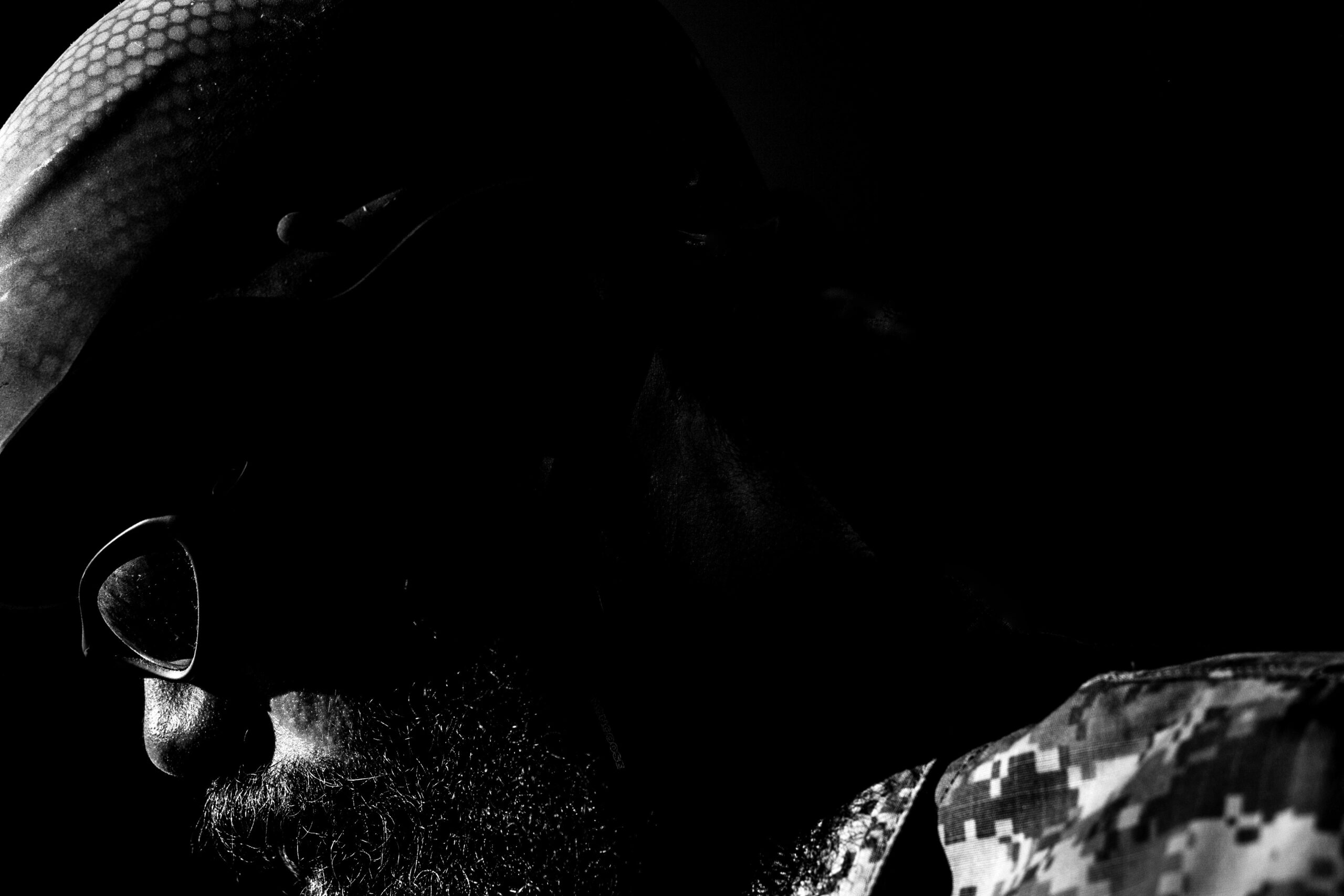
You live in a small two-bedroom house, that is more like a big shack with walls that make you feel like you’re in a storage space. You live on a military base in California where they train the Marines, and the Army and any special forces, right before they deploy to Iraq or Afghanistan. NTC, they call it. The National Training Center. They built a recreation of a marketplace in cities like Fallujah, Mosul or Kabul and housing areas you find in their desert which are much different from the one in yours. It’s 2009 and the military only has one base like this to train its soldiers.
You’re the woman who decided to marry the guy whose hair was high and tight, his shoulders were broad and round with the thick dick from that night you decided you were going to get drunk with your friends and go home with the hottest soldier on leave who hit on you. He hit on you, went home with you, gave you three orgasms before he left the next day. You lived your life; went back to the Casino, dealt cards to the wishful thinking and thinking and cynical day player pros. He fought his war and when he came home to your desert you introduced him to his daughter. He held her high. He stood post every night, he’d say, so you could sleep. Your little man gets sixty days with his daddy. Then he left to fight again.
You couldn’t sneak up on him now and put your hands on his shoulders or under his arms over those wooden abs. To touch him without him seeing you approach might get you hip-flipped and twisted into an arm bar before he recognized you. But when you put your hand on his back that first night, you felt his muscles, his inner strength. You felt safe. Secure. He was the kind of guy who would pummel any misogynist who fucked with you at the bar, calm himself down, check on you, make sure you were just fine and then order another round and get right back after it.
You miss the gamblers and the drunks. When you drive through town it’s beige. The clothes the men and women wear on the base are beige. Your home is beige. You are surrounded by the desert and your storage-space house shakes all day long. You want to see so many city lights illuminate the desert night again. You want to stay out too late and wake up tired and hungover and the best lay of your year face down in a bed where the military corners got sexed-off the mattress. You want one week you don’t have to make every meal. One week you don’t have to wake up first. One week without the bombs going off and Tommy, Jr. wondering if, when the house shakes, does Daddy feel it. “Can the bombs hurt daddy, or is he okay because he’s far enough away from them, like us?” You pick him up from pre-school and sit him at the table while you try to make brownies, but the eggs fall off the counter onto the floor because the Apaches are practicing maneuvers over a populated area.
It was supposed to be an easy way to stay together. He changed jobs. You move on to the base, and when he comes home, he trains the next batch of military volunteers how to survive when they run through an occupied neighborhood in the middle of 110-degree heat or at three a.m. in the desert blackness. He teaches them how to survive amidst the improvised chaos. How to react to seeing an EFP detonate the Humvee in front of you. He trains them, then deploys with them, then leaves them in their desert and comes back to yours. You want him to stop fighting. How do you choose between two families, he asks.
This base has a state-of-the-art replica of any town square they’re likely to find themselves patrolling, weapons pointed down, fingers near their triggers, eyes darting, looking for vest shaped lumps under burkas. Before you go fight a war with no demarcation line or anyone facing off against you four hundred yards away in a recognizable uniform, you come here to Ft. Irwin and learn how to fight a war during everyday life.
There have been worse real estate decisions. You don’t live in Tornado Alley. But you do live in the Mohave. You’re tired of the desert. It would be worth it to live under an airport at this point. Some of the other wives go for a tour of operations, where they will see what their husbands are doing every day. You decline, because you don’t need the details of your nightmares to be more specific.
They have someone at the base who manages the care packages. You send him pictures of his now four-year-old son and three-year-old daughter. Sometimes a picture that’s just for him in a prop Classified envelope, but you’re not that get after it woman he met at the bar the first night anymore, so there are more reasons why not to send him what he’s missing than ones that feel worth it. Also, he’s not gone long enough anymore to earn one. You try your best to meet that guy you found the first night every time he comes home.
He doesn’t say much in his emails, but he attaches pictures of his other family. The mother in you is desperate to feed all his boys better than the military. How can they fight eating MREs? The men he trains admire him, and you feel proud of your husband and of yourself for marrying the kind of man other men look up to, listen to, respect, are willing to protect with their own lives. He doesn’t tell you two of the boys in the picture you’re looking at will never hold their babies or touch their women with their own hands again. That one of them lost an eye, too, and who knows what other challenges and injuries will grow in those festering wounds. If they’re lucky, when they come back maybe they’ll meet Sgt. Dyer, a quadruple amputee who works on the base as an IED victim. They put a unit on patrol in a crowded bazaar and blow an IED and Sgt. Dyer is rigged to “explode” like a Hollywood stuntman. Limb’s fly, blood gushes. Screams. A quadruple amputee reliving his worst day, every day, so he can help his brothers. You waive to him when you get groceries at the commissary. He nods back. The men who play Iraqis selling their wares in the NTC marketplace watch you shop, and you do your best not eye them with suspicion or wonder if any of them are there to hurt you and your babies. They make you think like your husband, looking at everyone as a threat. They live on the base with you, in your desert, not theirs.
He doesn’t tell you about the group of dead children he saw, who looked peaceful despite dying violently in fear. He doesn’t tell you these things, because he knows you’ll only feel bad that you can’t help all these children. Dead boys and girls, toddlers and adolescents. You want to hold them like their mothers when they were babies and tell them they are loved and needed. He doesn’t tell you most of the time he doesn’t know if he’s killed anyone or not, mostly just firing so they won’t fire back, shooting in the dark, or through dust clouds created by the fighting, thick enough to jam your weapon. He doesn’t tell you about the ones he knows for sure he killed, either. But you know if he ever does, he did it to protect his family. He is a hero, but he’ll never say it. He trains his men to survive, knowing some of them won’t.
When he comes home, he’ll be a little different than the last time, and like the last time, and the times before that, you’ll have to get to know this new man. And he’ll have to get to know the new you. The one who stopped telling him how she really feels so he can operate in his desert while you operate in yours. Still the same broad shoulders, marble body and strong jawline. His memories of you have changed, too, and he does his best to get to know you. Everything will be fine, until he forgets he lives in your desert, on the base and the house shakes.
Category: Competition, Featured, Short Story, SNHU Student