by Michael Theroux
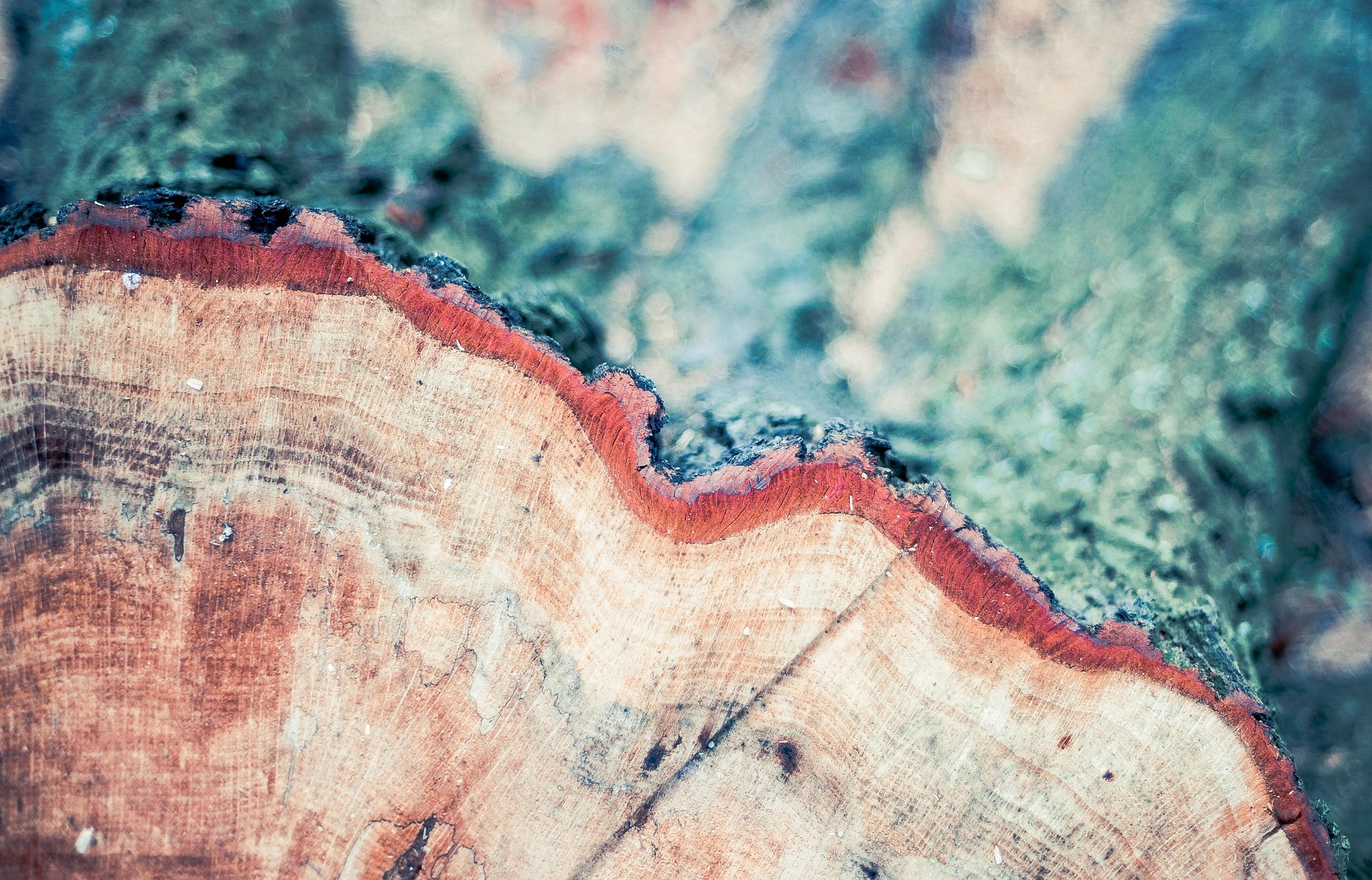
Cutter Bill had all his fingers and was proud of it. Most loggers, especially “cutters” who reached the ripe old age of 60 or so like Bill, had left various body parts scattered amongst the logging slash, accidents many loggers didn’t walk away from. Not Bill. Nope. He had plenty of close calls, a few serious mishaps, but both hands sported a full complement.
Tri Eagle logged the Kern Trench for incense cedar and Douglas fir and an occasional monster black oak. The toss, spill, and grind of the Kern River had deeply incised the canyon coming off Mount Whitney, steep sided and densely timbered. Bill had been with the company he simply called “the Eagle” long enough to be an established fixture, the cutter they depended upon to drop even the most difficult, dangerous, twisted “sticks.” Bill wielded a Husky—more properly a Husqvarna— chainsaw and usually had a four-foot blade mounted on it for “small work.” But that saw also bore a six-footer, and Bill handled it like a carving knife at Christmas.
He’d eyeball a marked tree, walk around it a few times. Stand way back, get up close—until he knew that fated pole as well as he knew his comrades. Then he’d pick up an arm-thick chunk of branch, drop-rip his saw into action, and, holding the branch in left and saw in right, make a sharpened stake, oh, maybe two feet long. He’d walk off from the base of the tree about twenty to thirty feet and thump the stake into the forest litter with the heavy back end of his Husky just enough that it would stand up on its own.
About then, the crew would usually pause to watch the Master at work. Bill would quickly make two or three magic cuts, yell “Timber!,” and step back a few feet to light a cigarette. The tree would shiver root to top, give a mighty groan, then, with a rending swoosh, shift from a hundred-plus feet vertical to horizontal. The detritus would settle, and once again, another stake was driven plumb flush with the duff, dead center of the trunk of that forest giant. Nobody could remember when Bill had missed driving in a stake.
Bill had run just about every kind of logging rig that ever worked timber. Consummate storyteller, he spoke of manning a D-10 on a particularly tricky clearing job, simply cause nobody else was brave or crazy enough.
See, that job required all the slash—the tops and branches, chunks and nonmerchantable twigs—to be cleared down to a central landing. Normal enough, but the timbered land was so darn steep a man could hardly keep his feet, much less run heavy equipment. Oh, nowadays there are fancy sidesteppers and such that can probably work full vertical, maybe even upside down, but “back when,” as Bill put it, a D-10 dozer was about as fancy as that company got.
So here goes Bill and his dozer, inching down to the right, planning out a cross-slope zigzag. But the tracks were skidding down about as much as crunching forward. Everybody was watching—some from above, looking down the cleared swaths, some from below, around the landing. Bill made the corner and started back with the land almost touching his left shoulder; he said later that he fully expected the next bit and was determined to handle it cool and clean.
When the upslope tracks began to lift, he just got up and began walking up and to the left. First, he climbed up the cab floor. Then he stepped onto the left track and kept pace as the dozer slowly rolled under him. With a mechanical equivalent of a grunt and a fart, that old tractor rolled over upside down, and Bill simply climbed across its underbelly.
Not done yet, with a shiver and a slide, once again all that metal began to roll. Naturally, Bill just climbed over the uppermost right-hand track, reached and grabbed the heavy cage bars coming up above him, and pulled himself back into the cab seat.
With a majestic thump and crash, the dozer landed tracks down, maybe fifty foot downslope from where the roll started. As calm as can be, Bill just gave her a crank, and she started right back up, albeit with a mighty backfire, and off they crept—to the cheers and hoots of the entire crew.
We were a tight crew, even with or perhaps because of the low pay. Timbering gigs were sparse; dire need and ingenuity found the team selling scraps, bark, chip, and special orders to the flatland landscape shops and horse ranchers. I was running supplies back and forth from the Kern Trench to Bakers Acres, and I found a ready market for three-foot diameter by four-inch-thick cedar stepping-stone slabs, coarse-cut massive planks for rustic tables and mantelpieces, and all the fibrous cedar bark the chippers could spit out. The crew would finish the bulk of the timbering and sort out what they might make from the busted logs and unmerchantable timber. I’d make a run and market the materials, call up and let them know the order, arrange for a flatbed rig to meet them at a big landing. The boys would have everything ready to load by the time I got on-site and the truck pulled in.
As I was getting ready for another Valley run, Bill came up and said, “Why don’t you see if you can pre-sell a big cedar horse trough? Watertight, bung to drain it, six thick legs under it so it wouldn’t just sit on the ground. Maybe ten to twelve feet long, four-foot wide and high.” So off I went, and sure enough, one of my rancher contacts thought that sounded just peachy. Full-load order that run consisted of maybe two hundred stepping stones, six or seven cedar slabs—and one big horse trough.
The flatbed beat me to the landing that day, and when I wheeled in, everyone was just sort of standing around, waiting. Slabs were already on the bed and cinched down. But no horse trough. Instead, there was this massive section of cedar trunk, a dozen feet long, five foot in diameter, sitting right next to the flatbed. With Bill sitting on top of it.
Timing for runs like this was tight, and an hour extra in pay to the truck and driver just about removed whatever margin we made on the material. I started to panic. Jumped out of my truck, trotted over to the flatbed. Just before I said something really stupid, I caught that mischievous glint in Bill’s eyes. He was simply waiting for me, six-foot blade sharp and ready.
First thing when the saw was roaring, Bill eyeballs the cedar trunk from the top, walking one end to the other. He picks a “cant,” or angle of cut, wider at the top, sets the blade across one butt end, and slowly walks that saw through the length of the trunk at that angle all the way to the other end. A rounded slab tipped off, and before it had settled, Bill was already walking that long blade back through the trunk on the other side. He then did the same angle on both stump ends, wider at the top than the bottom by a foot or so. Never missing a breath, Bill hops off and levels that blade about shoulder high and slices off the top as clean as you please.
With that long blade still singing, Bill hauls off and looks for the world like he’s going to throw the saw over the log—but he hangs on and lets the weight of the ascending saw help boost himself back up on top of the now flat-topped log. He took a moment to judge the depth of the trunk against the length of his blade. Then sunk that blade deep and once again walked the saw the length of the trunk—time, about ten inches from the outside, but on that same cant. Down one side, across the end, up the other, and finishing across the far end with a clean, continuous slice deep into the cedar.
The next step caught me off guard: He sticks that saw-blade tip straight into the cedar vertically again and progressively makes a checkerboard of deep incisions between the inner wall slices. This produced a series of maybe six-inch square-ended pegs, with their bottom ends all roughly level. He checked his work, snorted, and jumped off the log, blade still purring.
Next he works the log’s underbelly like a surgeon, and a few spare minutes later that log is standing on six very stout legs, all the extraneous stuff trimmed away. Again with the saw tip, he bores a six-inch hole low on one end, the future trough’s drain hole. About then the stinger crane on the flatbed swings its grapples around. His mates harness that huge hunk of cedar and gently roll it over on its side. Bill finally cuts the saw’s power, swapping for a six-foot pry bar. With a deft series of prod-and-pry moves, that bar cracked each peg off at its base, and a nice stack of six-inch-by-six-inch-by-three-foot-long square-sided posts got loaded, just as “sumpin’ extra.” Bill had by now swapped his six-foot for the four-foot blade and ripped the Husky back into service. He used the very tip as a grinder and leveled off the inside bottom of the trough. In the smooth inside bottom, with finesse hard to fathom, Bill cut in a nice CB.
The flatbed’s Stinger rolled the trough back on its legs so Bill could check and adjust level. He picked up one of the six-inch-by-six-inchposts, trimmed it, and tapped the bung in tight to the drain hole. Up goes the crane, over go the tie-down straps, and off rumbles the flatbed—a half hour after I’d got on-site and about fifteen minutes before its planned departure. Bill chuckled, standing next to me as we waved off the driver. “That horse trough will outlive us all, you know . . . ” No doubt.