by Barrie Brewer
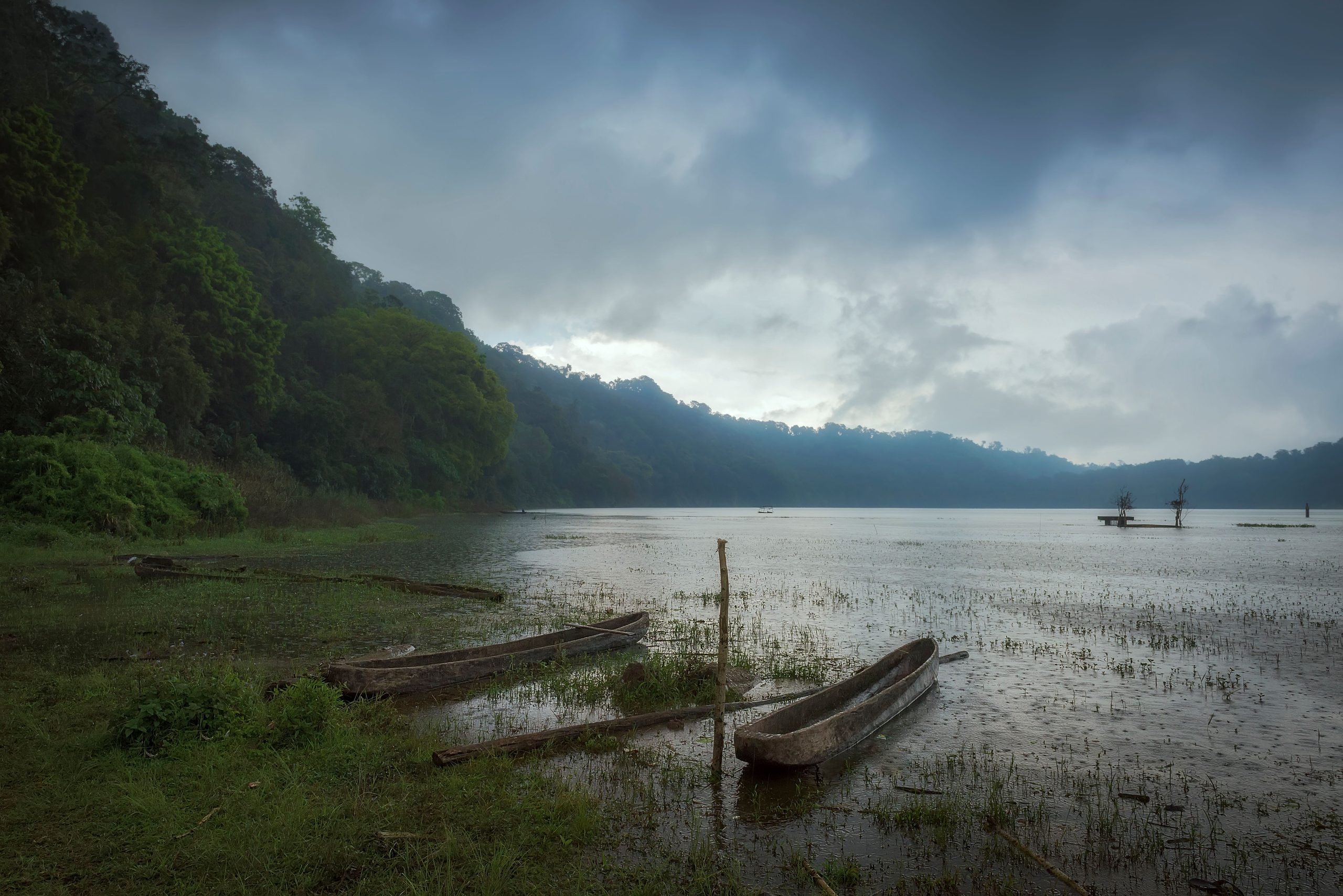
The river has kept many things—
bones that did not sink as they should,
secrets that refused to erode,
and once, a man who tried to take me.
I have no name—not in the way people use names, not in the way names pin things to memory and maps. Names hold. Names claim. Names make things easier to forget.
If I ever had one, it was given in a language of hand-carved wood rather than words: a shaping, a gouge, a patient listening along the grain.
Names are for identification and direction.
I have never needed either.
I remember water, and how it moved me.
I remember the hands that shaped me.
And I remember the hands that later tried to claim me—hands that did not understand how the river remembers what men forget.
I began the way many things begin here: inside a tree that endured many summers, drank storms, and anchored itself against winds that wanted it gone. Sap climbed its length. Birds nested in its arms. The earth tightened around its roots as if guarding something worth keeping.
One morning, I fell.
Whether by storm or tool, I do not know. Silence followed. Then hands came—strong, patient hands that pressed against bark and paused, as if listening to what I wanted to become.
There were two of them. One worked most often with the tools. The other stood nearby, watching the river, whispering into its current before the first cut was made.
I remember his quiet voice more than the blade.
A hollow was opened slowly, with skill that listened to the grain before cutting into it. Chips curled away like shed skin. Sweat fell. Breath thickened in the humid air.
Fire came next.
Coals pressed into my belly while striking tools widened the space within. Smoke curled into my ribs, slow and deliberate, until I understood something simple:
Emptiness was not weakness.
Emptiness was readiness.
Smoke gave me shape.
Fire gave me memory.
But it was the whispering man who gave me purpose.
“You will carry what we cannot keep,” he murmured once, pressing his palm against my smooth ribs. “And you will return what must not be lost.”
I did not yet understand what return meant.
Water taught me everything else.
For years—or something like years—I was guided. I slid, floated, rocked in rhythms that carried meaning without names. Sun fractured into liquid shards. Shadows rippled across my skin like thoughts forming and dissolving.
I carried laughter, the weight of water, and the quiet grief people do not speak aloud. Feet pressed against my ribs. Hands steadied along my rim. Children leaned over my edge to touch the current as if it were alive.
But I carried other things too.
Not living voices.
Still ones.
Wrapped in woven reeds. Weighted with stones that loosened over time. Guided into my hollow with reverence instead of haste.
I was not built only for travel.
I was built for remembrance.
At dusk, I was tied to roots with rope worn smooth by repetition. The fibers smelled of rot and river mud, of hands that had worked long and hard.
Someone sang once—low and careful—as if the river itself were listening.
The sound lingered longer than the singer.
Then one day, no one came back.
The silence that followed settled like silt—quiet, patient, impossible to sweep away.
I was left at a bend where the current slowed, where leaves gathered and circled without urgency. Rain filled me until I grew heavy. Sun emptied me until my ribs dried and cracked in places no one would see.
Moss gathered along my edges. Birds perched without hesitation. A serpent slept inside me once, coiled as if guarding something that mattered.
Silence settled in—not absence, but residue.
What remains after loud things leave.
The river keeps what belongs to it. I learned that long before men arrived with boots and gruff voices—long before one of them knocked against my ribs and listened for the hollow sound of history.
Water had already taught me what I was.
The river had been restless for days—its surface tight with secrets, its current tugging at roots as if remembering something unfinished.
I waited.
Then came the sound that defied belonging.
A roar overhead—metal biting air, spitting dust, then gone. The noise lingered long after its source vanished, pressing against the forest like accusation.
Footsteps followed.
Two men this time.
Their boots slipped in mud that did not welcome them. Their voices were sharp with disappointment, brittle with hunger that had nothing to do with food.
“Nothing,” one said. “Weeks out here, and for what?”
The other pushed through reeds that bent but did not break.
I felt him before he saw me—the way water senses change before an object surfaces.
The man with narrow shoulders crouched beside me. He brushed rain from his eyes and stared at the curve of my rim as if measuring something that refused recognition.
“Check this out,” he breathed. “An ancient dugout.”
The other laughed once—thin, humorless.
“This is hand-carved,” the first insisted.
The second man scanned the trees, counting sounds—insects, water, belonging.
He stepped closer.
Water lapped, unsettled.
“Maybe a canoe,” he said. “Old.”
I knew him before he knew me—not his face, but his form. The echo of bones that once rested inside me.
“Don’t touch it,” the second man said.
“What?”
“Leave it.”
The first man laughed. “You afraid it will bite?”
“I think it is empty because it stopped wanting to carry people.”
Rain thickened. The river climbed my ribs—not slowly, but with intention.
“I hear the river,” the second man said quietly. “And it does not want us here.”
“You know what this is worth?” the first pressed. “Museums kill for artifacts like this.”
“Stories are how this ends badly.”
The words echoed against memory—against a voice long ago whispering similar warnings.
“We take it,” the first man said.
They argued the way men do when luck abandons them—voices loud, words forced into places that preferred silence.
Lost tribe confirmed.
Ancient civilization discovered.
The first mimed lifting me, already weighing my worth.
The other watched the water.
“This isn’t something you just take,” he said. “You don’t pull it from this river and pretend it belongs somewhere else.”
The first man reached again.
Fingers closed around my rim.
The river surged.
A branch cracked. A heron lifted from upstream. Frogs leapt from my hollow.
Then the river went quiet.
Something large slid into the water upstream.
Both men froze.
A body came around the bend—arms loose, tumbling on the current, its face pale against the brown churn, as if the river had tried to erase it and failed.
It struck my side.
The impact rang through my ribs like memory returning.
Then came the hand—a hand that carried a scar I recognized.
A curved line across the knuckles, cut long ago while shaping me, when blade slipped and blood touched my grain.
The man who had given me purpose.
Returned.
Not lost.
Then came silence.
The river closed over the way it closes over rain—without hesitation, without apology.
“Was that—” the first whispered.
“Don’t say it,” the second answered.
They waited.
Nothing surfaced.
“That was no accident,” the second said. “It was a message.”
“People drown all the time,” the first insisted.
“Not like that.”
Rain struck harder. The river darkened.
“We could be dead broke,” the first said, “or rewarded for a rare find.”
Silence followed.
“Every tribe has warnings,” the second said. “They leave them where they matter.”
“You’re talking about curses.”
“I’m talking about consequences.”
The river rose another inch.
Water filled my hollow.
“You lift this canoe,” the second man said, “and something comes with it.”
Maybe not today.
Maybe not here.
But it comes.
The first man laughed—too loud for the river.
“You want to stay poor because of superstition?”
“I want to stay alive out of respect.”
They stared at each other—one seeing loss, the other relief never admitted aloud.
At dusk, they left.
Neither looked back.
But the river did.
It remembered the rhythm of their steps, the weight of their fear.
Years passed.
Saplings rose where there had been silt. Roots thickened. Water shifted.
Still, I remained.
Then came a woman alone.
Not with boots.
Not with machines.
Not with hunger.
She came with knowing.
Her clothes were faded. She carried a bundle wrapped in cloth that once had been silk.
She knelt where the man who shaped me had knelt long ago—not to examine, but to return.
Her hand moved along my rim the way memory resurfaces.
Her fingers trembled—not from fear, but from recollection.
She had seen the river take someone before.
From her bundle, she withdrew something small: a carving, bone worn smooth by years of touch—the same bone once placed beside the whispering man when he carved my ribs.
She pressed it into the silt beside me.
“I am sorry,” she whispered. “I am sorry they came. I am sorry we could not keep you hidden.”
She sat for hours—not speaking, just present.
Listening.
Her fingers traced the charred hollow where fire had once opened my belly.
She knew the old method—not learned, but inherited.
When she left, she did not look back.
Guardians never do.
They trust the river to finish what memory begins.
Water filled me again, then emptied. Silt traced new rings along my ribs like time recording itself in layers no one would read.
Others came in later years.
Some looked.
Some whispered.
One knelt and said, “I will not tell anyone,” as if speaking to something that might answer.
I did not.
I have been curiosity, proof, warning—and none of these names fit.
One day, my wood will soften. Roots will split me. The river will carry my pieces where fish hide and branches dam the flow.
Not everything wants to be known.
Some paths survive because they remain unnamed.
Some stories endure because they are never taken, never cataloged, never forced into language that diminishes meaning.
The river keeps what belongs to it.
The river remembers what people forget.
Some things return, even when no one is watching.
I was shaped to carry the living.
But I was honored to carry the dead—
to return them where belonging never ends.
I have been placed, lifted, hidden, found, examined, abandoned.
Through it all, I have never been lost.
The river knows where I am.
It always has.
And long after voices fade,
after maps fade,
after names fade,
memory carries on.
And what is carried on currents
always finds its way home.