by Lucy Carr
I dreamt of the red and yellow wool blanket that my wife, Evelyne, brought back from Morocco. She had purchased it in Tangier just before crossing the Straits of Gibraltar by ferry. I reached down to my calves to pull it across my body, my arms trembling from the cold. I abruptly awoke; reality slapped my muddled consciousness—revealing my surroundings. A thick awning of Larico Pine branches obscured the morning sun.
I could hear the ripple of a brook somewhere behind the wall of pale green boxwood. My faithful Colnago 10-speed bicycle (my companion since 1987) was at arm’s reach. In my disorientation, I had imagined the red and yellow wool blanket at my feet. It was surely in a cardboard box collecting dust, in the back room of our chalet, with the rest of Evelyne’s worldly possessions. Cartons of trinkets were stuffed under Evelyne’s single bed in the mansard bedroom. The boxes are all that is left of Evelyne’s memories.
The only occupants of the chalet this morning are the two aging feral cats, no doubt listlessly sleeping in a makeshift shelter on my terrasse in Gréolières les Neiges. I, on the other hand, was in a gully somewhere east of Calvi, Corsica.
My stomach began to follow my head with the realization that I was lost and without food or water. It grumbled its discontent. I slid my fingers into the tight side pocket of my bike shorts and rolled the empty energy-bar wrappers into tiny balls. Near my feet, I spied a spiky juniper bush. I crawled to it and extracted a small handful of round black juniper berries. They crunched between my teeth. I lay back, imagining the dishes of choucroute my mother ladled on my plate during my childhood in Colmar.
My last meal was the Corsican charcuterie and cornichon sandwich I bought at the ferry terminal yesterday morning. I had been pleased to have a more substantial breakfast than a pain au chocolat because I was setting out on an adventure (with my faithful Colnago) into the mountains of Tighjettu. I arrived in Calvi in the early hours. Cars whipped around the winding streets, fumes of diesel polluting my nostrils as busy people rushed about their morning routines. I ate my sandwich sitting on an iron bench looking north across the silvery Mediterranean Sea, toward my point of embarkation. It was time to go.
My goal was to reach the Circle of Solitude at 2760m altitude. The Circle of Solitude resonated with me because I was in my own circle of solitude. I could imagine myself high on top of the sublime peaks of Corsica with the cold wind blasting away my mournfulness. The changes in my life have trammeled me, covering me with an insidious coat of melancholy. I can see myself, resolute, having conquered the most strenuous peaks as I surmount my mountainous grief. The piercing wind bellowing, you can endure!
I had started off biking up the hill on the gritty trail. My Colnago was equipped with gravel tires. The fork was wide enough for a 28” tube. As I had anticipated, the trail became too difficult to pedal, and I continued with my dear Colnago on my back. I chose to equipe my bicycle with the minimum: a small bike pack for my telephone, a couple of energy bars (which I ate in little nibbles), inner-tube repair patches, and a bottle of water. I had weighed the bike before setting out: 13 kilograms. It was my carrying limit.
The Circle of Solitude is perched at the summit of steep, craggy peaks, far beyond the tree line. I knew that transporting my Colnago would be a task, but I had experience carrying my bike on other adventures. In the past, the chore of carrying the bicycle up was compensated on the way down. I had often gone careening down slopes on the Colnago’s back. I was not deterred.
I pressed my back against the damp soil to think—to wait for the angle of the morning sun to change and for the rising rays to warm my aching body. I felt the warmth of ultraviolet light begin to caress my bare legs. I became aware of cuts and dried blood tattooing my limbs. The safari through the brush, with my Colnago on my back, had left its marks.
I had erroneously chosen to cut off from the GR20 trail. I could discern the mountain peaks through the trees and determined that I should pierce through the dense vegetation; after all, the shortest distance between two points is a straight line. The shortcut could reduce my climb. Intoxicated by the resinous odor of the pines, I had lanced myself into a perilous miscalculation. I have always been stimulated by the scents of nature. The effort had left me depleted after nightfall, and I had been forced to repose under the trees, exhaustion winning over reason. I did not make it beyond the tree line.
I lay down to rest, ignoring the dangers of the night. Bats fluttered their wings, emitting high-pitched screeches. A sanglier stomped its hooves nearby, snorting as it furrowed in the pine needles for grubs. I did not have the faculty to consider the presence of spiders. Blackness draped itself over the shadows of pines, like a protective blanket.
I thought about why I was here. I had gone to visit Evelyne at the clinic, in Grasse, two days before. I was used to her vacant stare by now, although the decline had been rapid. I grieved her once-sharp dark-blue eyes, which had been windows for her mind across the globe as she voyaged on her bicycle. She had never been afraid to embark on an adventure. More than once, she had crossed Europe and North Africa for two or three months at a time. I would never be certain of where she was or when she would return, having no news other than the occasional postcard or collect call. It was the way we lived. I accepted her absence, and she accepted my refusal to join her. It did not hinder our marriage. We were married 45 years ago, a lifetime together—and apart. The dark-blue eyes that had served as windows were cloudy and obstructed now. Her eyes were barriers, and her mind enclosed in a prison, with a life sentence.
Guilt is a terrible thing. Evelyne had a world of memories that her sickness sucked away from her. She traveled across the Sahara on foot. She biked from Antibes to Copenhagen. She hitchhiked across Alaska—alone. I could have joined her on any of her explorations. Moreover, I wish I had joined her. But I had always preferred staying close to home. If I had shared the adventures with her, the memories would continue to live, in my mind. Now, all that remains of her voyages are material souvenirs, like the red and yellow blanket from Morocco.
Evelyne had travelled. For her, the globe had no limits; distances only joined one discovery to another. Yet, she never adventured close to home. I have embarked on expeditions all my life, but always within biking distance of my doorstep. We never coordinated our treks.
Evelyne had seen my itineraries for potential trips to Corsica. I had spread my IGN map of Haute-Corse on the table on the terrasse. I could read the tiny numbers that designated altitudes more easily in the sunlight. She read over my shoulder. Corsica was far away, yet close. It was a piece of France, detached by the Mediterranean, a ferry ride of less than six hours.
For the first time, Evelyne showed an interest in joining me. Corsica was far enough away for her to conceive it as an adventure. She wanted us to scale the Circle of Solitude. Afterwards, she would pursue the trail alone, to Sardegna and return by way of Livorno, Italie. I had put it off. Although the feat attracted me, Corsica was too far from my chalet, my nest, cradled in the mountains. I had plenty of mountain trails to explore in proximity to my home. I had convinced myself that the expedition to Corsica could wait. Now it was too late to have the experience with Evelyne.
I had returned to our chalet from the clinic, feeling suffocated by memories. My eyes caressed the acrylic painting of Evelyne, with her long pale hair pulled away from her face. It was intolerable. I did something I never did. I cried. Tears did not escape my eyes, and pent-up sobs did not burst from my lips. I just sat on the couch, staring at the Christmas lights I had left up all year. They were blurred. The lights, and the painting of Evelyne, were blurred by the welt of liquid threatening to fall from my eyelids. Evelyne was gone, buried deep in her disconnected mind.
The sun was higher in the sky. I could feel sweat prickling the scrapes on my arms. It was time to move on. Besides, Evelyne was still there, wasn’t she? I had always gotten by alone. Today would be no different. I had to find my way back to the campground in Calvi, then catch the ferry back to Nice. I fished my Android phone out of my bike pack. There was still some battery, but no network. Forty-six years working for France Telecom, then Orange, and they still haven’t figured out how to adequately connect Corsica to the network. I had to improvise.
My ears detected the brook anew. That was the answer. I estimated that I was halfway to the point cumulant of Corsica. Water ran down to the sea. I needed to follow the brook. I felt exhilarated. I had a plan. I hefted my Colnago on my back, and I picked my way through the bush.
Judging from the height of the sun and the humid heat, it must have been around noon. I had pushed through about fifty meters of thick brush. I cursed my beloved Colnago as it caught branches and hindered the passage forward. The boxwood and eglantine had carved my skin, and the sweat burned the cuts. It was impossible to continue with my Colnago. I resolved to continue alone. My faithful bicycle would have to rest here. I spotted a tall European Beech tree, standing stoically amongst the forest of pine. I would leave my beloved here, protected beneath its leaves. I plan to come back for it. The tree, a lone beech, would be easy to find again, wouldn’t it?
I set off crawling at the base of the shrubs and eventually reached the water. I cried a shrill shout of joy as I lathered my bleeding wounds in the cold, soothing water. I bent my head down to where the current ran the fastest and cupped the liquid into my mouth until my stomach felt full like after savoring a wild boar stew. It was a million times better than the Orezza bought in plastic packs at Carrefour. The tips of my phalanges turned translucent white as I held my water bottle (salvaged from my bike pack) under the water’s surface. I placed it in the back pocket of my shirt. It felt cool against my vertebrae. I rose, following the stream downward. I was on my way home.
Following the brook was easier than picking my way through the brush. The biggest obstacles were large boulders and drop offs, where the brook splashed down as much as two meters in a violent waterfall. I thought about my Colnago, waiting for me under the beech tree. I almost felt a choke of heat behind my eyelids. I won’t forget you; I will return for you! I vocalized in my head. I would plan another voyage, bringing appropriate gear and cutters. I would not abandon my companion who had carried me along hills and turns, memorizing every winding road within a 50-kilometer radius of my chalet, my companion whom I greased, changed cables, repaired inner tubes, and polished for so many years, so that I could ride freely breathing in the air—alone.
The heat was wearing me down. I needed to take a small break. My feet were sore from the wet chafing of my sneakers. I took them off and placed them in the sun to dry. I sat down a few meters from the brook, on a flat rock in the shade. The rock was warm but not scathing. I allowed my body to relax. How far had I advanced? The afternoon sun would soon begin to retreat. I did not want to spend another night in the elements. The day was hot, but the night would be cold. My nylon shorts and thin top were wet with moisture from sweat. I would suffer from another night outside—and the lack of calories would not help.
I felt a tickling sensation at the base of my foot. It felt like when my toes are frozen from cross country skiing, and the blood is just returning. My eyes fell upon the culprit. A violinist spider, with its long spindly legs, ambled along the ridge of my foot. I froze so as not to startle it. It was fascinating to watch the spider crawl across my foot, probing ahead with two spiky antennae and hauling its brown bulbous body with its eight stringy legs. It reached the edge of the rock and disappeared as silently as it had come. I made a mental note to pack antivenom when I returned for my Colnago.
I set back off along the brook, following its path, as the violinist spider had followed the contour of my foot. I was moving mechanically, adrenaline my only carburant. The two energy bars hadn’t lasted the first day out. I repeated to myself that I would soon reach the coast. I strained my ears to hear the rush of traffic and beeping of horns. For endless hours I was accompanied by an orchestra of rushing water and the occasional song of a red-headed shrike, resonating from the adjacent trees. I did not detect any sounds of civilization.
The brook joined a small river. It was a good sign. Smaller bodies of water jet themselves into larger ones. Eventually, the river would follow suit and pour itself into the Mediterranean Sea. I walked along the riverside. Strands of high, yellowing grass replaced the gray rocky terrain of the brook. The land was flat, easy to navigate. The shrill pitch of crickets replaced the sparse songs of the shrikes.
I trudged along in a daze. Blinded by fatigue, I almost walked past the young man fly fishing. He wore high boots, a straw hat and long sleeves to protect his fair skin from the beating sun. I heard his cries before I saw him.
“Whoo hoo, monsieur, ça va? Are you alright?” he cried out with a Corsican accent.
I was stunned, my legs buckling beneath me. Finally, I had reached civilization. I was not alone.
He waded out of the water, visibly distressed to see an old man in the wild, wearing nylon bike shorts. He reassured me that the town of Calenzana was only four kilometers away. I could make it before the church bells rang at eight. He took pity on me and gave me his remaining half of a Côte d’Or almond chocolate bar. The sugar melted into my blood immediately. I thanked him and continued down the indicated path.
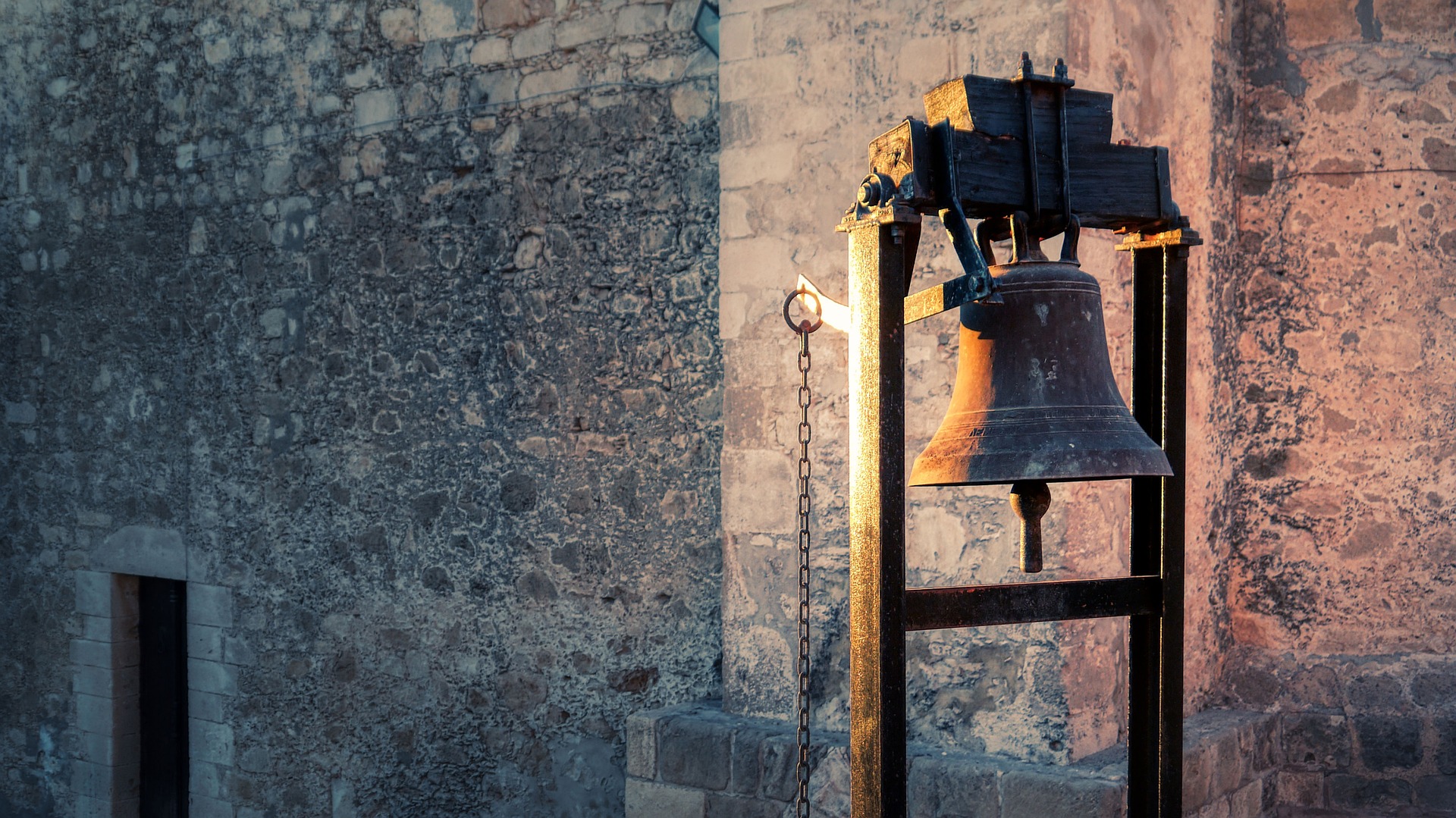
I heard the bells before I reached the houses. It was as if the sound broke something inside of me. My eyes glided across the red tile roofs of houses built with stones the same color as those in the brook. I collapsed to the ground, leaning against the granite marker that denoted the entrance to the village.
I no longer heard the river, the crickets or the shrike. Instead, I heard the haunting sounds of wind ghosting through the crevasses of bare cliffs. I could almost see the curve of the Circle of Solitude, bedded on the summit of Tighjettu. I shivered as I felt the icy gust of the emancipating wind whipping across my cheek. High in the crevasses perched the only occupants of the heavenly amphitheater: Corsican Royal Eagles, with their majestic black wings and powerful hooked beaks.
A lady with long blond hair wound in a bun was leaning over me. “Evelyne” I gasped, not trusting my unfocused eyes. She was Evelyne, twenty years ago. She spoke words to me that I couldn’t identify. A tall man with a square jaw was by her side, pulling me to my feet, dragging me to the Dacia rental car. Voices resonated in a Dutch accent. I was able to explain where I needed to go, the campground in Calvi. They cancelled their plans in Calenzana and accompanied me to my rented mobile home.
I crashed, still wearing my ripe-smelling bicycle gear. Sleep was recuperating. I felt my senses return as my stomach ached with hunger. I opened a can of prepared lentils and ate them cold, with a spoon. I slathered a stale crust of bread with a thick slice of pale, salted butter. The food filled my belly. I was then able to shower and dress my wounds while my Android was charging. I thought of my Colnago, high on the mountain, sheltered by the long branches of the beech tree. Once again, I whispered to it in my head, I will come back for you.
I sat down on the couch, and my thoughts returned to Evelyne, with her vacant eyes and abandoned body. She hated living an isolated life in the chalet. She was always moving around, interacting with people. I pictured her thin legs with stringy muscles molded by her leathery, tan skin. They were always in motion. She was active in the athletic club, (training school children). She was active in the nature club, (planning hikes for seniors). She had felt cramped and imprisoned in the chalet. She needed to be around people or to be engaged in an adventure. Evelyne had invested the small amount of money she inherited, when her parents died, in a studio apartment in Antibes. She often sojourned there, for days at a time, when the mountain suffocated her. It was fine by me; it was the way we were—together and alone.
I reached for my phone; there were two 4G bars available. I scanned the messages. I had a text from my neighbor: the cats were fine. Régine had been by earlier in the day to change the water and put out dried food. A friend, Tony, had tried to call. He left a voice mail proposing dinner at the local auberge next Thursday, his treat. He droned on about how he had not seen me for such a long time. I had a final voice mail from the clinic in Grasse.
“Monsieur Stevens, please contact the clinic as soon as you receive this message. It is très urgent. It concerns your wife, Evelyne.”
I sat down on the rigid gray couch in the mobile home and stared at the window. The opening faced north, the direction of my return. The beach was beyond the neighboring bungalow, but the night blackened the view. I strained my ears. They captured the faded sound of lapping surf. I resolved to call the clinic, despite the tardive hour. I knew in my internal cavity what I would learn: Evelyne’s body had joined her mind.
I packed my few belongings in my duffle bag and waited on the grey rigid couch. My reservations for the ferry to Nice were for 6 AM. I was returning to where I left. Was I returning to where I left?
I shuddered. Fatigue seeped into my bones. In my imagination, I wrapped the red and yellow wool blanket around my shoulders. I could almost smell the faded scent of Evelyne mixed with the stale cuttings of lavender that she had placed in the fabric to keep the mites at bay.
I pictured my pine-log chalet and remembered that I needed to repair a plank on my ramp. August nights are chilly. The two feral cats were probably nestled in their shelters on my terrasse. The days were already getting shorter; I would need to start collecting firewood soon. I thought about how the snow would decorate the peaks of the Circle of Solitude. Somewhere, under the branches of a lonely beech, my Colnago would be waiting for me.