by Phillip Knyphausen
My cousin Toto texted me at the start of February. It was all in German and he spelled my name wrong. I had only met him once before, at my uncle’s funeral in Mainz. In a tall black tailcoat, he approached me by the chapel. We talked quickly about our names and then Seattle, which after one question about the weather, cut me short to ask, “And what of the wine over there?” I was 20 at the time and didn’t know what to say. Neither did he.
“Hi Philipp, this is Toto from Rosengau. Your father just wrote to me that you’re living in Germany now. What are you doing here? Let me know if you ever come to Rosengau. Best regards, Toto.”
For the rest of the evening, he was ‘Toto Wine.’ The dinner selection was catered from his vineyard, Jones Wine, which the family took great pleasure leaning into one another to whisper about.
I wrote him back a familiar message. He got back to me a month later:
“Hello Philipp, hope all is well. Sorry for not responding. I’m sure you have heard about the tragedy of our cousin Leo from Rosenberg. The funeral will be held on Saturday the 7th. Rosenberg is not far from where you live. It would be good of you to come.” Leo was killed while hunting with his son. He was crushed by a tree. He was 49.
. . .
Lena, the woman whose apartment I live in, was born not 10 minutes from Rosenberg. We met in Seattle, working at a summer camp. When it was over she wanted to stay in the States but couldn’t, so I followed her back to Germany. I imagined it must’ve been odd for her to need a ticket from America.
In our raincoats and sneakers, we were shuffled up the stairs into an invisible corner of the church. It began with a youth choir center stage, that we could not see, followed by speeches and tears and Bach Passions, played by what must’ve been the best musicians in town. But it was a sensitivity I could not keep up with—to take them seriously would leave me weeping on the floor, vowing never to set foot near another tree again.
As everyone filed out, I could see the pant leg of a son and the hem of the widow’s dress. It was weird to think those were my cousins. I felt undercover in my corner, in my American disguise, and that if only some weepy old lady would turn and notice could she throw herself over me and weep some more.
We were almost out of the church when I saw Toto. He was much taller now, and his back much straighter. His tailcoat was corset-like, his mint-gray waves slicked behind his ears. I had never wanted to talk to someone less.
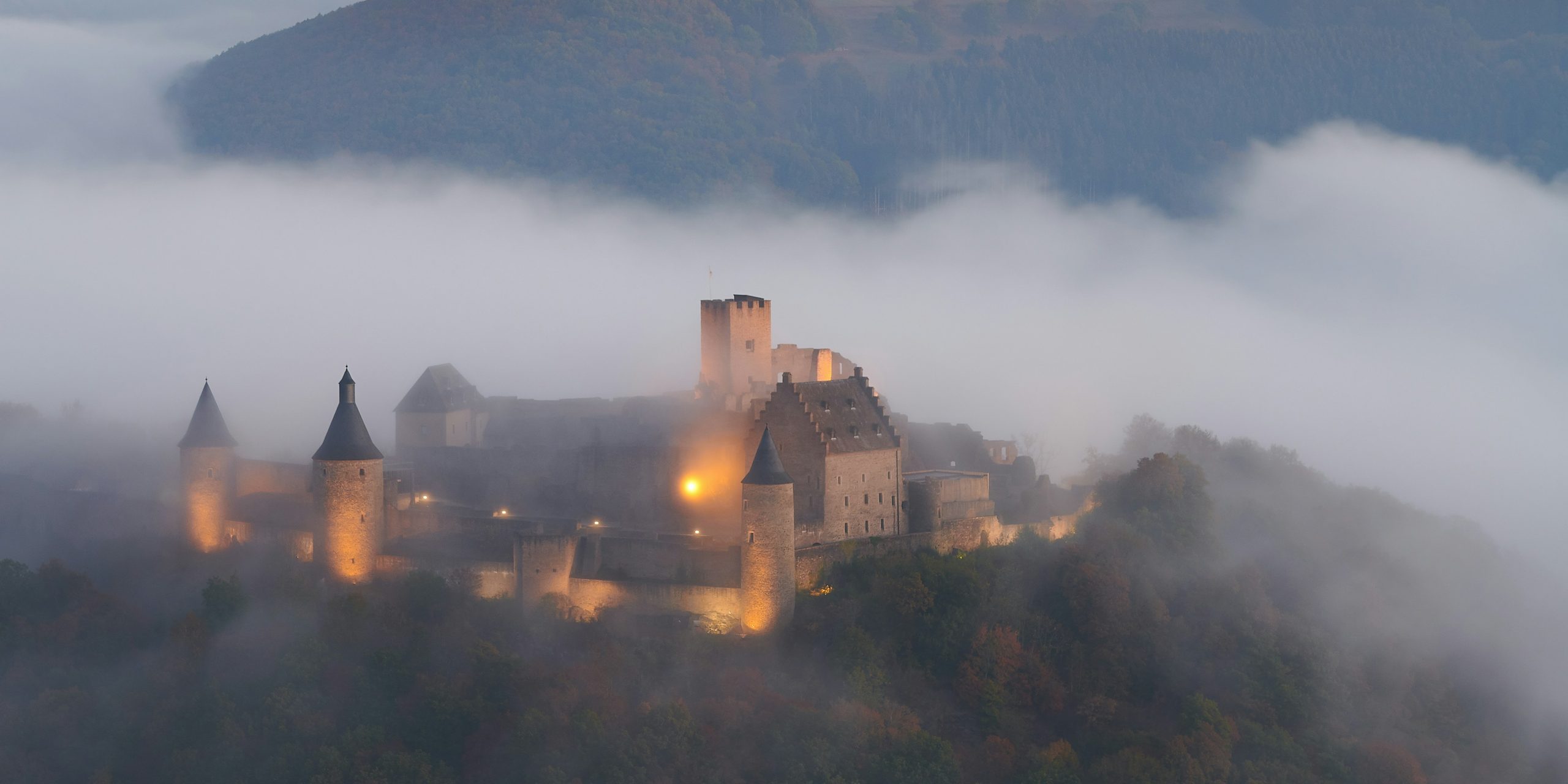
Our Uber dropped us off at a wide black gate. A man in a yellow vest motioned us in. We saw down a winding, narrow road until it opened into a parking lot, and with another turn a courtyard, surrounded by stables and barracks and a horrible moated castle. Four stories were the size of six, layered towers in every corner—I was told seven million euros were being afforded to maintain it all.
In the space between two barracks was a bathroom with a lady sitting out front. When someone finished, she would go inside and wipe down the seat. Before I could avoid her, we were swallowed by the mass, marching up to the forest behind the wagon. Every turn I would look back: a sea of black and people chatting, but as we got closer, a soft, lonely trumpet made people quiet.
The gates of the pavilion were opened. Everyone pushed inside. All I could see were the colors of a bouquet. To my left, in the dell, hikers were walking in a hurry. To my right, Lena and an old man were picking buttons off jackets when we were suddenly pushed aside. The widow with her youngest, crying quietly into her shirt, walked past. You might have accused her of being too strong. Of course there was change, but in her face you could only see what had happened. She looked up just above the horizon, her face as soft as Mary. I could not look away.
. . .
There was a sign to leave the forest which everyone followed: “For invited guests only.”
Lena and I went alone along the path, through the meadows by the castle walls. Someone was watching us. As we got closer, we could see she had a tiny headset. We acted normal, funeral normal, and cut right inside.
Between the moat and mild hills was a tall marquee whom those before us were already spilling from. We went over the plan:
“This is embarrassing.”
“It’s fine—”
“I don’t wanna do this—”
“We can just say we’re unsure—”
“We weren’t even invited, your cousin just sent us some flyer!”
At another time, I would’ve thought her fears a little green. But she was right. We didn’t belong. I had never even met Leo, nor his family, and every further exploit was a gross appropriation of the ceremony.
Inside the tent was a warm tomato bisque and some bread. Lena was up at the bar, grabbing a soda. We sat at the end of a long empty table. Next to me was a group of thirtysomethings asking a caterer to move out of their photo. Through a window I could see another son. He was following the cracks in the ground, alone, framed by the absurd castle he knew as home. Lena said he looked like me when I was his age, but more mature.
I saw Toto one last time. He was leaning his elbows on a standing table, talking to a much shorter man he wasn’t looking at. We walked right by them as we left.
We were the first, it seemed. Another couple was even now walking toward the tent from the lot. As they got closer, I could see it was my father’s sister, Alma, with her husband. They were surprised to see us of course; I hadn’t told them I was in Germany.
I had visited their home a couple of years ago. The dinner was so heavy, the company so strained, that on returning to my cousin’s place I had to hug her, if not for myself. It was a part of our family that I hadn’t known; to be constantly aware of your posture, to covet the smallest TV, to have no partner worthy. I’ve always asked my dad why he has such beautiful antiquarian books if nobody is allowed to read them: “I don’t know, because they’re nice to have.”
We told them we were going to Berlin. That we were staying with Emma, their eldest, who not too long ago had almost become my sister. Alma had pressured her to be adopted by my father, well into her thirties, so that she might have had our family name. I guess it was a requisite of land inheritance, even for some patchy plot of marsh.
We had dinner with Lena’s grandparents that evening. At dusk, they took us through the cemetery right out front of their door. Their parents they had buried as far away as they could, beside the road:
“Oh sure, they all fought in the war, but he never talked about it. If you asked him, he’d get quiet, sometimes mad. But once he got dementia, you could ask him anything,” her grandfather laughed.
We lagged behind. Lena had to remind me some of the edging stones belonged to the graves:
“I’ve always wanted to be buried,” she said. “I don’t know, those book-shaped gravestones I like.”
“I want to be burned,” I said. “And I want everyone I love on top of a windy Scottish cliffside to throw my ashes to the sea, only for them to blow back around and get all over their smug faces.”
Lena rolled her very tired eyes.
Category: Featured, Nonfiction