by Huina Zheng
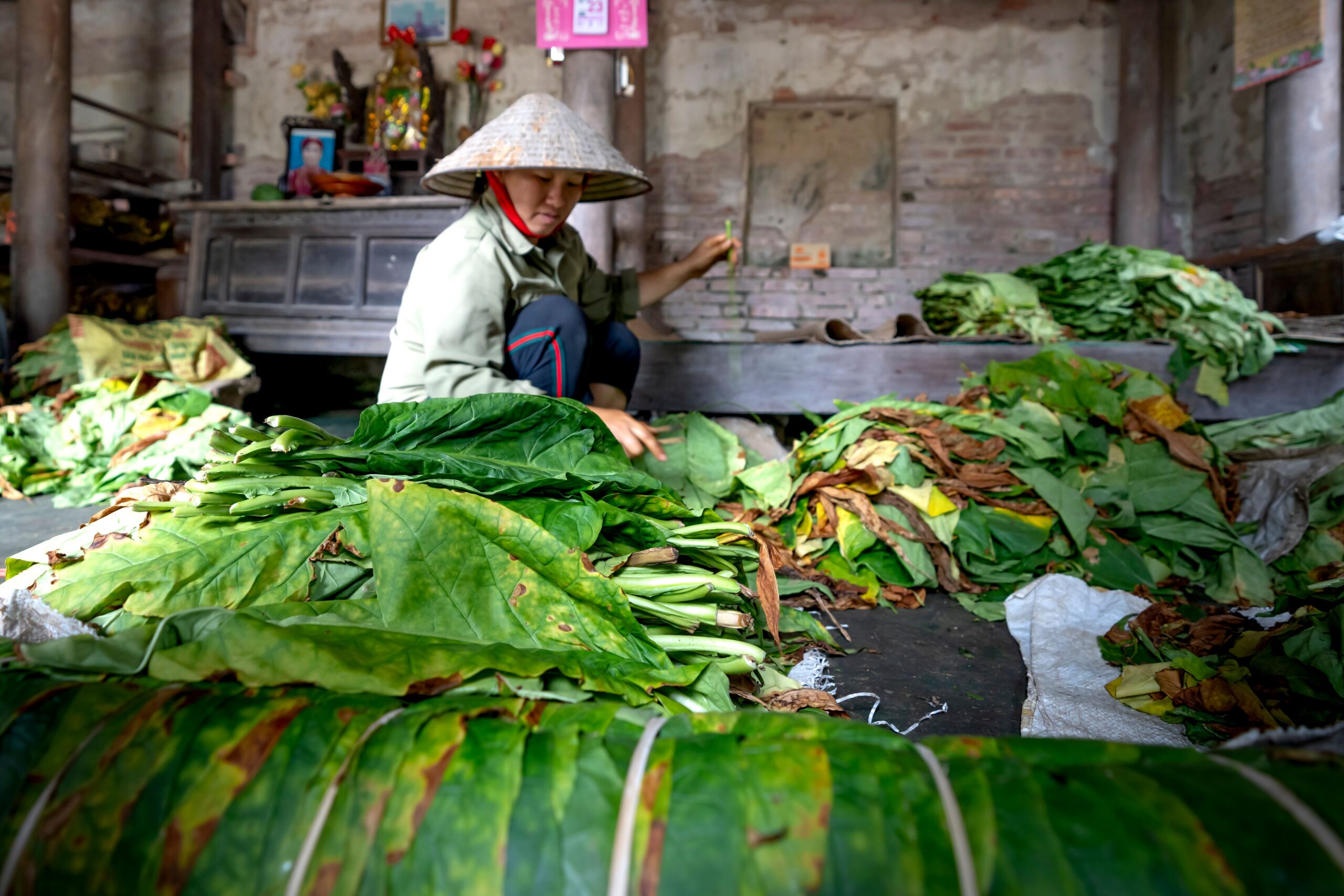
We eat the vegetables my grandmother picks up from the market every day. Leaves that are rotting, yellowing, wilted like used tissues, vendors toss them aside, and she bends down to gather them into her bamboo basket. She says appearance is the least valuable thing in the world. In the years of famine, a piece of moldy bread was more useful than gold. She says city people take the good vegetables and leave the bad ones behind, and that is heaven’s will. Heaven lets the frugal eat their fill and leaves the wasteful wanting. When she was young, she chewed tree bark, chopped banana leaves and ate them with salt. Compared to that, these leaves are a feast. She says if we all lived like those people, there would be consequences. So we should eat them first, eat them properly, eat them without shame. Eat them for the whole market to see. Then they will feel ashamed. They will feel uneasy. They will lie awake at night thinking about every leaf they threw away.
She says city people don’t understand: the yellow leaves are the most nourishing. She says they turn yellow because sunlight is sleeping inside them. I once looked it up at the library. There is a term for it, “yellowing of the inner leaves.” The outer layers grow too tightly packed, blocking the light, so chlorophyll fails to develop while carotenoids accumulate. We wash the leaves, chop them, boil them into a pot. She calls it “close to the earth,” something city people cannot buy with money. We eat so much sunlight that it’s no wonder she is over seventy, still strong, still steady on her feet.
On her way home from the market, she found me crying beside a garbage bin, still wrapped in cloth. My voice was loud enough to scare off the stray dogs circling nearby. She believes that anything abandoned must have something good that others fail to see. Like me. A baby with that much strength, she said, is meant to live a long life. She said I was clever, that I would be helped by those older than me. I don’t know how she looked at a face covered in tears and mucus, wrinkled like the back of a monkey, and came to that conclusion. She even said my forehead was full, that I would one day work for the state. I once got a perfect score on a math test in first grade. That was because I copied the answers from the girl sitting next to me. After that, even when I kept failing, she said the same thing: you have good fortune. She does not believe she could be wrong.
My grandmother and I are like two vines, twisted together. She says I cling to her. I say that was when I was little, and now she clings to me. But it doesn’t matter who clings to whom. She says I am like a beam of light shining into her dusk-heavy room, but she does not know that light also wants to go into a wider world. She remembers all my good points, and she always reminds me of all the good she has done for me. After I finished middle school, I sold sweet soups with her outside an elementary school. Dried tangerine peel red bean soup, kelp mung bean soup, sweet potato soup, and black sesame paste. She cooked; I pushed the cart. We didn’t earn much, but it was enough for our living expenses. Secretly, I made up my mind to go to Shanghai, that international city with skyscrapers. In my head, I made a list of all the things I wanted to do: take the subway to and from work every day, because I was tired of pushing the cart and breathing in car exhaust; sit comfortably in an air-conditioned train car no matter how hot or rainy it was outside; watch a movie once a week; go to Disneyland; eat Häagen-Dazs. She said, “What’s so good about Shanghai?” I said, “I don’t know. People there probably don’t pick up discarded leaves.” She said, “Then go.” The next day, she said, “Without me, you would have died.” I both looked forward to leaving her and feared I really would leave, like a child who wants dawn to come quickly so she can go out and play, but also hopes it will not come too quickly so she can sleep a little longer.
Every weekend, we make dumplings with the vegetables she brings back. On ordinary days, we eat the vegetables that look the least alive first. By the weekend, even the ones that had still looked green have turned yellow and soft. I roll out the wrappers, and Grandmother prepares the filling. She soaks the vegetables in salt water. She says once the leaves have “finished crying,” their mood improves, and then they taste better. It is a big project. We use up all the remaining vegetables, usually enough for two days. With aged vinegar for dipping, I don’t mind eating dumplings for all three meals.
In summer, the vegetable leaves Grandmother brings home fill the entire refrigerator. Cabbage and spinach take up most of the space. Even if we eat vegetables as if they are rice every day, we still cannot finish them. But I still want rice as my staple food. When I tell Grandmother not to bring back so many, she glares at me and says, “Then should we just watch pile after pile of vegetables get thrown away as garbage?” In the heat, vegetables wilt and rot. Because there are too many vegetables, buyers become pickier and only want the ones with the best appearance. The rest become trash. I point at my own face and say, “Look, even my complexion has turned green and yellow.” Grandmother ignores me and continues washing the cabbage and spinach.
The kitchen becomes like a steamer. The water with baking soda added to it bubbles and spits in the pot. Steam fogs up my glasses. I feel sweat running down from my armpits. She puts the vegetables in one by one, then fishes them out one by one and places them into a red bucket. When the bucket is full, I carry it to the balcony.
Together, we hang them one by one on bamboo poles. After they dry, they will become small bundles of dried vegetables that can be stored for a long time.
“A handful of dried vegetables is worth a bowl of meat,” she says. “What is left here is the essence.”
“Dried vegetables have no nutrition,” I say. “If we keep eating like this, what will happen to us?”
She rolls her eyes. “When the rainy season comes,” she says, “you throw these dried vegetables into the pot, and the whole room smells like sunlight.”
“What about nutrition?” I ask.
She pauses. Then she smiles, showing the gums where her front teeth are missing.
I pick up a strip of dried vegetable and bite into it.
I chew slowly.
I don’t swallow.
Category: Featured, Nonfiction