by Jennifer Ward
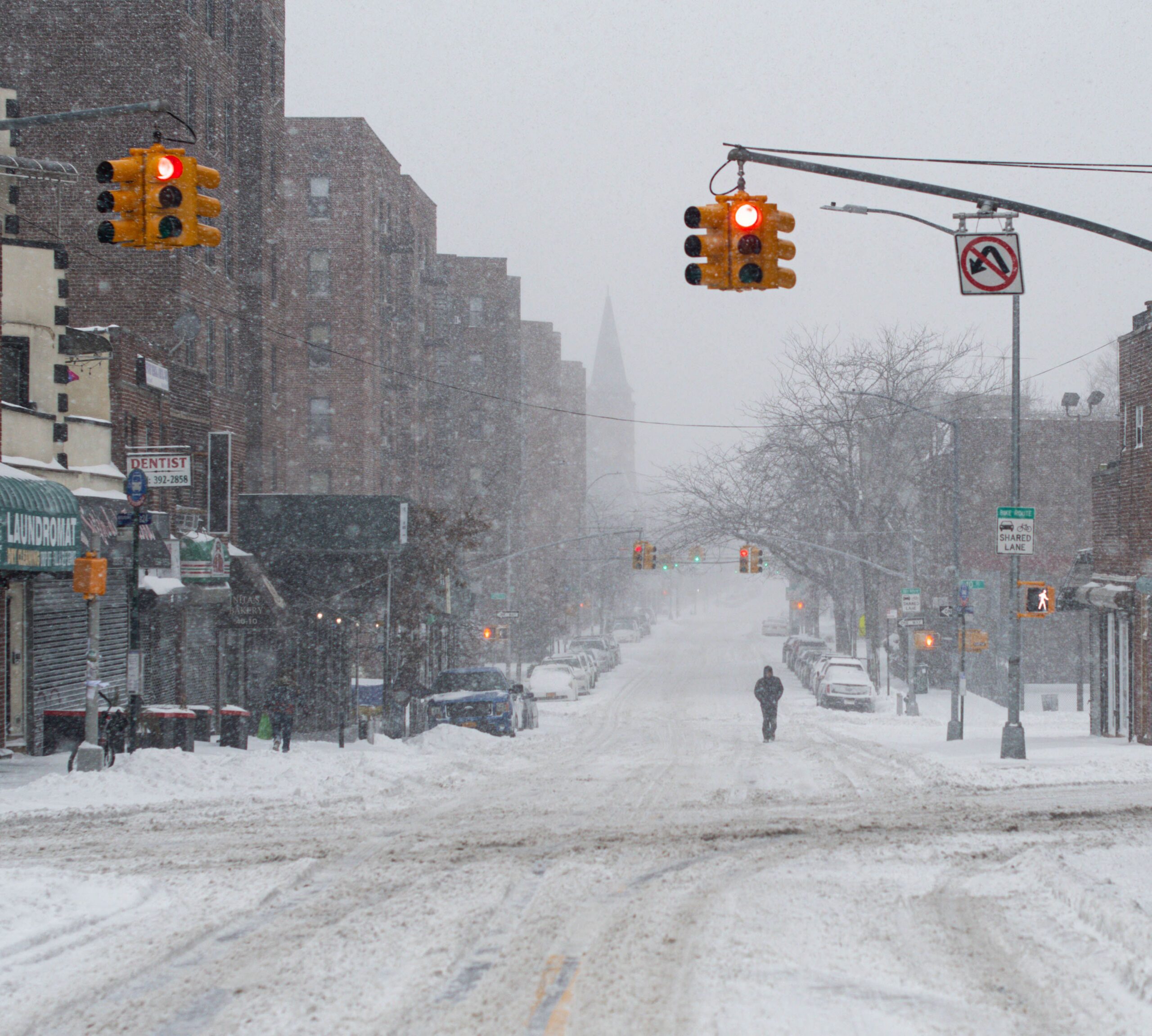
I remember the winter I turned ten most of all.
One Sunday, my father stood by the front door in his worn blue coat, a coffee mug in his hand. The faint smell of whiskey lingered between us, bitter as a broken promise. I tried to look past it.
“Do you want to go for a walk, Sadie?” he asked, like he did every December. “I think it’s time we get a tree.”
I grabbed my hat and gloves without hesitation and headed for the door.
With a shaky hand, he set the mug near the jar of pennies we kept for milk and eggs. My parents’ wedding photo sat face down beside it.
He turned off the lights, then paused in the doorway, keys in hand. I sat on the hallway steps and waited, knowing it wasn’t easy for him. A moment later, he locked the door and motioned for me to start walking.
Outside, falling snow turned the city into a dreamlike scene. Our neighbors, Charlie, Evelyn, and their son, Corey, had put up their tree the week before. They waved from across the street, and we waved back.
Bay Ridge was alive with holiday bustle. Storefront windows glowed with colored lights. At Woolworth’s, a train set circled beneath a life-sized Santa. A little farther down the avenue, a row of Christmas trees crowded the sidewalk. A young man in a plaid jacket and jeans stepped out from among them.
“Biggest and best ones for forty-five!” He turned up “Jingle Bells” and whistled along.
My father grabbed my hand and pulled me away. The music faded behind us. He didn’t glance back . . . but I did.
“Let’s go this way,” he mumbled, breathless.
Cold stung my cheeks, but I still nodded.
At the next block, we stopped in front of Ralph’s Fish Market. My father rubbed his hands together then pulled out his wallet, its leather dull and worn. He turned away from the street and opened it. I pretended to study angel-like impressions in the snow as he counted the bills.
He closed his wallet and looked at me. “I think we’re going to head back.”
I took a deep breath before speaking. “But . . . why? I don’t wanna,” I cried, pulling on the sleeves of my coat. My chest ached.
“I don’t think today is the right day.” He tucked his wallet back into his coat pocket.
My shoulders slumped beneath a familiar weight. I thought of the book he read to me for years, Rumer Godden’s The Story of Holly and Ivy. It was about an orphaned girl, a doll, and a couple, each longing for a family. In stories, people often find happiness. I wanted that so much for us too.
“Please, Dad . . . can’t we just keep looking for the tree?”
My stomach tightened as he kept his eyes on the street, hands in his pockets. I twisted a plastic button on my ragged coat, tugging at the thread until it loosened.
Silence stretched beneath the steel-gray sky. Maybe I shouldn’t have said anything.
Then he spoke. “You never ask for much, Sadie.” He looked down at me as his expression softened. “Alright,” he said after a moment. “We can keep looking.”
“Really?” I asked, making sure he had truly changed his mind.
“Yes.”
He reached for my hand, now holding it more firmly. We headed north, our footprints leaving a long white trail.
Sunset Park came into view, blanketed in perfect snow. Along Fifth Avenue, the area was decorated with green garland and red bells. At the corner of 60th Street, Our Lady of Perpetual Help Church stood tall, its arches reaching toward the fading sky. Church bells echoed down the street. Around us, cars and people passed by, yet the street itself felt unexpectedly calm.
A few blocks ahead, we saw another tree lot on the avenue. A cluster of evergreens leaned against an old wall. Some appeared thin and uneven, their needles darkened at the tips.
An older man stood nearby, smoking under the golden glow of a streetlamp. He wore a long coat over his large frame and a cross around his neck. When he exhaled into the cold air, the smoke floated above him like a crown of light.
My father moved along the rows, brushing the branches with his fingertips. I followed, doing the same.
He stopped in front of a smaller tree. It stood alone, crooked, like it had found a way to keep growing.
He turned to the man. “How much for this one?”
“Forty dollars.” The man rubbed a hand across his salt-and-pepper beard. There was a familiar look in his eyes that moved from the tree, then to me, then to my father. It was as if he recognized something in us.
“Do you want it?”
“I’m not sure,” my father said quietly.
“I’ll let you think about it.” The man drifted off to another customer.
“Do you like it?” I asked.
“It’s a good tree . . .but . . .”
He couldn’t look at me. Instead, he stared down the street toward the water.
“I understand. Maybe we can find another one,” I said, turning away. From the corner of my eye, I knew he saw what I felt.
The man returned a moment later.
“Look, I know it’s not the best, so . . . I could let it go for twenty-five. My name’s Nate, by the way.”
“Nice to meet you. I’m Tom. This is my daughter, Sadie.”
I smiled. “It’s not bad. I think we can make it look beautiful.”
“I think so too,” my father said. He turned to Nate. “I really appreciate this. Are you sure?”
His voice sounded more hopeful than it had in a long time.
“Yeah, take it.”
My father handed him two ten-dollar bills and a five, then lifted the tree. Nate stood in a cloud of smoke, waved goodbye, then vanished into the lot.
“Can I help?” I asked. I knew I could do more this year. I was older. Stronger.
After a brief hesitation, he nodded.
“Of course. Take the stump end. I’ll carry the front.”
I looked up at my father and then at the quiet streets ahead. We carried our little tree home in the dark, but the night felt brighter.
“Thanks for helping me.”
“Anytime.”
It was about nine o’clock when we got home. We dropped our hats and gloves in the hallway and brought our tree into the living room. That night, he didn’t drink. I thought it was the Christmas spirit. The room held the scent of pine while we decorated with ornaments, lights, and silver tinsel.
Scraps of white tissue paper were scattered across the floor. I gathered the pieces into a cardboard box then stopped when I noticed how tired and pale he was. I poured two cups of hot chocolate and gave one to him.
We said little while we sat on the rug, admiring the beautiful display we had created.
Later, just before midnight, he gave me one gift early—a square package wrapped in brown paper. Inside, I found a new copy of The Story of Holly and Ivy. I wrapped my arms around him, hugging him tight.
For the first time in weeks, he smiled.
***
Years have carried me away from that small Brooklyn apartment. College, work, heartbreak, loss. Through it all, that winter stayed with me.
Now, I’ve come back to Brooklyn.
I still have the copy of The Story of Holly and Ivy that my father gave me. The pages are yellowed and worn from years of use, but I could never replace it. The book rests on a shelf behind the register in my bookshop in Montclair, New Jersey.
I closed up early and headed east toward the city. The skyline faded behind me, its lights reflected in the Hudson. I knew my apartment would be dark when I returned.
Later, at Holy Cross Cemetery, the city falls silent. I know this quiet. I settle in the grass as the wind moves through my long, silver hair.
In two weeks, it will be Christmas. This month, I turn sixty.
The first stars appear. The sky deepens to lavender blue as snow drifts in slow spirals.
I place a crooked wreath trimmed in red velvet on my father’s grave. It leans to one side, like the little tree we carried home that winter. I can almost feel his hand on my shoulder as we balanced the weight of the tree between us. I let myself smile, remembering that Christmas, when he seemed much lighter than he had been in weeks.
Tears blur my vision as I lift two branches, holding them against my chest. The wind settles. The scent of pine rises from my fingertips—clean and sharp. For a moment, I hear church bells echo softly in the distance. Or perhaps I only imagine them.
A dusting of snow settles on my coat, and I leave it there. I breathe in the scent of pine and close my eyes.
The years drift away.
For a moment, I am not alone.