by Valerie Logel
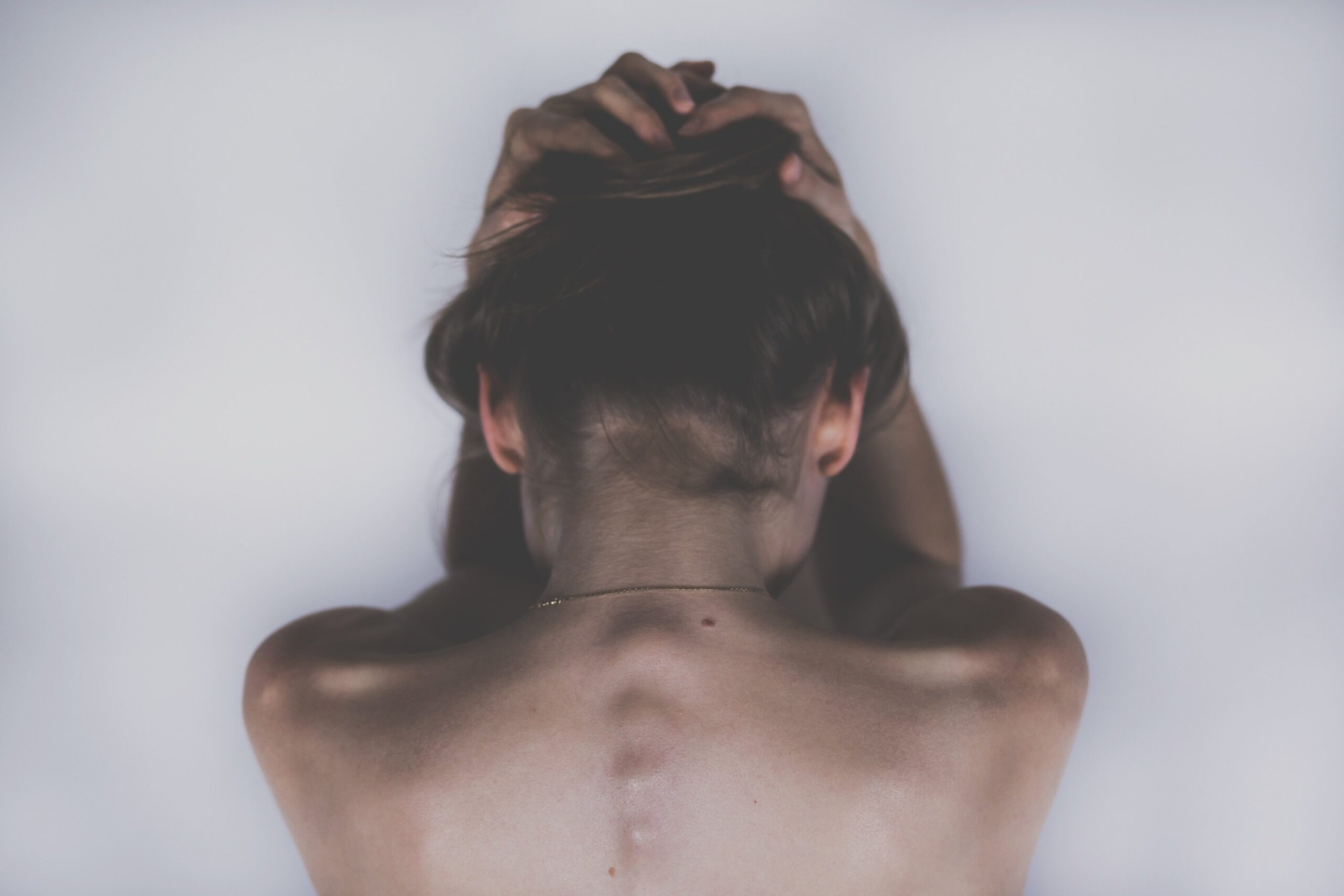
The day after my twenty-first birthday, I was driving home from a family dinner with the man who would later become my abusive ex in the passenger seat. The radio played softly, and we were talking about plans for the rest of my birthday celebration. It was supposed to be a night of beginnings, not endings.
I had no idea my life would be shattered into pieces—just like my C7 vertebra, which burst apart and lay scattered across my spinal cord. In that instant, the axis of my body—the very structure that held me upright—was broken, and with it, the illusion of safety I carried into adulthood.
But the truth was, our relationship had already been poisoned. Just weeks before the accident, I was pregnant and lost an internship opportunity with the county of San Diego. Three years wasted behind me, a shadowed blur of dependence on alcohol to numb reality, humiliation, and surviving abuse. I chose an abortion because I couldn’t imagine exposing a child to the world with him as my partner. The relationship was toxic, violent, and suffocating. That decision was painful, but it was also survival—not just for me but for a child not yet born.
According to the CHP report, the sheriff’s deputy in the brand‑new SUV was driving over ninety miles per hour when he struck my passenger-side front tire. I don’t remember the impact itself—only the music, the conversation, and then silence. I was told later that people poured into the street in uproar, because I was well known in my tiny town, born and raised among them. Neighbors who had watched me grow up stood in disbelief, staring at the wreckage, their voices rising in panic as firefighters fought to free me. My absence from memory is filled by their presence in testimony.
The report indicated my car spun in circles until it crashed into the row of parked cars on the side of the road directly in front of my mother’s bedroom window. Weeks later my mom and sister described to me that they felt the power of the crash from inside the apartment. At first, they didn’t realize it was me. I had just bought the car a week earlier. Either way, it was unrecognizable after the force it endured. They ran outside, confused by the wreckage, frozen in disbelief. It wasn’t until they heard my screams—raw, desperate—that they understood. They stood helpless as firefighters cut me out of the twisted metal with the jaws of life, knowing our lives would never be the same.
The sheriff ended up in the same trauma room, right next to me, with a broken back. My passenger had also broken their neck. And yet, the system treated us differently. Before the CHP investigation report was even completed, my insurance pointed the finger at me. I was tested for alcohol and drugs, while the sheriff was not. The system seemed determined to make me the guilty one. The sheriff’s department never sent flowers, never acknowledged the devastation, never asked how I was doing.
I woke to a sterile brightness and scattered memories that felt more like dreams than reality. Two weeks had vanished. My body was no longer mine—spinal fusions had already been done while I lay unconscious. They had taken a graft from my hip and placed it in my neck. Two surgeries followed—metal plates, rods, nuts, and bolts stitched into my spine. I had a concussion. I couldn’t get out of bed without my blood pressure plummeting until I passed out. I lost so much blood they considered a transfusion. My body was a battlefield of bruises; my entire right side marked from head to toe.
Being athletically gifted—an athlete all my life—saved me from death and permanent paralysis. Instead, I faced partial paralysis, learning how to walk, how to use the bathroom, how to inhabit my own body again. I tried to move my toes, my feet, my legs, but they were strangers to me—silent, unresponsive. Yet even in that silence, I began to imagine steel standing where bone had failed.
Recovery was not only physical. After the accident, while still in a neck brace and attending outpatient therapy, my abuser attacked me again for the last time. I was punched in the face, kicked, and dragged across the driveway and into the house. My body was already fragile, stitched together by surgeries where metal nuts, bolts, and rods were installed into my spine to secure it, and yet I was forced to endure another kind of violence. He was arrested and went to jail, but the damage lingered. I was healing physically while being torn down emotionally, trapped in a cycle of pain that seemed endless. Survival meant more than learning to walk again—it meant reclaiming my body and life.
True healing began when I met the man who would become my husband. Love didn’t erase the scars, but it gave them meaning. He saw me not as broken but as resilient. Together we struggled, together we built, together he helped me feel strong again. We would stand side by side, taking vows, promising a future rooted in hope that would thrive for well over a decade.
Every step I take now has more meaning, more power, because I was never supposed to walk again. And yet I do. Against every prognosis, I stand. I walk. I live. I have a beautiful child, something that seemed impossible during recovery. At the time, I believed the abortion was my last chance at motherhood—I had chosen survival over bringing a child into chaos. But life gave me another chance, a gift I never expected. My child is living proof that resilience can bloom even from shattered bones and scar tissue.
The settlement brought a measure of closure, a symbolic justice for what had been taken. But even that victory was complicated. Years after my case, my attorney took his own life. I can’t help but feel he carried a guilty conscience. He had taken too much money from me at the last minute, exploiting my youth and inexperience. His death left me with questions about justice, ethics, and integrity.
Even as I built a new life, my injuries remained invisible. Years later, I applied for support and was denied multiple times, the rejection compounding financial hardship. Age discrimination resurfaced, echoing the same injustice I had faced when my insurance blamed me before the CHP report was even complete. My injury was invisible, but the discrimination was not. It revealed a failing social institution—one that punishes survivors twice: first through trauma, then through denial.
Eight years after the crash, I was still fighting, but now with words and advocating for myself. Part of the reason I write this now is because I want to share my story, not just as testimony but as a foundation for my future. I want to become an attorney and to help others navigate the same disability hurdles that nearly broke me. My scars have become my compass, pointing me toward justice.
Years later, I realized the crash had not defined me. The abuse had not broken me. The denials had not silenced me. My story was not about destruction; it was about resilience, about choosing hope, about walking forward even when the world tried to keep me down.
Burst fracture, steel standing—that is who I am. And that is what I offer: testimony that pain can be transformed into strength, injustice into advocacy, and scars into a compass pointing toward renewal.
Category: Featured, Nonfiction