Each year, Southern New Hampshire University’s (SNHU) Word for Word Literary Series dedicates an event to instructors from its online creative writing programs. This year, on Wednesday, November 19, the spotlight was on nonfiction, with instructors Tracy Crow, from the Online MFA, and Dan Gleason, from the online MA, reading and discussing their work.
Tracy Crow, a former Marine Corps officer, is a writer, literary agent, and the president/publisher of MilSpeak Foundation, a 501(c)3 nonprofit dedicated to the creative writing endeavors from within the military community through writing workshops and a traditional publishing pathway for books authored by military veterans and family members.
Tracy is a former assistant professor of journalism and creative writing and the author/editor of six books, including her award-winning memoir, Eyes Right: Confessions from a Woman Marine, and a historical biography with co-author Jerri Bell, It’s My Country Too: Women’s Military Stories from the American Revolution to Afghanistan, which earned a starred review from Library Journal.
In addition working as an adjunct in the Online MFA, Tracy teaches in the low-residency MFA program at Queens University of Charlotte in North Carolina.
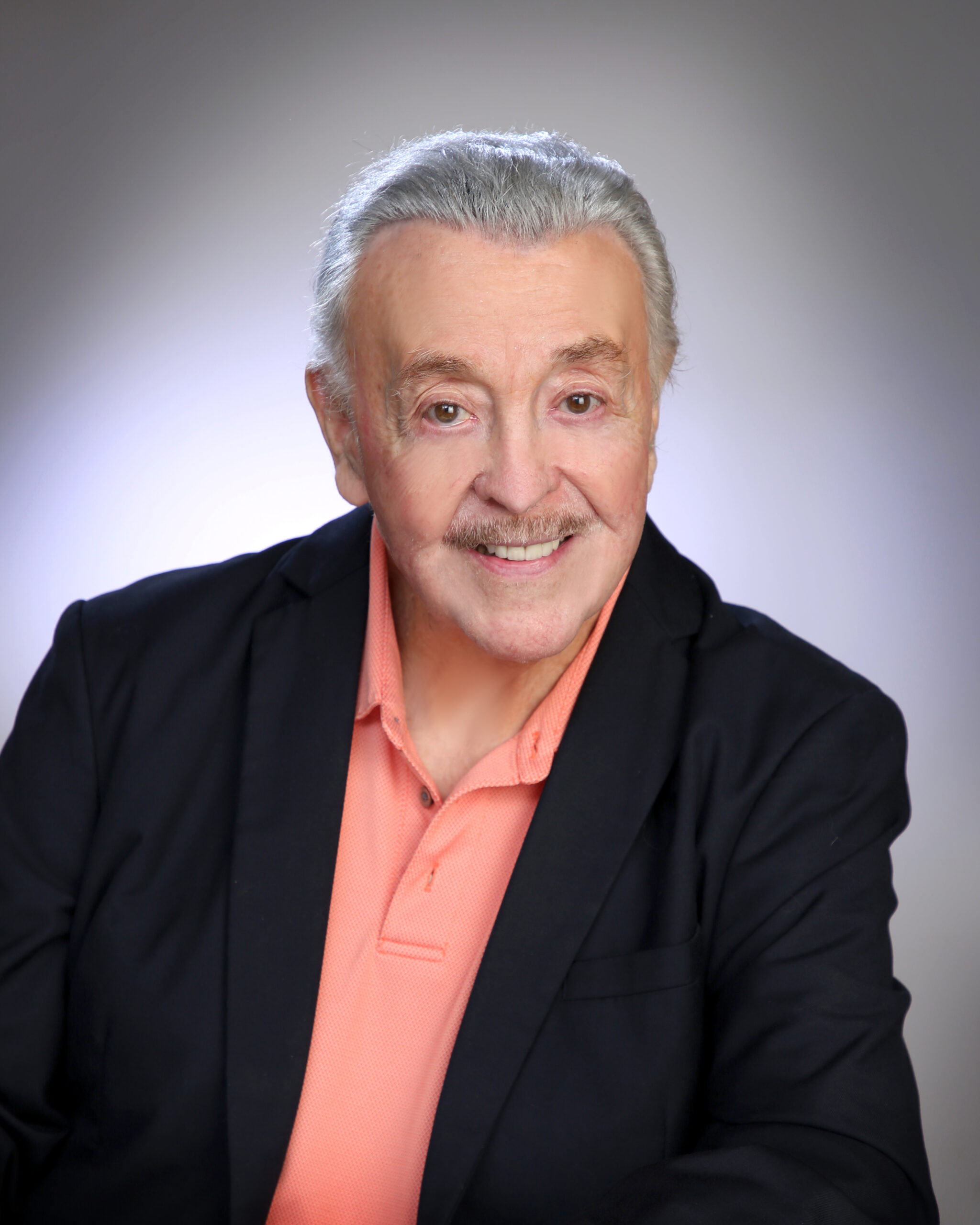
Dan Gleason is a graduate of the University of Iowa’s Program in Creative Writing, perhaps better known as the Iowa Writers’ Workshop. A prolific magazine writer, whose fiction and nonfiction has appeared regularly in major publications that include Esquire, the New York Times, Atlantic, Sports Illustrated, Vanity Fair, and many others, Dan has also sold two nonfiction books and one novel, and has recently finished his second novel.
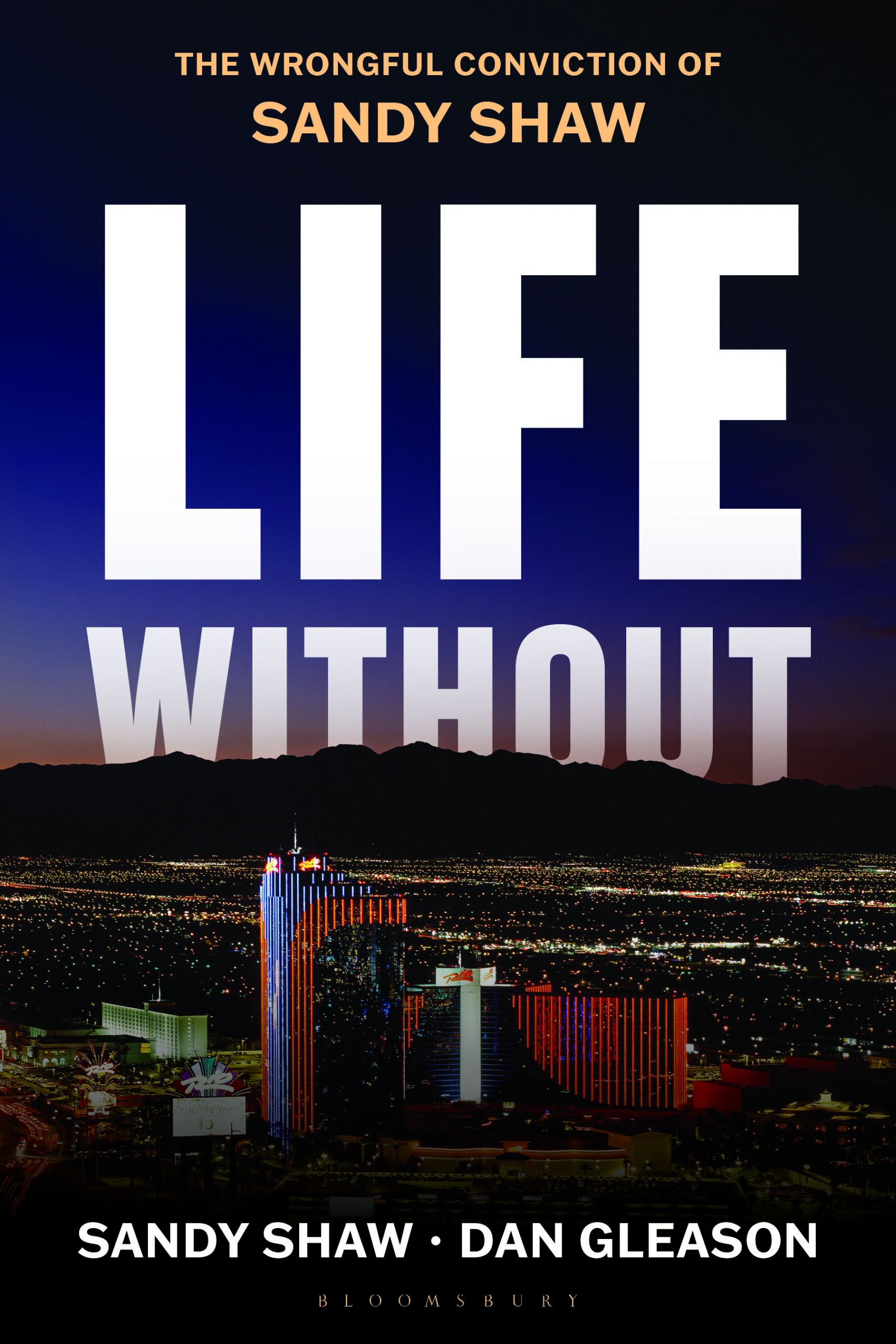
Dan’s latest publication, the true-crime book Life Without, tells the story of Sandy Shaw, who spent 21 years in prison for a murder she did not commit, and is based on hundreds of hours of interviews with Ms. Shaw.
Dan’s writing awards include The Georgia State Bar Association’s Indigent Defense Journalism Award; The Golf Writer’s Association of America “Best Magazine Article of the Year” (two times), and Runner-up, Big Apple Film Festival Screenplay Competition (2021). Dan has been an instructor for SNHU’s Online Masters program since 2015.
After reading from Eyes Right and Life Without, Tracy and Dan answered questions from the audience and from associate deans Jacob Powers and Paul Witcover.
Following is a transcript of that Q&A, edited for the page.
W4W: Dan, often true-crime works shine a light on a justice system that is not very just. There are so many stories out there of people like Sandy Shaw who have been imprisoned, wrongfully imprisoned, and are exonerated only many years later. And to just imagine having to be in prison for that long, or on probation for that long, for something that one didn’t actually commit, it’s horrifying.
DG: When I decided to help her, I had no idea she was innocent. I just figured she did not get a fair trial. And that’s all we’re guaranteed, but we’re guaranteed that by our Constitution. And a lot of times, it doesn’t happen.
W4W: That seems to be a theme I have seen as well. I was thinking of other pieces, literature pieces that have been created on this, and one that stuck out to me was the play The Exonerated. It came out, I think, turn of the century, actually, in 2000. It was just a bunch of characters on stage talking about how eventually they were exonerated for crimes that they did not commit. And to read them back to back is shocking and insightful too. These types of stories are important to share.
DG: I knew a guy named Bobby Lee Cook, who was a legend in the South and had a deep drawl and all that. He was a criminal attorney. I was doing a piece, and he said, Mr. Gleason, he said, you get a capital crime, you’re going to get all the justice you can afford and not a penny more. So you better have money if you’re tried for capital crime.
W4W: Tracy, I want to talk about the act of writing a memoir. In a way, it’s a bit of a balancing act between privacy and revelation. For Eyes Right, how did you decide where to draw that line? How has your understanding of that line changed as you’ve grown and evolved as a writer?
TC: I started off with a couple of theories, one basically handed to me from grad school, which was, you own your story, and so you have a right to tell your story. But I also grew up in military public affairs, so that meant I knew a little bit about libel law. So you can write pretty much as you wish and include people as you wish when they are a public figure, but when they are a private citizen, you do have to respect that they have a right to privacy.
So I joke often that I left out enough of this memoir that I could have written another book for that very reason, and I changed the names of some people. I changed the name of my husband, who later became my ex-husband, but not the name of my daughter, because she was OK with that. I changed the name of other people that were in there because they also had a right to privacy. I did not change the name of the general, John Hopkins, because he had died. And so they don’t have a right to privacy. So I did have to be concerned about those things, but I also let the first draft be what the first draft needed to be. I got as much as I possibly could out on that first draft.
In terms of revelation, I would say not a whole lot changed for me, and I do talk about some of this with libel in my memoir. You have a right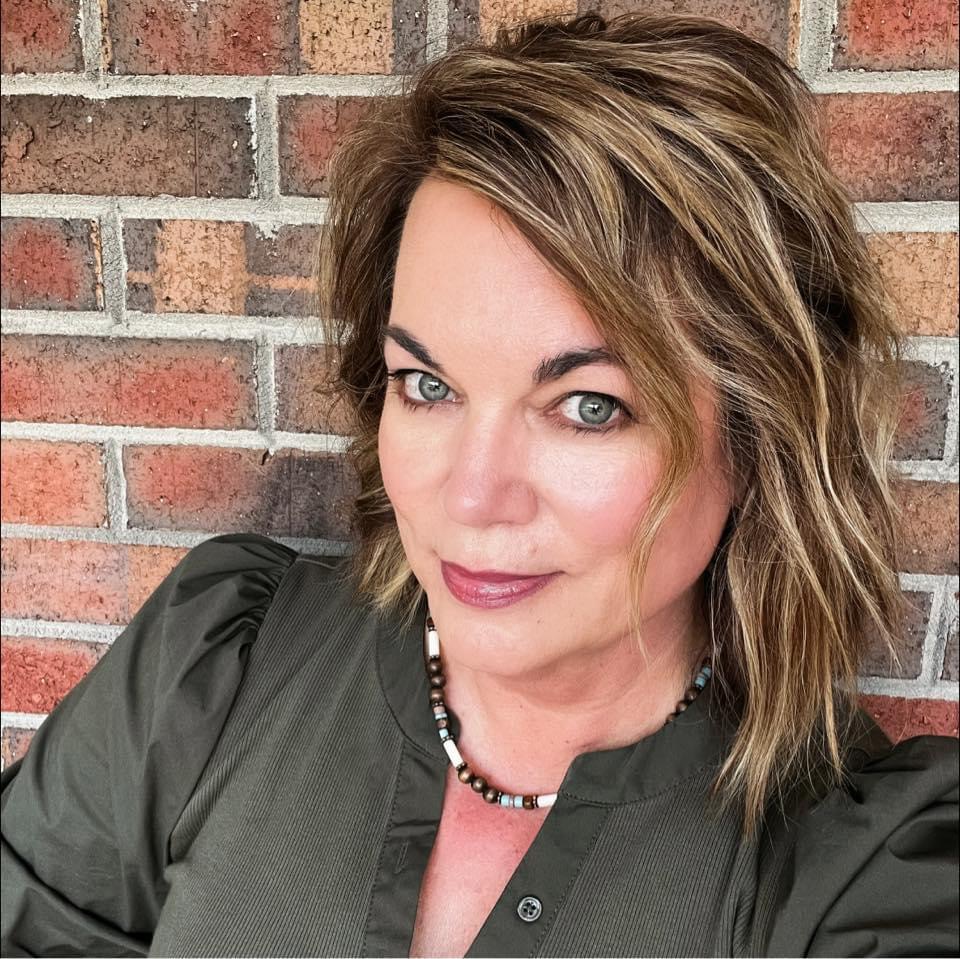 to your story, but you also have to remember there are no demons or angels out there. And you also have to understand that when you’re writing a personal memoir, that other people are characters in your life, but they also have a right to privacy as private citizens. So you may need to change names.
What you’re not allowed to do, because that breaks the contract between you and the reader, in my opinion, you’re not allowed to compile and make up characters. You’re not allowed to take characteristics from this one or that one and create one character because it’s more convenient or something. So you do have to hold to as much truth as you possibly can recall it.
W4W: Here’s a question for both of you, and maybe we can start with you, Dan, for this one. Do you know what your profound truth or universal theme is when you start writing? Or do you discover it as you build your manuscript?
DG: Well, you think you know, but you discover— I’ll give you an example. I was injured, and I couldn’t actually get out and walk for two months. I had a manuscript that had been sitting there for more years than I would like to share. I’d piddle with it, and I’d leave it alone, go to something else.
So I had thirteen hours a day in the computer chair, and I started writing a novel about a con man and a sadder but wiser beauty queen. I had wonderful characters, based on my hometown and all the weirdos. I grew up in a town full of weirdos, an old coal-mining town. But I said, this story is about revenge. If I had a theme, it’s revenge.
And all of a sudden, I’m maybe about halfway through it, and I said, no, the theme of this is loyalty. There’s revenge in it, but this is about loyalty.
So yes, get a theme, but don’t be tied to it. Don’t ruin your story because you’re thinking, oh, God, I got off the theme of, I don’t know, toe-dancing or whatever it was. But let it go and then just let it— Don’t you think, Tracy, that readers will figure out what the theme is on their own?
TC: Yes. It’s not important to me. They may often have a takeaway that you never even intended.
DG: Exactly. Somebody might tell me my story isn’t about loyalty, but I think they’ll see that. I hope.
W4W: You don’t want to hit your readers over the head with what you think your story is about. And I guess that’s as true in nonfiction as it is in fiction. I mean, like, really, when you come right down to it, how different are fiction and nonfiction? You think instinctively, well, they’re completely opposite to each other. But are they really?
DG: No. A good story, if you don’t have a good story, I don’t care if it’s fiction or nonfiction. The only way you can get away with writing crappy stuff is if you’re writing a textbook.
TC: I was hoping, as I was reading, that students who are writing fiction were picking up on some of the craft elements. I’m always teasing them that these craft elements are going to start jumping off the page at you as you start to identify them. You’re no longer really reading for pleasure anymore as much as you are studying the craft.
So I was hoping that they would see the same things, that these are the same—the sensory language, the sounds, all the different feels, the smells, all of that sort of stuff. We’re using the same craft. We’re using the same thing. It’s told through a certain perspective, but the storytelling craft is still there.
Maybe a memoir, there’s a little bit . . . We always talk about show, don’t tell. But in memoir, there’s a little bit more show and tell with that reflection. And I think if you’re writing a first-person point of view novel, you should maybe remember that, that, like a memoir, it should probably have a little bit more of the show and the tell, the reflection part in there.
W4W: When do you know that it’s ready to get published? And how long does it usually take that to actually happen with your writing? Does it by project? Is there a point where you set your pen down and say, I’m finished? Or is it something that you continuously work on until . . . I mean, where’s that threshold where you cross it and say, all right, got to send it to my agent, or I got to send it out and see if I can find representation for this work?
DG: Well, it depends. In nonfiction, you got a deal before you start. I mean, you write 40 pages, and you send it to an agent. Or if you already have an agent, they say, yes, I’ll start sending it around. But you have to have chapter outlines. So it applies, what you said, more to fiction.
And I don’t know. I have a lot of friends who are writers that struggle with—they say the endings are so hard. That’s easy for me. I don’t know why.
And even with this nonfiction thing, once I got going on it, and it was all approved, and money’s there, and I’m going on it, my agent called me and said, can you finish this in two weeks? I said, hell, no. I mean, I was like two months from it. And I said, why? She said, well, I’ve got someone who wants to try to get a documentary off this, but they need the ending. I said, let me do this. Let’s take the chapter outlines, and I’ll add some stuff to them. And then I’ll write an ending. And I figured, OK, I’ll write the ending, and then I’ll go back to it when the book’s finished and change it all because it’s just going to be shit.
 And all of a sudden, I wrote the ending. Hell, it’s better than anything I could have contemplated and worked on, maybe because I didn’t think about it. I just dashed it out, and it all came out. But I don’t know. I think you’re finished when you’re finished, when you think you are. I don’t know how else, because I don’t think there’s any formula for it.
I just wrote a novel called The Highwayman, based on that old poem by Alfred Noyes, “The Highwayman.” The road was a ribbon of darkness across the purple moor . . .
And the ending of it just came to me. I think when you write really well, and when you’re going really well—not if you’re a good writer or not—if you’re doing your best, you can’t . . . Nothing else is going on around you. Time passes. You don’t see it pass.
The phone rings. You think, is that a real phone? And I can tell you this. A long time ago—I’ll share this real quickly—that was in the typewriter days, and I had the typewriter against the wall. And I was in an apartment on, like, a raised dining room. That’s where I worked. And I had a girlfriend who had a key to the place, and I’m typing away and typing away and typing away. And I look up, and it was like a vampire. She was standing at my— I said, Jesus Christ, don’t come up and do that. You could give a guy a stroke.
She said, do you know how long I’ve been standing here? I said, no, how long? She says, about 15 minutes. I said, that’s cool. That’s what I want. Right? You get in that zone, and then you come up with stuff that you think, Jesus, that’s pretty good. Did I write that? Was that me?
So that’s all I know about endings and whether it’s ready. What do you think, Tracy?
TC: Well, let me share this story. I left grad school in January of 2005, graduated, and I lived in Florida at the time. And the very next week was Eckerd College’s very first Writers in Paradise workshop. And I thought, oh my gosh, this is in my backyard. I’m an Eckerd College grad, so I’ll go to this. And I encouraged several of my grad school buddies to come on down and stay at my house, and we would all go.
So we go to this workshop, and I have got all this advice from all my instructors that said, your manuscript is ready to go. You did a great reading. Your book is ready to go. I thought I had a manuscript ready to go out and sell, but I went to Michael Steinberg’s seminar. And Michael Steinberg, who has sadly passed, Michael Steinberg was considered like this guru of nonfiction. He’s the founder of Fourth Genre. Everybody who ever writes nonfiction tries to get into Fourth Genre, the literary journal. It’s just the crème de la crème.
And Mike did one-on-ones with us after he read an excerpt of our pieces. So it was my time, my turn for the one-on-one. And Michael asked me one question that no one had ever asked me in the two years of writing the manuscript in grad school. He asked me one question, and it caused me to go back and rewrite the entire manuscript. One question.
And that was the thing that was missing, and all he said was, all I’m going to say is, I hope you’ve written about and explored such and such.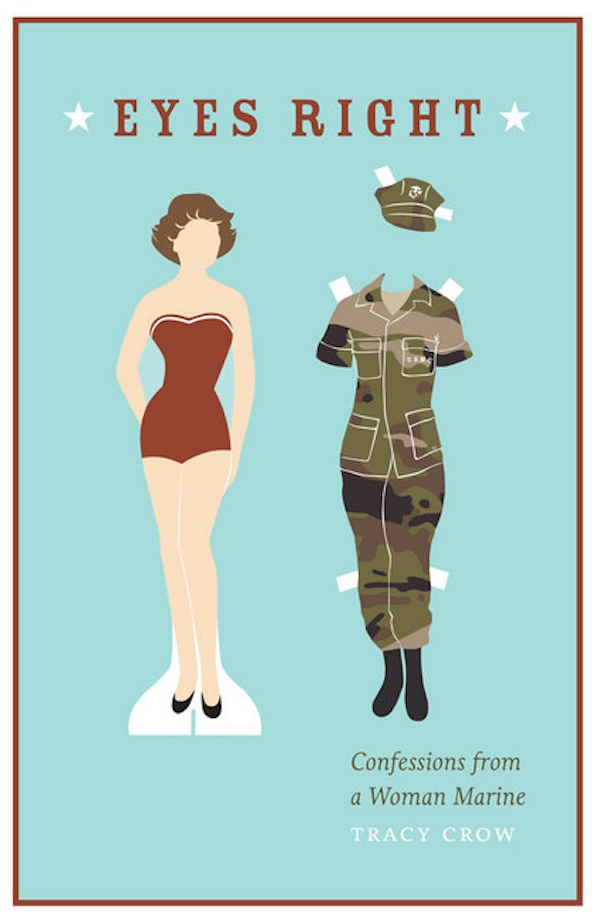 And I suddenly realized I had not. And I had to go explore that very deep, vulnerable material. And it really, really took a lot out of me to do that, but I had to rewrite the entire manuscript.
So you have to—sometimes it comes that way. Sometimes you just know. Sometimes you’re under contract, like Dan talked about. I mean, I’ve written two books on spec, so they were already under contract and outlines. When they were done, they were done. They were sent off to an editor, that sort of thing.
But you’ve got to be open enough to allow what may come through and tell you, and then you’ve also got to be willing to go, oh my God, I can’t believe I have to rewrite this entire manuscript. How long did it take me to write it? Let me think. Actually, it only took me a couple of months to rewrite the manuscript, but it took me eight years to place the book.
DG: Wow. Why am I wowing? I sat on that story twenty years!
TC: It happens when it’s meant to happen.
DG: When you wrote the ending, did you know, OK, this is it?
TC: Yes, basically because, I mean, I knew the story. So yes. But even then, because of what Michael had me go back and work on and really instill throughout the memoir, then it actually changed some of the reflections toward the end. And it also altered how I decided to write the epilogue.
DG: That’s pretty cool.
TC: Michael was a genius. I mean, all he did was ask me this one question. He didn’t even know the answer. He said, I don’t even want to know the answer.
W4W: It definitely goes to show that every project and, for that matter, every author who writes the project, has their own journey. And that question might not be the same for everyone, but it is something that’s worth exploring. And knowing also, like what you just said, Dan, you were sitting on this story for twenty years.
TC: Let me say, as a literary agent, what I see and what I wish I didn’t see, and that’s too much work that’s too early. I get so many manuscripts from emerging writers that are not ready to be shown, and I can tell from page one. Agents and editors, we have this page-one rule. If it’s not there on page one, we don’t have time to go to page two and page three. We just don’t have time. There’s too much work coming in.
So when it’s not there, I’m like, dang it, they sent it too early. And sometimes, if I can see some potential, I might read to page fifty. And then I send my notes and say, come back and talk to me when you do this or that.
But the problem I see more than anything is so many eager writers who don’t wait to get feedback, and they’re pushing their work in the world, and it’s too soon. It’s not ready yet. It hasn’t cultivated enough yet.
DG: Because they’re eager would-be writers. They’re not eager writers. They’re eager would-be writers—want to be and probably will be. But I’ve got a thing. I don’t revise. I don’t write a draft. I revise as I go. And of course, the pitfall of that is perfectionism.
I remember the first book I did was a book about the pro golf tour for Random House. It was nonfiction. I had a wonderful time, and it turned into a great . . . If you’re a journalist out there, you can mooch all the food and freebies and concerts, and everything’s free.
So I was trying to finish it, and I couldn’t. And it was 4 o’clock in the morning. I would write from about 3:00 in the afternoon till 4:00 or 5:00 in the morning and watch a little of Ted Turner’s movie channel and then go to bed. And I couldn’t finish. I was so mad.
And I lay down, and I’m about to go to sleep. And I woke up, and I said . . . I was trying to end it with the end of the season. And I said, it’s December, the tents are down, the circus is gone, and the season is over. Or something like that. And I jumped up and went and typed it. But that, again, means write from the inner mind and don’t try to push it. And wait till it’s ready. Wait till it’s ready in your inner mind.
And that’s probably what your people weren’t doing, Tracy. Probably they were just writing it like they thought they should write it. And they wanted feedback from you, and that’s not right. You don’t get it from an agent.
TC: I wish I had the time to do that, but I don’t. I mean, I just don’t have the time.
W4W: Of course, as teachers at SNHU, both of you are giving incredible feedback to your students.
DG: Oh, yeah, that’s different.
W4W: The students that come into an MFA or an MA program, they may be impatient, but at least they have the wisdom to know that they’ve got stuff to learn.
TC: I’m a little bit nervous this term, because these students are so sharp and on top of everything that I don’t know if I’m going to be able to help them a whole lot. They’re trying to squeeze everything they can out of me. I love it.
W4W: The closing message that you both delivered is a wild one because I know people are constantly seeking advice on how to become a writer. How do I know when I’m ready? How do I know when to get an agent and everything?
And the answer often is it’s just this gut feeling, and it’s hard to describe what that gut feeling is. But you have to trust yourself, and you have to find a way to get there without feeling like you’re writing for the sake of writing. Paul and I edit the Penmen Review, and sometimes we’ll get pieces in there, and you’ll see it. It’s like this poem is a poem. It’s written like a poem. It’s not quite at that caliber yet. It’s like you have to find that threshold or find that mountain to climb.
But it really, truly, is a gut feeling, and for all those who came tonight, I think that’s a good message to take away from this, as well as check out these two amazing authors’ works, because they’re both captivating and fascinating in their own way.
DG: Good looking. Don’t forget that.
W4W: Good looking as well. So thank you both, Dan and Tracy, for sharing your work. It was delightful.
Category: