by John Neal
“You have such a lovely house,” Meg said.
“Is it?” Kate said.
The words were out of her mouth before she realized she should have simply said “thank you.” Now Meg was giving her a funny look, and then maybe she figured Kate was being modest because the curious frown softened to an understanding smile.
“Of course! Just look at it. Who wouldn’t want to live here?”
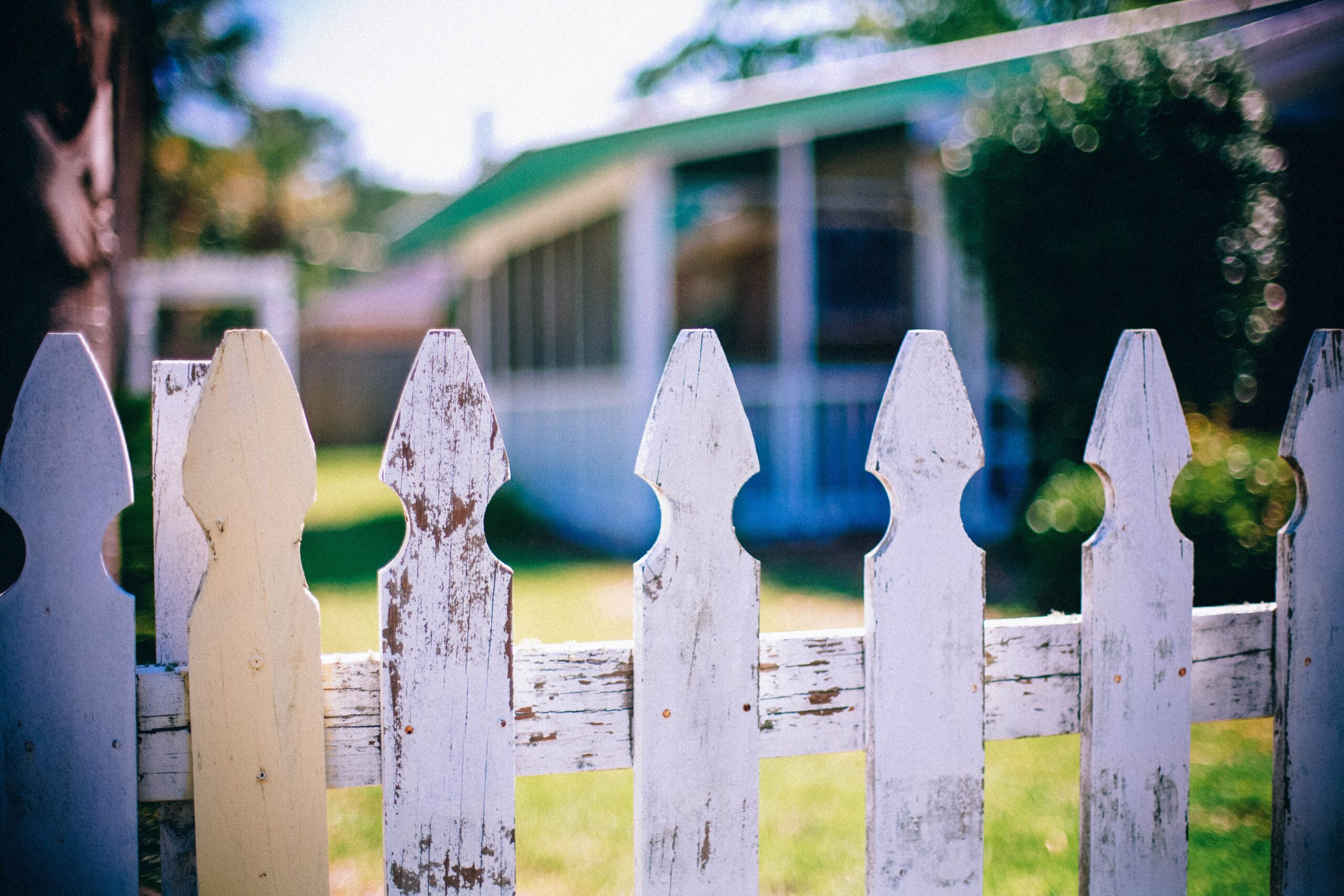
They were in the living room, spacious and decorated with modern Scandinavian-style furniture, wood tables, and bookshelves. Photos framed in sleek black frames hung from walls alongside abstract paintings by an unknown but promising artist she bought from a gallery downtown. Outside, the evening sun poked through the lush leaves of the elm tree in the front yard like flecks of gold, and the assorted peonies and pansies in the flower bed shuddered against the white picket fence that ringed the lush green lawn. It all looked perfect, and yet Kate felt there was something missing.
They had finished dinner more than hour ago— Kate and her husband, Jim, and Jim’s colleague from the university’s English department, Nathan, and his wife, Meg. The four of them lounged in the living room, squirming to get comfortable on the minimalistic white leather and light wood furniture that had been recommended by all the design magazines but that Kate never really liked and thought she paid too much for. They sipped cocktails and Kate wondered if the guests would ever leave. Her head ached from the wine served at lunch and the effort to keep up with the conversation. A mile-high stack of dirty dishes was piled up on the counter in the kitchen, waiting for her to scrape them and load them into the dishwasher before she could lie down in a dark room with a cool, damp cloth over her eyes. She glanced furtively at her watch but Nathan and Meg showed no signs of leaving, and now Jim was pouring more gin into their glasses. He moved with his usual smooth confidence until it came to the pour, which he did with the exaggerated deliberateness of someone who had drunk too much.
“You should have seen where she lived before we got together,” he said.
“Where was that?” Meg asked.
“Boston,” Kate said.
“A real dump,” Jim said.
Nathan, slumped in the shallow couch with his glass resting against his sunken chest, snorted. Condensation left a dark ring on his blue dress shirt. “An apt description of Bean Town,” he said.
“Boston is all right,” Jim said. “But the apartment Kate lived in was … how would you describe it?”
“Cozy,” Kate said.
“Cramped is more like it. And dingy. And it smelled. A real dump.”
“I don’t remember it that way.”
“It’s been a couple of years so you don’t remember. I remember. It reeked. Cigarette smoke and beer and sweat.”
Meg laughed nervously.
“It sounds like Jim rescued you,” she said.
“I did. You should have seen the guy she was living with then. Bill. What a piece of work.”
“He wasn’t so bad,” Kate said.
Jim let out a loud guffaw that rose up from deep down his over-filled belly.
“He was a loser. Uneducated. A drunk and a drug addict.”
“He hurt his back at work,” Kate said. “The doctors put him on oxy. He had a prescription and everything, but that stuff is worse than heroin.”
“I’ve loved Kate ever since high school. We may have gone our separate ways but the feeling never died. I realized it when we reconnected. She was cleaning motel rooms and I was guest lecturing at Harvard I couldn’t bear to watch her in that environment. It took some doing, but I convinced her to leave. She deserved a better life than one spent cleaning motel rooms for minimum wage to support her boyfriend’s habit.”
Meg reached across the cushion and took Nathan’s hand in her own. Kate expected her to say “aww” and wasn’t disappointed.
“Aww, that’s so sweet,” she said. “You’re so lucky to have someone like Jim. Isn’t that right, honey?”
Nathan looked like he was going to be sick. He swallowed and nodded his head in agreement. The wet ring on the front of his shirt had gotten bigger and darker.
“You’d think that would have been it,” Jim said. “Happily ever after, right?”
“It wasn’t?”
“Bill didn’t take it well.”
“Breaking up isn’t easy, even if you think it’s the right thing to do,” Kate said.
“He called and texted Kate at all hours, begging her to go back. When she didn’t, he started to threaten her. He threatened me. He’d call down to my office and hang up when I picked up the phone. Of course, I knew it was him. He’d show up around the campus and in town, always staring from across the street. I was scared. Kate was terrified.”
“He wasn’t well but he’d never do anything,” Kate said. “Bill wasn’t the type.”
“What did you do?”
“We went to the police,” Jim said. “At first, they wouldn’t help. The guy was just standing there on the sidewalk, and there’s no law against that. But then I showed them the text messages and voice recordings of Bill threatening to kill me and Kate. We got a restraining order against him. As much as I put my faith in the law and justice system, a piece of paper doesn’t mean much to people like Bill.”
He took a sip and grinned.
“I bought a gun, a SIG Sauer. I got a concealed carry permit, too.”
“Oh my,” Meg said with a sly grin. Kate thought she was shocked by Jim’s confession but also turned on by it.
“It’s the wild, wild west,” Nathan said and he smirked at his own joke. The wet ring on his shirt had soaked through the fabric and it clung to his chest like a second skin.
“I still got it upstairs, if you want to see it,” Jim said.
Meg reached out her hand. It took Kate a moment to realize she was making a gesture of sisterly compassion. She took her hand and Meg gave her a gentle squeeze and let go. She thought that if Meg wanted to show some compassion she could offer to help clean up and leave, but Meg showed no sign of doing that as she settled back into her seat.
“What happened?” Meg asked. “Did he stop harassing you?”
“He did for a while,” Jim said. “But then the idiot tried to kill himself.”
“He was very sick,” Kate said. “He was the sweetest person. The drugs completely wrecked him. He may not have been sophisticated, but he was good with his hands. He could fix just about anything. He never said no to helping other people in the neighborhood. We were more often closer to dead broke than getting by, but he could make me laugh.”
Jim kept on talking.
“He put a gun to his head and pulled the trigger. I don’t know. He must have flinched or something because he blew out a piece of his skull but the bullet missed anything vital. The hospital called us in the middle of the night. I thought it was one of my brothers had a heart attack or something.”
“Why’d they call you?” asked Meg.
“Bill had me in his emergency contacts list,” said Kate. “I went to go see him.”
Jim groaned.
“I still don’t know why you did that after all the hell he put us through.”
“He had no one else. His one sister moved to Australia with her girlfriend. He was all alone. His head was all swollen up and wrapped in bandages. I didn’t think he’d make it.”
Meg went aww.
“Did he die?”
“He survived,” said Kate. “It was touch and go. It took a long time for the swelling to go down and the wound to heal, but Bill’s tough. After he got out of the hospital, he got the help he needed and worked to put his life back together. He even fell in love. He and his girlfriend moved to California last year.”
“Some people are harder to kill than cockroaches,” Jim said.
“He opened his own garage, and he seems to be doing well. He seems happy.”
“You keep in touch with him still,” Meg said.
“No,” Kate said. “I’ve seen him on Facebook. We’re not friends but his profile is public.”
It was another hour before Nathan and Meg decided they had overstayed their welcome. Jim made a fuss about it being early still, and Kate merely stood by with her hands folded in front of her as they said their goodbyes.
With the guests gone and Jim squirreled away in his study with a newly opened bottle of gin, Kate tackled the stack of dirty dishes in the kitchen. She pushed scraps of food into the garbage disposal and flipped the switch to the on position. She startled at the sudden loud noise, as she always did, and waited for the rough grinding sound of the machine’s teeth gnashing at the waste to change to a smooth whir.
Her gaze lifted to the window and she looked out at the neat little lawn with the leafy elm tree now cast in twilight shadows, the colorful little flowers concealed in the dim light from the streetlamps, and the white picket fence that stood like a line of soldiers in the blue night. And then she realized that what she was missing from her perfect little house was laughter.